
 has taken a stern stance on the tragic death of Anjel Chakma,)
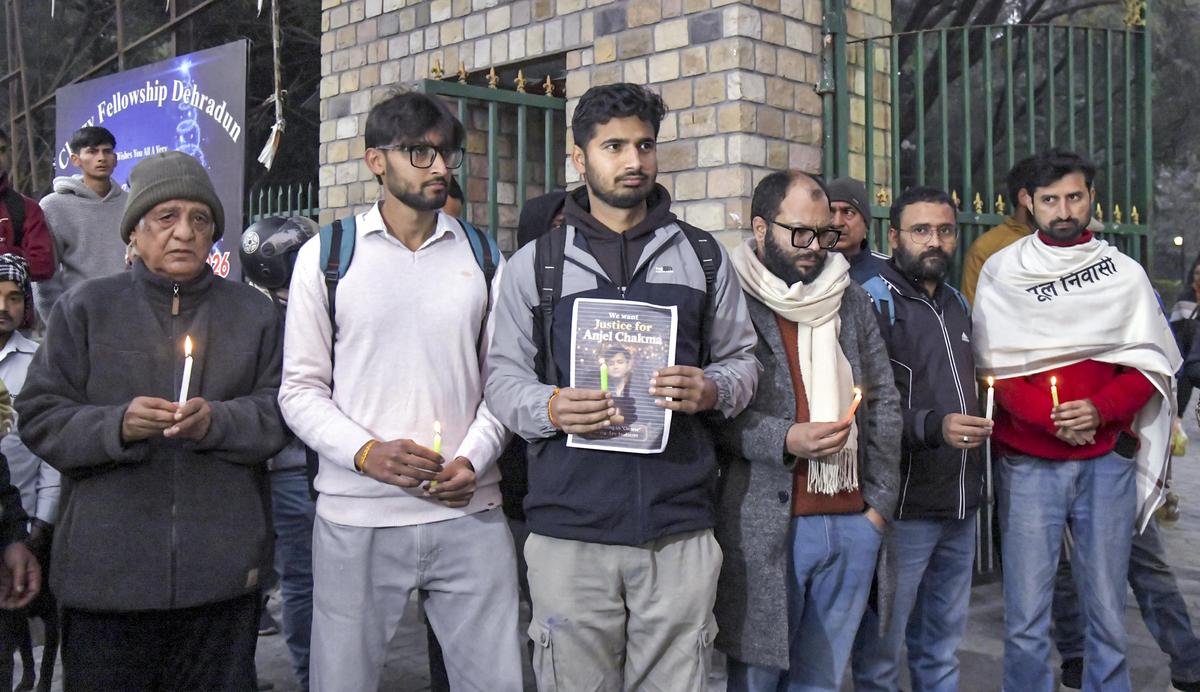
New Delhi, December 30, 2025: The National Human Rights Commission (NHRC) has taken a stern stance on the tragic death of Anjel Chakma, a 24-year-old MBA student from Tripura, who was allegedly killed in a racially motivated attack in Uttarakhand. On Tuesday, the NHRC issued formal notices to the District Magistrate (DM) and the Senior Superintendent of Police (SSP) of Dehradun, demanding a detailed “Action Taken Report” within seven days.
The Fatal Confrontation
The incident, which has sparked nationwide outrage, occurred on December 9, 2025, in the Selaqui area of Dehradun. Anjel and his younger brother, Michael, were out to buy household items when they were allegedly confronted by a group of intoxicated local youths.
According to the complaint, the attackers targeted the brothers with racial slurs, including “Chinese” and “Chinese momo.” When Anjel stood his ground, asserting, “I am an Indian, not Chinese,” the group reportedly turned violent. The final-year student was brutally assaulted with knives and blunt objects, sustaining severe injuries to his spine and head. After battling for his life for 17 days, Anjel succumbed to his injuries on December 26.
NHRC’s Intervention
The NHRC bench, presided over by member Priyank Kanoongo, took cognisance of the matter under Section 12 of the Protection of Human Rights Act, 1993. The commission noted that the allegations prima facie suggest a “racially motivated incident” and a violation of the victim’s right to life, dignity, and equality.
The NHRC has directed Dehradun authorities to:
- Conduct a thorough inquiry into the allegations of racial discrimination.
- Submit a comprehensive report on the investigation and arrests made.
- Ensure the safety of all students from the North-Eastern region residing in Uttarakhand.
Current Investigation Status
Dehradun SSP Ajay Singh confirmed that five suspects have already been apprehended, including two juveniles. However, the prime accused, identified as Yagya Awasthi, remains at large and is suspected to have fled to Nepal. A reward of ₹25,000 has been announced for information leading to his arrest.
While the police initially registered a case of “causing hurt,” the charges were upgraded to Section 103(1) (Murder) of the Bharatiya Nyaya Sanhita (BNS) following Anjel’s death.
Growing Outrage and Political Response
The killing has reignited the demand for a dedicated anti-racial violence law in India, similar to the recommendations made by the Bezbaruah Committee in 2014.
- Rahul Gandhi, Leader of Opposition in the Lok Sabha, termed the incident a “horrific hate crime,” blaming the “normalization of hate.”
- Uttarakhand CM Pushkar Singh Dhami spoke with Anjel’s father—a BSF jawan currently posted in Manipur—to assure him of a fast-track trial and strict punishment for the culprits.
- Protests have erupted in Agartala and Dehradun, where students held candlelight marches demanding justice and better protection for North-Eastern students.
The case continues to develop as local authorities work to track down the remaining suspect and address the systemic failure to prevent such violence.