

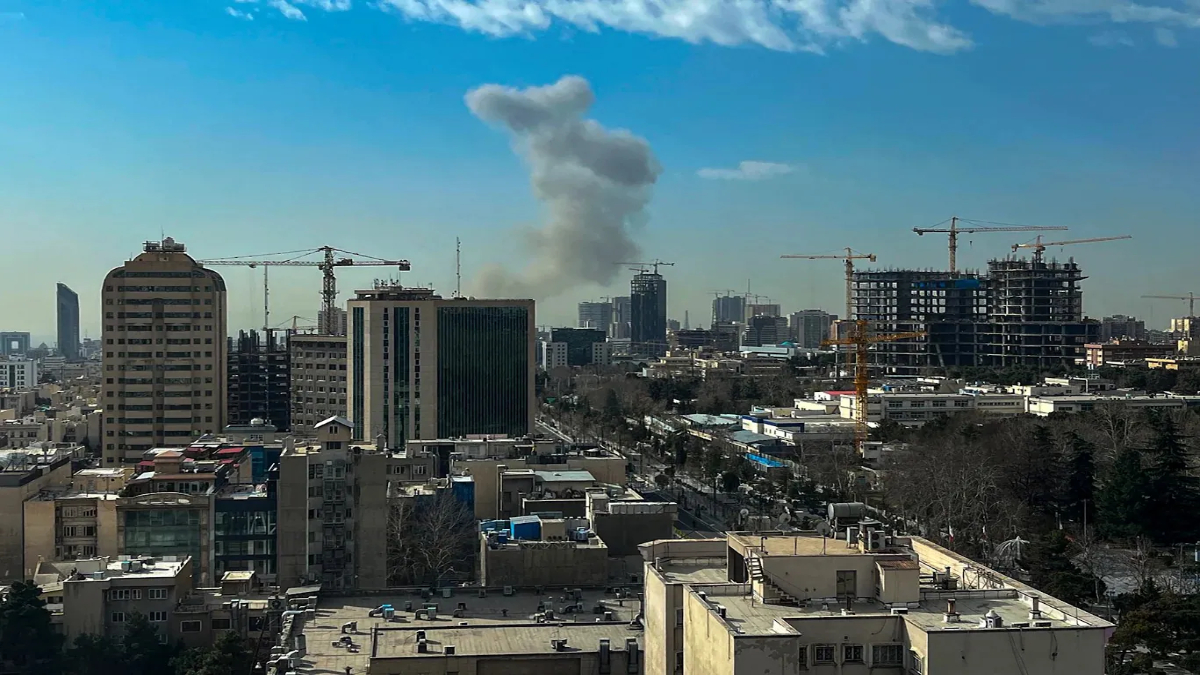
On February 28, 2026, the Middle East was thrust into a new and volatile chapter as the United States and Israel launched a massive, coordinated military operation against Iran. Dubbed “Epic Fury” by some military sources, the strikes targeted over 30 locations across the country, including the capital, Tehran, as well as Qom, Isfahan, and Karaj.
The international community has reacted with a mix of support, condemnation, and deep-seated anxiety, with many echoing the sentiment that the window for diplomacy has been slammed shut.
“No One Wanted To Negotiate”: The Russian Perspective
One of the most stinging critiques of the operation came from Moscow. Dmitry Medvedev, Deputy Chairman of Russia’s Security Council, took to Telegram to accuse Washington of using recent diplomatic efforts as a mere smokescreen.
This sentiment refers to the fact that talks regarding Iran’s nuclear program had been ongoing in Switzerland just days prior. The sudden shift from the boardroom to the battlefield has led many analysts to argue that the U.S. and Israel had already committed to a military solution, regardless of the diplomatic progress being made.
The U.S. and Israeli Stance: “Preventative” and “Decisive”
In a social media address, U.S. President Donald Trump described the strikes as “major combat operations” aimed at eliminating an “imminent threat.” He framed the mission as a necessity to destroy Iran’s missile arsenal and ensure the regime never acquires a nuclear weapon.
Israeli Prime Minister Benjamin Netanyahu echoed this, labeling the strikes “preemptive” and designed to remove an “existential threat” to the State of Israel. Both leaders notably appealed directly to the Iranian people, with Trump urging citizens to “take over your government” and “cast off the yoke of tyranny.”
Key Targets of the Attack
| Category | Strategic Focus |
| Nuclear Infrastructure | Facilities allegedly revived for uranium enrichment. |
| Military Assets | Surface-to-surface missile sites and command centers. |
| Naval Capabilities | Assets in the Persian Gulf to prevent maritime blockades. |
| Logistics | IRGC infrastructure and military industrial plants. |
Regional Fallout and Retaliation
The reaction from the region was immediate and kinetic. Iran’s Foreign Ministry condemned the attack as a “gross violation of sovereignty” and vowed a “crushing response.” Within hours, reports emerged of:
- Iranian Missile Interceptions: The UAE and Kuwait reported intercepting ballistic missiles fired from Iran.
- Targeting of U.S. Bases: Retaliatory strikes were reported against U.S. military installations in Bahrain, Qatar, and Jordan.
- Casualties: At least two fighters were killed in a strike on a pro-Iran group’s base in Iraq.
Gulf nations, while often at odds with Tehran, have expressed grave concern over the potential for a total regional war. The UAE described the escalation as a “dangerous act,” while Saudi Arabia urged all parties to uphold stability.
International Condemnation and Legal Questions
The legality of the strikes has been called into question by several global bodies and officials.
- The European Union: Described the situation as “perilous” and began withdrawing non-essential personnel from the region.
- ICAN: The International Campaign to Abolish Nuclear Weapons condemned the attack, noting that military action is not a sustainable solution to proliferation and risks a nuclear catastrophe.
- United Kingdom: While a traditional ally of the U.S., some British officials expressed concern that there was no clear “legal basis” for the strikes, as there was no evidence of an imminent Iranian attack.
The Human Toll and “Regime Change”
Inside Iran, the situation is dire. Connectivity has reportedly dropped to just 4% of normal levels as the government initiated a near-total internet blackout. While some videos surfaced showing segments of the population celebrating the strikes as a catalyst for change, the broader reality is one of fear and uncertainty.
The joint U.S.-Israeli strategy appears to be leaning heavily toward regime change, a policy that many regional experts at organizations like Chatham House warn could lead to a catastrophic state collapse, far worse than the conflicts seen in Iraq or Syria.
As the smoke clears over Tehran, the world is left to wonder if this “preemptive” strike has prevented a war or simply started a much larger one. With both sides declaring “no red lines” for future actions, the path back to the negotiating table seems more distant than ever.