

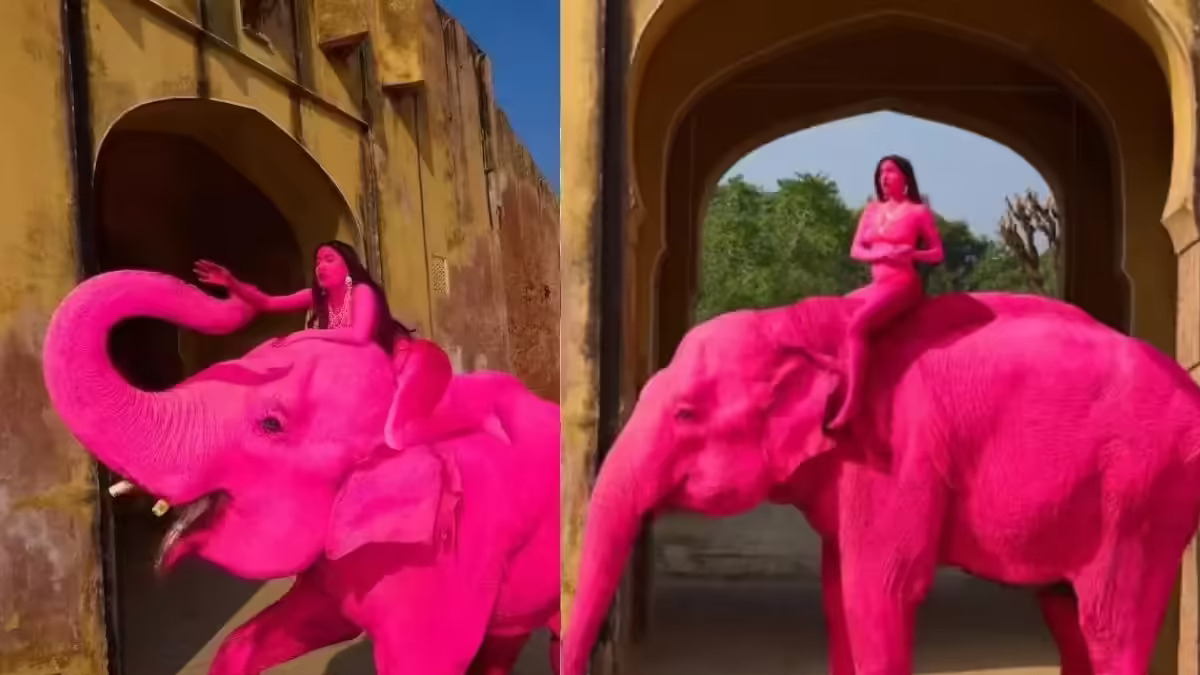
New Delhi, March 31, 2026: A vibrant artistic vision has turned into a center of national controversy in India following reports that an elephant, painted bright pink for a high-profile photoshoot in Jaipur, passed away just a month ago. The images, which recently went viral, have sparked a heated debate regarding animal welfare, the ethics of conceptual art, and the use of live animals as “props.”
The “Pink” Vision
The project was the brainchild of Julia Buruleva, a Russian-born, Barcelona-based conceptual photographer known for her “Art Expedition” series. Buruleva spent six weeks in Jaipur, Rajasthan—famously known as the “Pink City”—where she was inspired by the monochromatic architecture and the cultural significance of elephants.
Her creative goal was to capture a “pink elephant against classic Rajasthani gates,” creating a surreal, real-life visual that matched the city’s iconic hue. The photoshoot featured a model named Yashasvi posed atop the elephant, with both subjects covered in vivid pink pigment.
Outrage Over Animal Welfare
While the photographer described the shoot as a “connection with nature,” social media users and animal rights activists were quick to label it as animal abuse. Critics argued that:
- Skin Sensitivity: Elephants have highly sensitive and porous skin; covering a large animal entirely in paint can cause distress or health issues.
- Technological Alternatives: Many pointed out that in the age of advanced post-production and AI, physically painting a live animal was unnecessary and cruel.
- Ethical Boundaries: Activists questioned why an animal was treated as a decorative object for the sake of Instagram “likes” and artistic portfolios.
The Death of ‘Chanchal’
The controversy intensified when it was revealed that the elephant in the photos, a 65-year-old female named Chanchal, had died in February 2026.
Ballu Khan, president of the Hathi Gaon (Elephant Village) committee, confirmed the animal’s passing, noting she was around 70 years old. The elephant’s owner, Shadik Khan, defended the shoot, stating that:
- The photoshoot lasted only about 10 minutes.
- The paint used was “kaccha gulal” (organic powdered color), the same type used by locals during the Holi festival.
- The elephant was washed immediately after the session and showed no signs of harm at the time.
Despite these assurances, the timing of the elephant’s death—occurring shortly after the images began circulating—has led to a formal inquiry by the Rajasthan Forest Department. Authorities are now investigating whether proper permits were obtained and if animal welfare protocols were violated during the production.
Artist’s Defense
In response to the backlash, Julia Buruleva told news outlets that she stands by her work. She argued that her practice is rooted in “real-life connection” rather than digital manipulation.
“While AI and digital tools can replicate images, they cannot replace the authenticity of real-life connection, which is the heart of my work,” Buruleva stated, adding that she believes in finding a “healthy balance” between human creativity and respect for living beings.
The Larger Conversation
This incident has reignited a broader discussion about the treatment of captive elephants in Jaipur’s tourism and art sectors. While the owner claims the death was due to natural causes related to old age, the incident serves as a stark reminder of the thin line between cultural appreciation and exploitation.
As the investigation continues, activists are calling for stricter regulations to ensure that “artistic freedom” does not come at the cost of animal dignity and safety.