

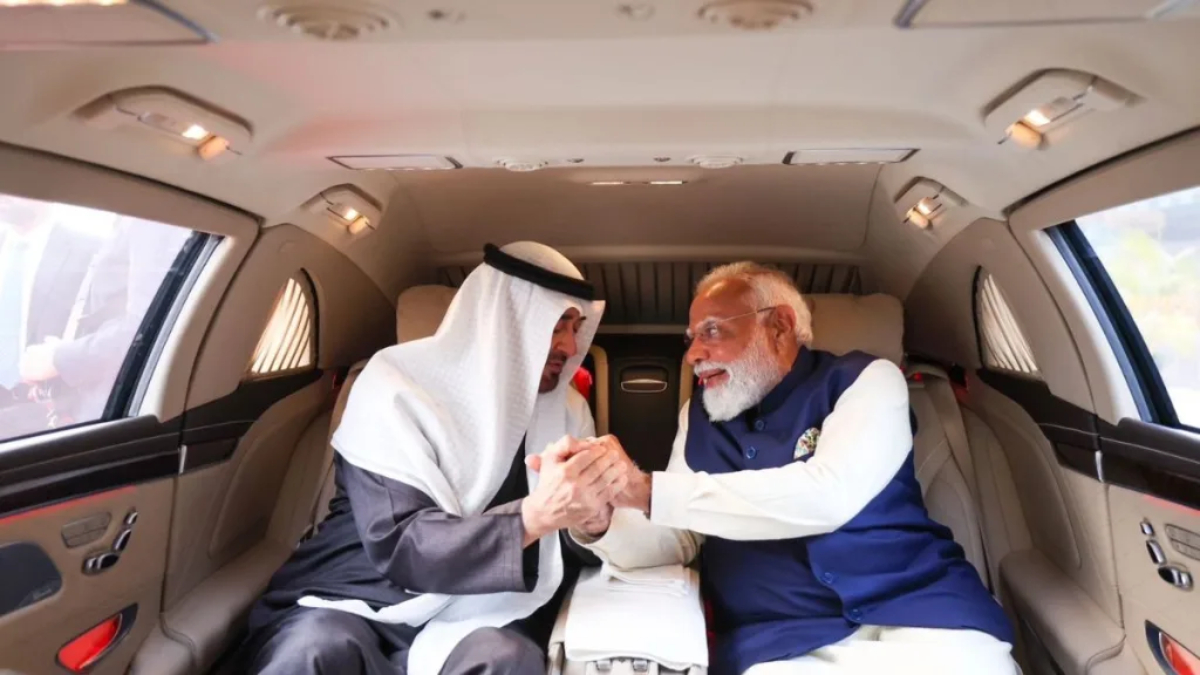
New Delhi, March 18, 2026 — In a significant diplomatic push amid escalating tensions in West Asia, Prime Minister Narendra Modi held a high-level telephonic conversation with the President of the United Arab Emirates, His Highness Sheikh Mohamed bin Zayed Al Nahyan, on Tuesday. The two leaders reaffirmed their commitment to the “early restoration of peace” and emphasized the critical need for regional stability.
The dialogue comes at a volatile time for the Gulf region, following a series of military escalations that have disrupted international shipping lanes and caused civilian casualties.
Key Outcomes of the Discussion
During the call, which the Prime Minister described as “productive,” both leaders touched upon several pressing geopolitical issues:
- Restoration of Peace: Both nations agreed to work closely to de-escalate current conflicts in West Asia, focusing on a return to security and stability.
- Safety of the Strait of Hormuz: A major highlight of the talk was the mutual agreement on ensuring safe and free navigation through the Strait of Hormuz, a vital chokepoint for global energy supplies and Indian trade.
- Condemnation of Violence: PM Modi reiterated India’s “strong condemnation” of recent attacks targeting the UAE, which have resulted in the loss of innocent lives and damage to civilian infrastructure.
- Diaspora Welfare: The Prime Minister thanked the UAE President for the continued safety and well-being of the nearly 4 million Indians residing in the Emirates.
Strengthening the “Brotherly” Bond
In a post on the social media platform X (formerly Twitter), PM Modi referred to the UAE President as his “brother,” signaling the deep personal and strategic rapport between the two administrations.
“Spoke with my brother HH Sheikh Mohamed bin Zayed Al Nahyan… We will continue to work together for the early restoration of peace, security, and stability in the region,” the Prime Minister stated.
This conversation marks the second time the two leaders have consulted since the flare-up of the US-Israel-Iran conflict in late February. India has maintained a “multi-alignment” strategy, engaging with all regional stakeholders—including Saudi Arabia, Iran, and Israel—to safeguard its national interests and the safety of its vast diaspora.
Economic and Strategic Stakes
The stability of the Gulf is a cornerstone of India’s economic security. With bilateral trade recently targeted to reach $200 billion by 2032, any prolonged instability in the Strait of Hormuz poses a direct threat to:
- Energy Security: India sources a significant portion of its LNG and crude oil through these maritime routes.
- Trade Corridors: Initiatives like the ‘Bharat Mart’ and ‘Virtual Trade Corridor’ rely on predictable regional logistics.
- Inflation: Global oil price volatility, driven by West Asian tensions, remains a primary concern for the Indian economy.
Looking Ahead
As India prepares to chair BRICS in 2026, its role as a “credible, non-aligned stakeholder” is becoming increasingly central to Middle Eastern diplomacy. The UAE has already expressed its full support for India’s upcoming chairmanship, signaling a partnership that is moving from simple trade to deep “systemic interdependence.”