

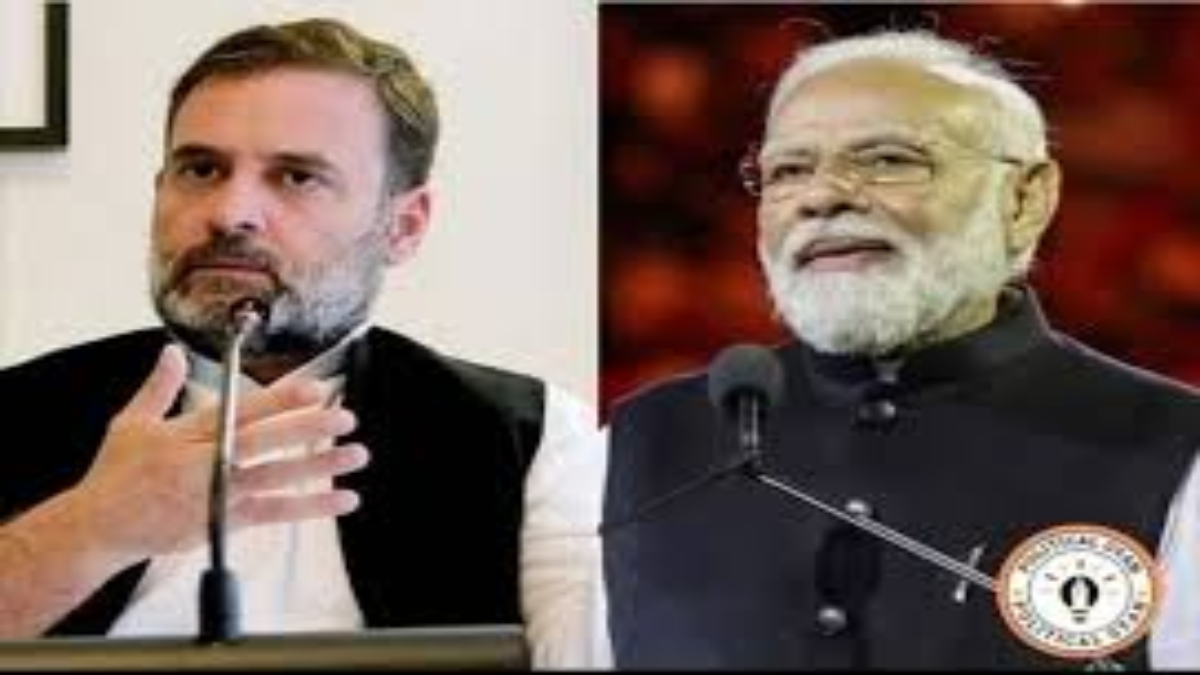
New Delhi, July 20, 2026 — In his customary address to the media ahead of the Parliament Monsoon Session, Prime Minister Narendra Modi combined national pride with a sharp political jab. While celebrating the milestone achievement of Hyderabad-based startup Skyroot Aerospace, the Prime Minister took a veiled swipe at Congress leader and Leader of the Opposition in the Lok Sabha, Rahul Gandhi, remarking that India’s real youth power is driven by 28-year-old innovators rather than any “56-year-old youngster”.
The political barbs came against the backdrop of a major victory for India’s private space industry. Over the weekend, Skyroot Aerospace successfully executed Mission Aagaman, placing its 24-metre carbon-composite orbital rocket, Vikram-1, into orbit. Lauding the achievement, PM Modi highlighted that the average age of the engineers and scientists behind this ambitious endeavor is just 28 years.
“Real Youth Power vs. Political Youth Labels”
Standing outside the Parliament building, Prime Minister Modi emphasized how young minds across the nation are taking India’s aspirations to new heights.
While the Prime Minister did not directly name Rahul Gandhi, the target of his comment was unmistakable to political observers. The opposition leader, who turned 56 recently, has long been presented by the Congress party as a voice for the younger generation. PM Modi’s remark sought to contrast political branding with the tangible, high-tech achievements of India’s gen-next entrepreneurs and engineers.
Skyroot Aerospace and the historic Vikram-1 Launch
The success that prompted the Prime Minister’s praise represents a major step forward for India’s space program. Skyroot Aerospace, founded by former ISRO engineers Pawan Kumar Chandana and Bharath Daka, launched its Vikram-1 Test Flight-1 from the Satish Dhawan Space Centre in Sriharikota.
The 24-metre rocket successfully completed all planned flight stages, including stage separations and the precise firing of its Orbital Adjustment Module (OAM), before injecting its payloads into a nearly 450-kilometer orbit. With this launch, India became one of only three countries worldwide to possess proven private orbital launch capabilities.
The Prime Minister framed this victory as a direct result of government policy shifts that opened up space technology and defense sectors to private enterprise. He noted that when given the right regulatory environment, young Indian innovators are capable of rivaling global tech giants.
A Broad Panorama of National Achievements
Beyond the space launch, PM Modi used his opening remarks to highlight a broader pattern of recent economic and technological achievements across the country. He linked these successes to structural reforms that have enabled rapid growth even amidst tough global economic conditions and ongoing geopolitical conflicts in West Asia.
Among the key milestones listed by the Prime Minister were:
- Semiconductor Expansion: The inauguration of India’s third semiconductor manufacturing plant, bringing the country closer to self-reliance in high-tech component manufacturing.
- Green Energy Innovation: The rollout of advanced green hydrogen-powered trains featuring the longest configuration and most powerful engine of their kind globally.
- Energy Infrastructure: The dedication of a massive, modern oil refinery project in Rajasthan to strengthen energy security.
- Economic Momentum: Continued strong performance with GDP growth expanding at a robust 7.7%, demonstrating resilience despite global headwinds.
Call for Calm and Productive Debates in Parliament
Transitioning from national pride to legislative business, Prime Minister Modi expressed hope that both the monsoon rains and the Monsoon Session of Parliament would prove highly productive for the country.
Addressing the expected political friction with opposition parties, PM Modi urged all Members of Parliament to focus on reasoned debate backed by logic and facts, rather than creating disruptions.
He emphasized that Parliament benefits immensely from the collective experience of seasoned leaders across all party lines, urging them to channel that knowledge toward helping India’s aspirational youth move forward.
Political Backdrop of the Monsoon Session
Despite the Prime Minister’s call for constructive dialogue, the Monsoon Session promises to be contentious. Scheduled to run until mid-August with 19 planned sittings, the session will feature crucial legislative proposals, including the Supreme Court (Number of Judges) Amendment Bill, 2026, alongside taxation and educational reform measures.
Meanwhile, the opposition, led by Rahul Gandhi, is preparing to press the government on several sensitive issues. These include recent controversies over competitive examination leaks (CBSE-NEET), public protests, regional political developments, and domestic economic pressures.
As lawmakers assemble, PM Modi’s comments set a clear tone for the government’s narrative: positioning India’s modern identity around youthful innovation, technology-led growth, and high-impact space missions. The contrast between political rhetoric and technological progress will remain a defining theme inside and outside the legislative chambers in the coming weeks.