
 marks a watershed moment in Middle Eastern)
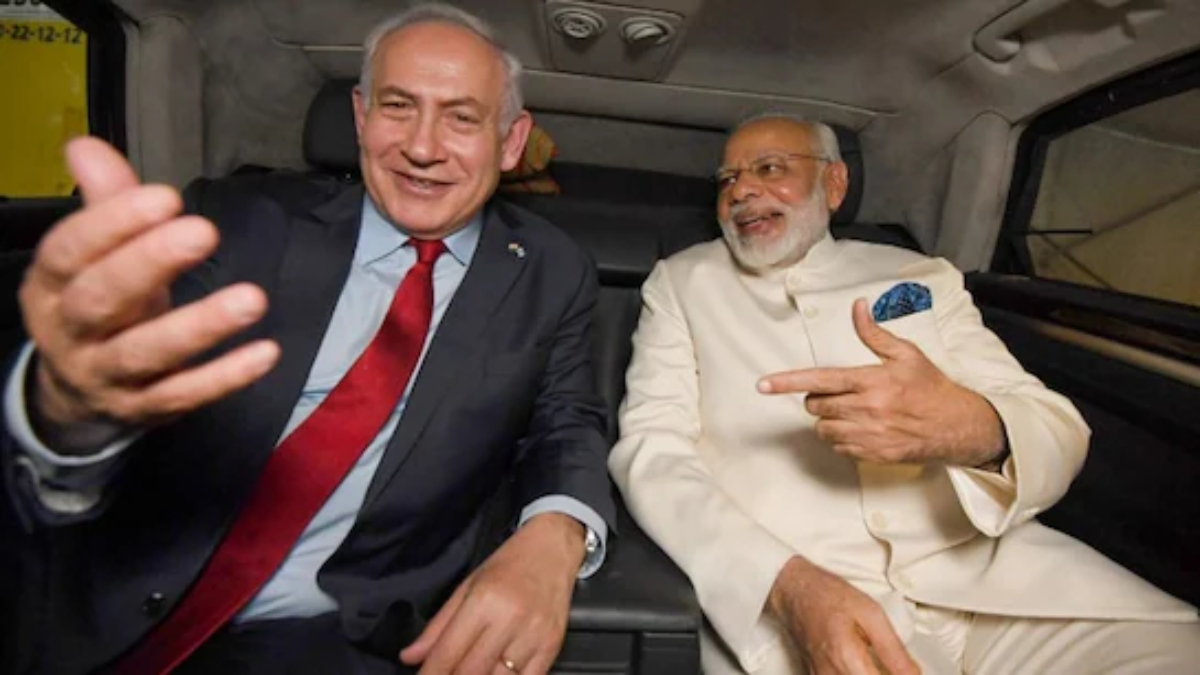
New Delhi, February 25, 2026: Prime Minister Narendra Modi’s state visit to Israel this week (February 25–26, 2026) marks a watershed moment in Middle Eastern and Indo-Pacific geopolitics. Israeli Ambassador Reuven Azar, speaking ahead of the visit, characterized the meeting as more than just a diplomatic routine, describing it as a “deepening bonhomie” between PM Modi and Israeli Prime Minister Benjamin Netanyahu.
This visit, Modi’s second to the Jewish nation since his historic 2017 trip, comes at a time of significant regional shifts and technological acceleration. The “personal chemistry” between the two leaders is being viewed as the primary engine driving a new era of the India-Israel Strategic Partnership.
A “Hexagon” of Alliances
Prime Minister Netanyahu has framed this visit within a broader diplomatic vision. He recently described a plan to build a “hexagon” of alliances, positioning India as a cornerstone alongside Arab nations, African states, and Mediterranean partners. The goal is to create a coordinated axis of like-minded democracies to counter regional radicalism and promote economic stability.
Israeli Envoy Reuven Azar echoed this sentiment, stating:
“Now, when India and Israel come together, it’s never just a meeting. It’s a partnership built on trust, powered by innovation, and guided by a clear understanding of the challenges of our time.”
Key Pillars of the 2026 Visit
The itinerary for the two-day visit is packed with high-stakes discussions and symbolic gestures:
- Address to the Knesset: PM Modi will become the first Indian Prime Minister to address the Israeli Parliament, an honor highlighting the shared democratic values of both nations.
- Defense & Security: Conversations are expected to focus on “Mission Sudarshan”—India’s ambitious air defense shield. Discussions will likely cover the integration of Israeli technologies (similar to the Iron Dome and Arrow systems) into India’s indigenous defense infrastructure.
- The FTA Momentum: Ambassador Azar indicated that both nations are moving decisively toward a Free Trade Agreement (FTA), with hopes of finalizing the first phase by the end of 2026.
- Innovation & Frontier Tech: A major “Innovation Event” in Jerusalem will focus on AI, Quantum Computing, and Semiconductors, sectors where both nations aim to lead globally.
Deepening the Strategic “Axis”
The relationship has evolved significantly since it was elevated to a Strategic Partnership in 2017. Beyond the multi-billion dollar defense trade, the “bonhomie” is now reflected in “ground-level” cooperation:
| Sector | Current Focus |
| Agriculture | 35 operational Centers of Excellence in India using Israeli drip irrigation. |
| Water | National-level cooperation on water desalination and rejuvenation of the Ganges. |
| Energy | Joint ventures in Green Hydrogen and renewable energy projects. |
| Diplomacy | Active participation in the I2U2 Group (India, Israel, UAE, USA). |
Symbolic Gestures
The visit is not without its emotional weight. The two leaders are scheduled to visit Yad Vashem, the World Holocaust Remembrance Center, and PM Modi will meet with members of the Indian diaspora. The Jerusalem Post featured PM Modi on its front page with the headline “Welcome, Modi,” reflecting the high public and political regard for the Indian leader in Israel.
As the two “resilient democracies” realign their efforts, the world watches closely. This visit doesn’t just underscore a friendship between two men; it cements a strategic axis that could define the security and economic architecture of the region for decades to come.