

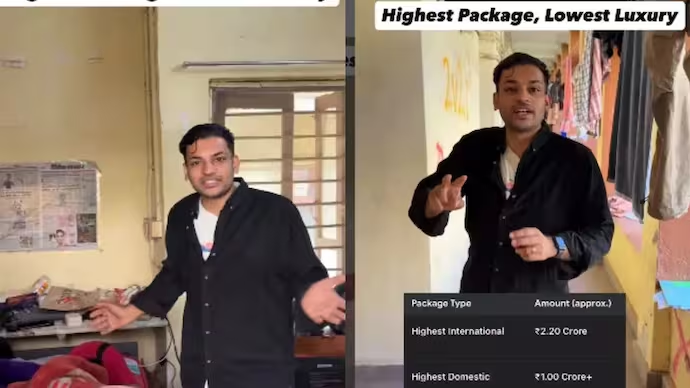
New Delhi, January 17, 2026: A stark reflection on the living conditions at one of India’s premier educational institutions has been prompted by a viral video circulating across social media platforms. The elite status of the Indian Institute of Technology (IIT) Bombay is often associated with academic excellence and lucrative career paths, yet the actual daily existence of its residents is being reconsidered in light of these recent revelations.
A Glimpse into the Dormitory Reality
In the footage that has captured widespread attention, the dilapidated state of hostel infrastructure is showcased with unsettling clarity. Cramped quarters, peeling plaster, and makeshift arrangements are observed, sparking a heated debate regarding the allocation of resources within the campus. It is suggested by the visual evidence that the prestige of the institution is not always mirrored in the basic amenities provided to the students who reside there.
The burden of academic pressure is known to be immense, but the added strain of inadequate housing is now being highlighted as a significant concern. Concerns are being raised by parents and alumni alike, as the contrast between the high entrance standards and the humble living conditions is analyzed. The narrative of the “struggling genius” is being challenged by those who believe that fundamental comfort should not be sacrificed for the sake of education.
Also Read: Tax Planning vs. Evasion: SC’s Tiger Global Verdict
Infrastructure and the Student Experience
The maintenance of historical buildings is often cited as a challenge by administration, yet the urgency for renovation is emphasized by the deteriorating state of the balconies and washrooms shown in the video. It is argued that the mental well-being of the student body is directly influenced by their physical environment. When living spaces are found to be damp or overcrowded, the quality of life is inevitably compromised, regardless of the technological advancements found in the nearby laboratories.
Questions are being directed toward the management regarding the utilization of funds and the prioritization of student welfare. While new wings and research centers are frequently inaugurated, the older hostels are perceived to have been left in a state of neglect. The viral nature of the content has ensured that these grievances are no longer confined to campus forums but are being scrutinized by the general public.
Moving Toward Accountability
A call for transparency and immediate action is being echoed across digital spaces. It is hoped that the attention garnered by the video will lead to a systematic overhaul of the residential facilities. The reputation of IIT Bombay is seen as a source of national pride, and the alignment of its infrastructure with global standards is viewed as a necessary step for the future.
The conversation remains ongoing as students continue to share their personal accounts of campus life. It is widely expected that this “reality check” will serve as a catalyst for much-needed reforms, ensuring that the next generation of engineers is supported by an environment that fosters both their health and their intellect.