

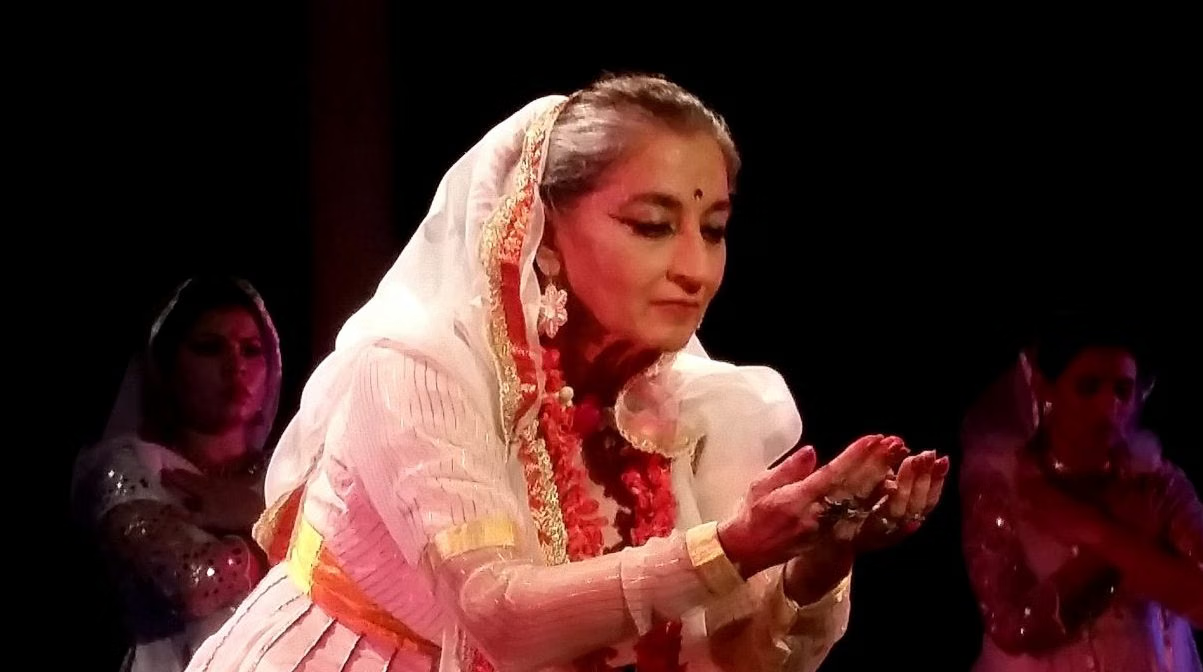
New Delhi, May 11, 2026: The recent detention and alleged manhandling of Sheema Kirmani, a legendary classical dancer and veteran human rights activist, has sparked widespread outrage across Pakistan and the international community. The incident, which occurred outside the Karachi Press Club on May 5, 2026, has become a flashpoint for discussions regarding civil liberties, the right to peaceful protest, and the treatment of cultural icons.
The Incident: What Happened in Karachi?
On Tuesday afternoon, Sheema Kirmani, 75, along with several other organizers and volunteers of the Aurat March, gathered at the Karachi Press Club (KPC) for a scheduled press conference. The purpose of the meeting was to present demands for the upcoming 2026 Aurat March and to address the “No Objection Certificate” (NOC) required for their planned rally.
Before the press conference could begin, a heavy contingent of police, including veiled female officers, blocked access to the club. According to eyewitness accounts and viral video footage:
- Physical Restraint: Kirmani was seen being forcibly removed from her vehicle and physically restrained by police personnel.
- Viral Footage: Clips circulating on social media showed the elderly activist asserting her rights, stating, “It is my political, human, and legal right to enter the press club,” while questioning the legality of the police intervention.
- Verbal Misconduct: Reports and video evidence suggested that inappropriate language was used by law enforcement during the arrest of the respected artist.
Following the confrontation, Kirmani and six other activists, including transgender rights advocate Shahzadi Rai, were taken into custody.
Government Response and Accountability
The backlash to the arrests was immediate and intense. Civil society, journalists, and human rights organizations condemned the use of force against peaceful citizens. Within hours, Sindh Home Minister Zia-ul-Hasan Lanjar ordered the immediate release of all detained activists.
In an effort to address the public outcry, the provincial government took several steps:
- Suspensions: Three high-ranking police officials were suspended pending an inquiry. These include Saddar DSP Nasir Afridi, Women Police Station SHO Hina Mughal, and Artillery Maidan SHO Nadeem Haider.
- Official Inquiry: A transparent investigation has been ordered to determine why force was used, especially since the activists were attempting to enter a private organization (KPC) rather than holding a public rally.
- Personal Apology: Minister Lanjar reportedly contacted Sheema Kirmani personally to express his regrets over the incident, reiterating a “zero-tolerance policy” against the misuse of authority.
Despite the government’s stance that Section 144 (which restricts public gatherings) was in effect due to security concerns, activists argue that a press conference within a walled facility does not violate such orders.
Who is Sheema Kirmani?
For those following the viral news, the name Sheema Kirmani carries deep historical and cultural weight in South Asia. She is not merely a “Pasoori dancer”—a title recently popularized by her appearance in the hit Ali Sethi music video—but a pioneer of classical dance and feminist activism in Pakistan.
A Legacy of Artistic Defiance
Born in Rawalpindi in 1951, Kirmani dedicated her life to preserving Bharatanatyam, Kathak, and Odissi in a climate that was often hostile to these art forms. Her activism became particularly prominent during the military rule of General Zia-ul-Haq in the late 1970s and 80s.
- Defying Bans: When classical dance was discouraged and viewed by some as “un-Islamic” or “foreign,” Kirmani continued to perform in her trademark sari and bindi, using her art as a form of secular protest.
- Tehrik-e-Niswan: In 1979, she founded the cultural and feminist organization Tehrik-e-Niswan (The Women’s Movement). The group uses theatre and dance to raise awareness about gender inequality, domestic violence, and labor rights.
The ‘Pasoori’ Connection
While her work has spanned decades, a new generation of global audiences recognized her in 2022 through the Coke Studio song “Pasoori.” In the video, Kirmani performs a graceful and evocative dance that symbolized the bridge between tradition and modern expression, further cementing her status as a cultural bridge-builder.
Recognition and Resilience
Kirmani’s contributions have not gone unnoticed. She was nominated for the Nobel Peace Prize in 2005 as part of the “1,000 PeaceWomen” project. In 2023, the Government of Pakistan honored her with the Pride of Performance award, the country’s highest civil literary and artistic honor.
Why This Incident Matters
The manhandling of a 75-year-old Pride of Performance recipient has highlighted what the Human Rights Commission of Pakistan (HRCP) describes as a “systematic denial of public space.”
The incident has raised several critical questions:
- The Right to Assembly: If a press conference can be shut down by force, what does it mean for the future of political dissent in Karachi?
- Treatment of Elders: The physical dragging of a senior citizen and respected artist has touched a nerve in a society that prides itself on the respect of elders.
- The 2026 Aurat March: Despite the arrests, organizers have vowed to proceed with their march, which is scheduled to take place at Sea View, Karachi.
Conclusion
Sheema Kirmani has spent over fifty years “dancing through the dust,” as some admirers say—refusing to let her art or her voice be silenced by political pressure. This recent incident in Karachi serves as a reminder of the ongoing tension between state authority and the rights of activists in Pakistan. As the inquiry into the police conduct continues, the image of Kirmani standing her ground outside the Press Club has already become a new symbol of the very resilience she has championed her entire life.