

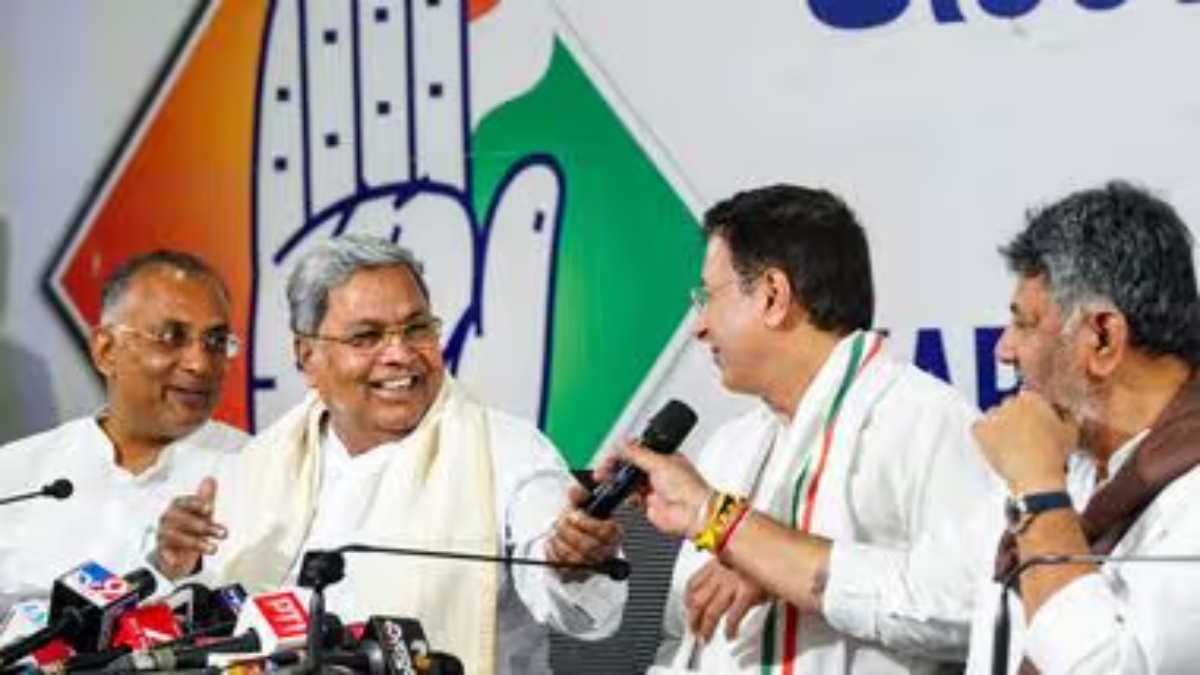
New Delhi, May 29, 2026: In a move that marks a massive political shift in Karnataka, veteran Congress leader Siddaramaiah arrived at 10, Janpath in New Delhi on Friday morning. The visit came less than twenty-four hours after his high-profile resignation as Chief Minister. Accompanied by his son, Yathindra, and Congress General Secretary Randeep Singh Surjewala, Siddaramaiah held detailed discussions with Congress Parliamentary Party chairperson Sonia Gandhi and senior leader Rahul Gandhi. The high-stakes meeting was framed not as a rebellion, but as a deliberate transition of power.
The atmosphere around the meeting was a blend of gratitude and hard political bargaining. Siddaramaiah used the opportunity to formally thank Sonia Gandhi for her long-standing trust, dating back to 2006 when he broke away from the Janata Dal (Secular) to join the Congress rank and file. However, sentiment quickly gave way to strategy. The central talking points of the meeting focused entirely on managing the fallout of his exit, securing the political future of his loyalists, and outlining an extensive cabinet reshuffle that will fundamentally alter the state’s governance.
Deciphering the Resignation: Why Now?
Siddaramaiah’s resignation on Thursday afternoon concluded a quiet but intense multi-year internal power struggle within the Karnataka Congress. Since the party’s landslide victory in May 2023, rumors of a mid-term leadership pact between Siddaramaiah and his powerful deputy, D.K. Shivakumar, had consistently hovered over the state. By stepping down now, Siddaramaiah honored an organizational understanding brokered by the Congress high command, a move the party publicly praised as “selfless.”
Timing played an essential role in this transition. With the next Assembly elections scheduled for 2028, the party leadership recognized that the 78-year-old veteran would be past 80 by the time the state votes next. Passing the baton to a younger leader gives the next administration adequate runway to stabilize. Furthermore, upcoming local body elections for five major municipal corporations under the Greater Bengaluru Authority (GBA) mean the party needs a highly mobilized organizational machine—a specialty associated with D.K. Shivakumar.
The Cabinet Reshuffle and Balancing the Power Scales
Because the resignation of a Chief Minister legally dissolves the entire Council of Ministers, the state government must be completely reconstructed. This reality has thrown open the gates for a sweeping cabinet reshuffle, which served as the primary agenda item during Siddaramaiah’s Delhi visit. The outgoing Chief Minister is working hard to ensure his camp does not lose its influence under the incoming administration.
The high command is walking a tightrope. To maintain political stability and avoid creating a disgruntled alternative power center around Siddaramaiah, the party must give his camp an equitable share of power. Reports suggest that several low-performing ministers from the outgoing cabinet will likely be dropped to make way for fresh faces, while up to four Deputy Chief Ministers could be appointed to maintain a delicate social equilibrium.
Staying Back in Karnataka: Declining the Center
One of the most defining aspects of Siddaramaiah’s post-resignation strategy is his absolute refusal to step away from state politics. The Congress high command initially offered him a prestigious Rajya Sabha seat and a prominent organizational role in New Delhi to facilitate a clean break. However, the veteran leader firmly declined the offer.
Siddaramaiah has made it clear to both Rahul Gandhi and Congress President Mallikarjun Kharge—whom he met later on Friday—that his heart remains in Karnataka. By choosing to stay in Bengaluru as a legislator, he ensures that his immense political clout remains a factor on the ground. While this guarantees that his massive voter base stays tethered to the party, it also introduces a delicate challenge for his successor, who will have to govern under the watchful eye of one of the state’s most formidable political operators.
Looking Ahead: D.K. Shivakumar’s Big Moment
As Siddaramaiah finalized his exit strategy with the Gandhis, his long-time rival and current Deputy Chief Minister, D.K. Shivakumar, traveled separately to Delhi. Shivakumar is widely expected to succeed Siddaramaiah as the next Chief Minister of Karnataka. Known as the party’s ultimate troubleshooter, Shivakumar is scheduled to hold distinct, intense negotiations with Congress General Secretary (Organisation) K.C. Venugopal to finalize the blueprint of his new government.
The transition marks a classic changing of the guard in southern politics. While Siddaramaiah built his legacy as a mass leader representing backward communities, Shivakumar brings unmatched organizational skill, financial muscle, and deep support from the influential Vokkaliga community.
However, Karnataka’s political history shows that mid-term leadership changes are historically difficult to manage. Only three Chief Ministers in the state’s history have ever completed a full five-year term. The Congress high command has managed a smooth and remarkably civil handover on paper, symbolized by images of the two leaders embracing before Siddaramaiah left office. The true test of this transition will unfold over the coming weeks, as the party attempts to announce a reshuffled cabinet that satisfies both factions without fracturing the unity that brought them to power.