

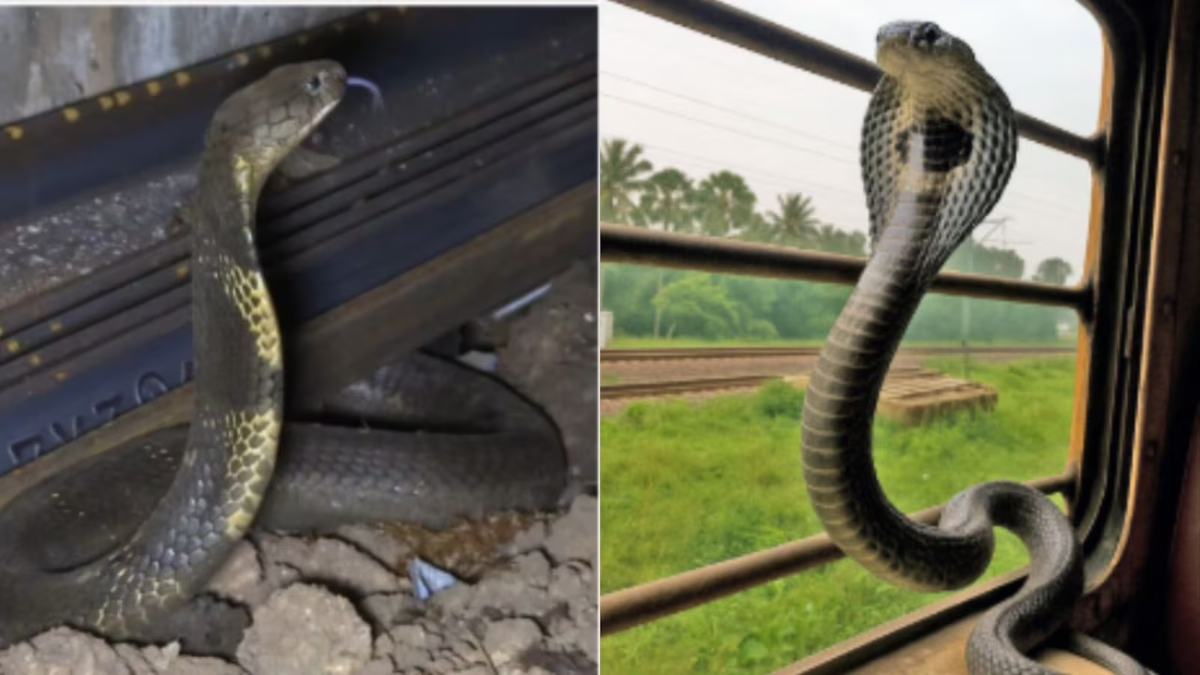
In a twist that sounds more like a Hollywood script than a scientific study, researchers have confirmed that the world’s longest venomous snake is increasingly using India’s massive railway network as a high-speed transit system. A new study published in the journal Biotropica (January 2026) reveals that King Cobras (Ophiophagus kaalinga) are inadvertently hitching rides on trains, appearing in urban and coastal areas far from their natural forest homes.
The Science Behind the “Stowaways”
Led by Indian researcher Dikansh Parmar and an international team, the study analyzed over 20 years of rescue records and sightings in Goa. While King Cobras typically prefer the dense, humid forests of the Western Ghats, the team documented 47 unique locations where these apex predators were found—many of which were “ecologically improbable.”
Specifically, five major sightings occurred directly on or near railway infrastructure. One 10-foot cobra was found sheltering among concrete pillars at Chandor railway station, while others have been spotted peering from train windows or coiled near tracks in Vasco da Gama.
Why are they “Taking the Train”?
Researchers believe the snakes aren’t looking for a vacation; they are seeking two things: food and shelter. * The Lure of Prey: Rail yards and stationary freight wagons often attract rodents, a primary food source for many snakes (though King Cobras primarily eat other snakes).
- Accidental Boarding: During the night, a cobra seeking a dark, cool place to rest may crawl into a freight car or the undercarriage of a passenger coach.
- High-Speed Conduits: Once the train moves, the snake is transported dozens or hundreds of kilometers in a matter of hours. This “passive dispersal” allows them to bypass natural barriers like mountains or dry plains.
The Risks: A Double-Edged Sword
This phenomenon poses significant dangers to both the reptiles and the public:
| Risk Factor | Impact on Wildlife | Impact on Humans |
| Habitat Mismatch | Snakes arrive in dry, urban areas where they face starvation or dehydration. | Increased chance of accidental encounters in places where people don’t expect venomous snakes. |
| Safety Concerns | High mortality rates due to being crushed by machinery or killed out of fear. | India currently lacks a specific antivenom for the King Cobra, making bites potentially fatal. |
| Invasive Potential | Snakes may establish populations in new, unsuitable areas, disrupting local ecosystems. | Panic among commuters; several recent incidents have forced the evacuation of entire AC coaches. |
A Growing Trend?
This isn’t just limited to Goa. In late 2024, a 10-foot King Cobra was rescued from a tree in Chanakyapuri, New Delhi—the first such sighting in the capital’s history. Experts believe it traveled over 350 km from Uttarakhand, likely hidden in a vehicle or construction shipment.
With the rise of social media and smartphones, more “snakes on a train” videos are surfacing, highlighting a need for better monitoring of rail hubs. Conservationists are now calling for “wildlife-sensitive” railway planning to ensure that as India expands its infrastructure, its most iconic reptiles don’t end up on the wrong track.