

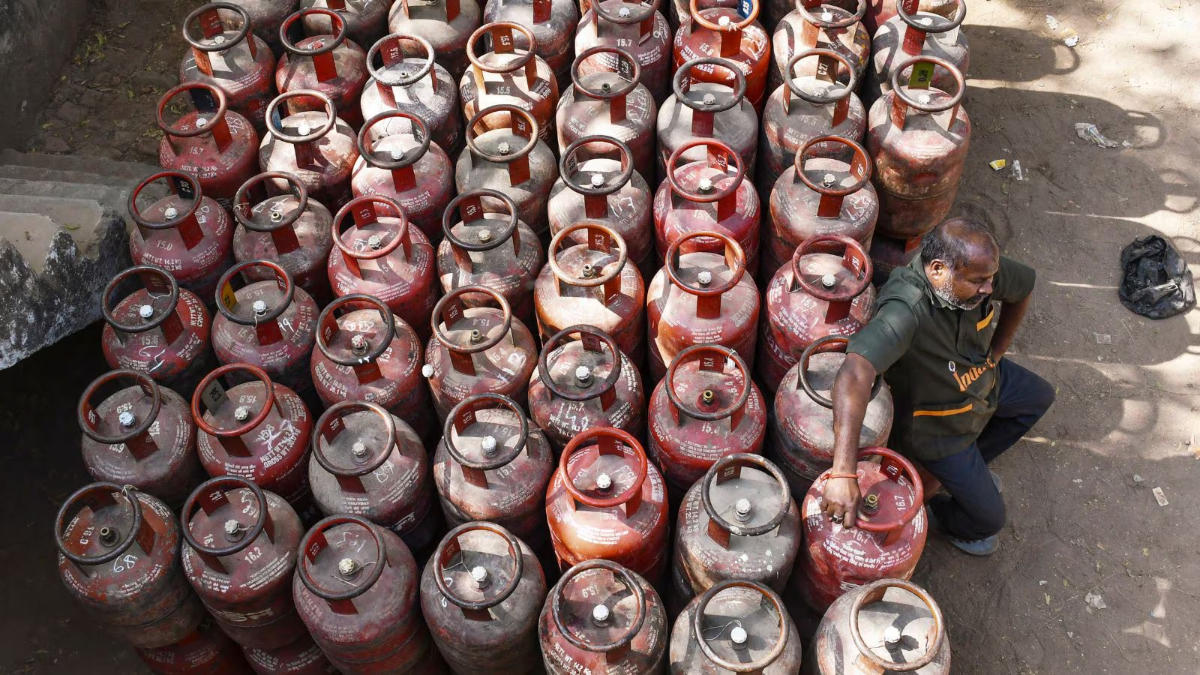
SHIMLA – The colonial charm of Shimla’s Lakkar Bazaar, usually alive with the aroma of steaming siddu, sizzling paranthas, and brewing tea, has been replaced by an eerie silence and the sight of downed shutters. A severe shortage of commercial LPG (Liquefied Petroleum Gas) cylinders has pushed the local food industry to the brink, forcing several small eateries to close their doors indefinitely.
While the government maintains that the supply of domestic gas remains stable, the commercial sector—the backbone of the hill station’s economy—is reeling under a supply chain “choke” triggered by escalating geopolitical tensions in West Asia.
Small Businesses on the Edge
In the narrow lanes of Lakkar Bazaar, just a stone’s throw from The Ridge, the impact is visible. Lokinder, who runs a popular local dhaba from a rented premise, is among those who have had to send their staff home.
“I have only one cylinder left, and the agency has refused to provide a refill,” Lokinder said. “Our entire kitchen depends on gas. Without it, we cannot serve a single plate of food. If the situation doesn’t improve within a few days, paying the monthly rent will become impossible.”
Similarly, Ram Sharma, owner of the well-known Amar Bhojanalya, was forced to halt operations on Thursday evening. For these small-scale entrepreneurs, the “irregular” supply is not just a business hurdle; it is a threat to their survival.
The “Essential” Priority Dilemma
The crisis stems from a strategic decision by oil marketing companies to prioritize essential sectors. According to Mohammad Amid, Divisional Sales Head at Indian Oil Corporation (IOC), the available stock is being diverted to:
- Government and private hospitals
- Educational institutions and hostels
- Security and essential services
“While there are about 55,000 commercial connections in Himachal Pradesh, the supply of 47 kg and 425 kg cylinders has been significantly hit,” Amid explained. To mitigate the blow to the tourism sector, distributors have been instructed to provide 19 kg commercial cylinders to hotels and eateries from a limited reserve of approximately 12,000 units.
Adaptive Measures and “Crisis Menus”
In a desperate bid to stay afloat, some business owners are shifting their strategies:
- Reduced Menus: Many eateries have stopped serving gas-heavy items like slow-cooked daals and deep-fried snacks, focusing instead on dishes with shorter cooking times.
- Electric Transition: Hotelier Sushant Nag reported ordering commercial induction cooktops from Chandigarh at inflated prices to bypass the gas requirement.
- Alternative Fuels: The State Pollution Control Board has temporarily eased restrictions, allowing the use of kerosene, coal, and biomass pellets to prevent a total industry collapse.
Government Response and Outlook
Himachal Pradesh Chief Secretary Sanjay Gupta has urged the public to avoid “panic booking,” which has recently crashed the servers of oil marketing companies. He assured that approximately 73,000 domestic cylinders are currently in stock, and the government is exploring a 20% diversion of private domestic supplies toward commercial establishments.
However, for the workers at Lakkar Bazaar, these assurances feel distant. “Many attendants of patients at the Indira Gandhi Medical College (IGMC) depend on us for their meals,” said Laxmi Kant, whose eatery has been shut for two days. “If we stay closed, they go hungry. We need a solution now, not next week.”
As the peak tourist season approaches, the “Queen of Hills” faces a grim choice: stabilize the fuel lifelines or watch its famous hospitality industry fade into the mountain mist.