

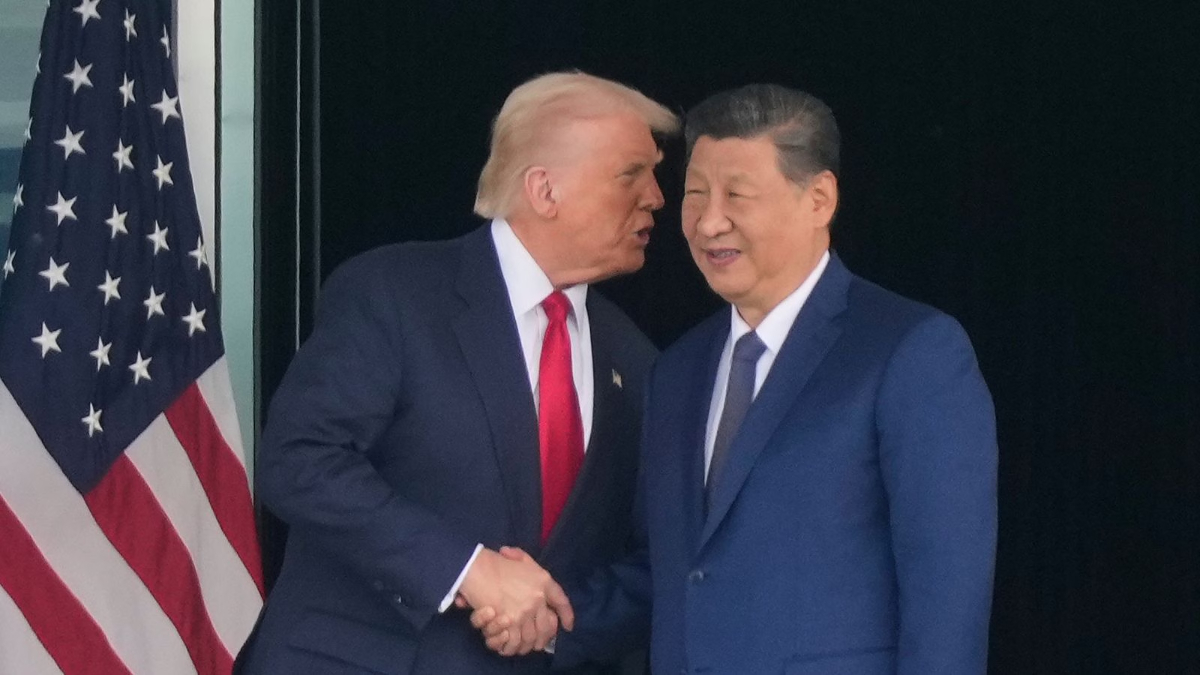
New Delhi, May 14, 2026 – In a moment of high-stakes diplomacy that has the world holding its breath, Chinese President Xi Jinping issued a blunt and sobering warning to U.S. President Donald Trump on Thursday: mishandling the issue of Taiwan could push the world’s two largest superpowers into a direct military conflict.
The warning came during the first day of a landmark two-day summit in Beijing, marking Trump’s first visit to the Chinese capital since 2017. While the meeting began with the usual pomp—cannons firing in Tiananmen Square and children waving flags—the rhetoric inside the Great Hall of the People quickly shifted to the “red lines” that define the modern era of superpower rivalry.
The Taiwan “Red Line”
President Xi did not mince words when discussing the self-governed island, which Beijing claims as its own territory. According to state media reports, Xi described Taiwan as the “most important and sensitive issue” in the U.S.-China relationship.
“The Taiwan question is the core of China’s core interests,” Xi reportedly told Trump. “If handled well, bilateral relations can remain stable. If mishandled, the two nations could collide or even come into conflict, pushing the entire relationship into a highly perilous situation.”
Xi emphasized that “Taiwan independence” is fundamentally incompatible with peace in the region. This stern message comes at a time when the U.S. has increased military aid to the island and high-ranking officials in the Trump administration—including Secretary of State Marco Rubio—have historically been vocal supporters of Taiwan’s security.
Trump’s Balancing Act
President Trump, known for his “America First” approach and a penchant for personal rapport, struck a more optimistic, if slightly ambiguous, tone. Calling Xi a “friend” and the gathering the “biggest summit ever,” Trump expressed confidence that the two leaders could resolve their differences.
However, the U.S. delegation arrived with a heavy agenda. Accompanying the President are tech titans like Elon Musk (Tesla) and Jensen Huang (Nvidia), signaling that while security is the headline, the “business of America” is the subtext. Trump is seeking:
- Trade Concessions: Pushing for massive Chinese purchases of American soybeans, LNG, and Boeing aircraft.
- Tech Access: Negotiating the flow of high-end semiconductors, including Nvidia’s H200 chips, which have been a point of contention in the ongoing “chip wars.”
- Global Stability: Seeking Beijing’s help in navigating the fallout from the conflict in Iran and the resulting energy shocks affecting global markets.
A World in Crisis
The summit takes place against a backdrop of global instability. With the Iran conflict threatening the Strait of Hormuz—a vital artery for China’s oil supply—both leaders are under immense domestic pressure.
| Issue | China’s Perspective | U.S. Perspective |
| Taiwan | A “red line” and internal matter. | A democratic partner requiring “deterrence” support. |
| Economy | Grappling with a real estate collapse and falling consumption. | Battling inflation and a 33% presidential approval rating. |
| Technology | Seeking self-reliance in AI and semiconductors. | Limiting China’s access to “dual-use” military tech. |
The “Thucydides Trap”
Xi Jinping also urged the U.S. to “transcend the Thucydides Trap”—the historical theory that a rising power and an established power are destined for war. He argued that the world is big enough for both countries to prosper and that they should be “partners, not rivals.”
But for the U.S. side, partnership requires more than rhetoric. Secretary of State Marco Rubio, a long-time China hawk, is reportedly pushing for Beijing to take a more active role in resolving the Iran war, which has sent global oil prices spiraling.
What Happens Next?
As the summit moves into its second day, the world is watching for “concrete deliverables.” Will Trump secure the trade deals he needs to boost his popularity ahead of the November 2026 midterms? Or will the fundamental disagreement over Taiwan continue to cast a shadow over the Pacific?
The optics of the meeting—the handshakes, the state banquet, and the visit to the Temple of Heaven—suggest a desire for “managed rivalry” rather than total decoupling. However, Xi’s warning serves as a stark reminder: in the 21st century, the margin for error in diplomacy has never been thinner.
The takeaway is clear: While the two leaders can talk trade and tech over dinner, the “perilous situation” regarding Taiwan remains an unresolved flashpoint that could, if triggered, change the course of history.