

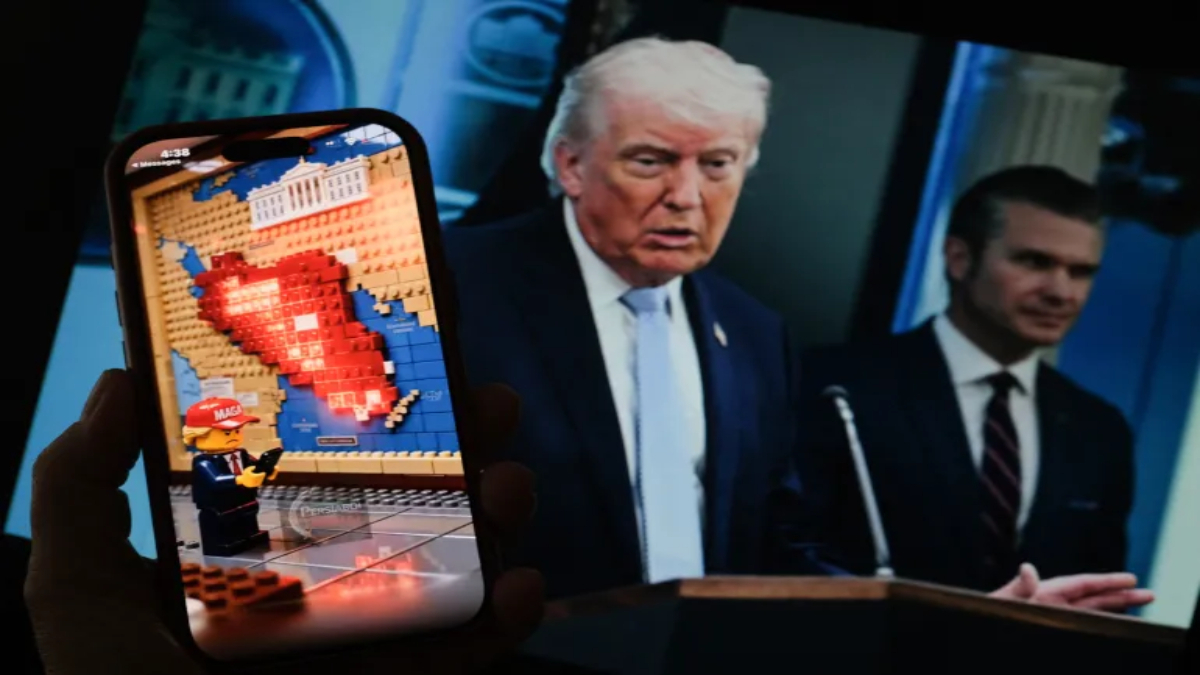
New Delhi, April 17, 2026: In the modern theater of war, the most powerful weapons aren’t always missiles or drones—sometimes, they are plastic bricks and AI-generated pixels. As of April 2026, a bizarre new chapter in psychological warfare has unfolded: Iran’s “Lego War.”
Through a series of high-quality, AI-generated animations titled “One Vengeance for All,” Tehran has managed to bypass traditional media gatekeepers, reaching millions of Western viewers by wrapping heavy political messaging in the playful, familiar aesthetic of a children’s toy.
The Rise of “Slopaganda”
The term “slopaganda”—a blend of “AI-generated slop” and “propaganda”—has become the buzzword of the 2026 conflict. At the heart of this movement is Explosive Media (also known as Akhbar Enfejari), an Iranian digital enterprise that recently admitted to the BBC that the Iranian government is a direct “customer” for their viral content.
Their most successful production, “One Vengeance for All,” is a two-minute masterclass in narrative framing. Using Generative AI to mimic the look of Lego minifigures, the video depicts a historical “indictment” of the United States. It blends decades of grievances—ranging from the 1988 downing of Iran Air Flight 655 to the atomic bombings of Hiroshima—into a single, cohesive story of “justice” rather than just military aggression.
Why the Lego Look Works
The choice of a toy aesthetic is a calculated move to win the information war. Information security experts point to three main reasons why these videos have become “inescapable artifacts” of the war:
- Bypassing Algorithms: Social media platforms like TikTok, Instagram, and YouTube use automated filters to block violent war footage. However, AI-generated Lego figures are often flagged as “playful” or “satirical,” allowing the videos to spread for days before human moderators intervene.
- The Gaming Aesthetic: The videos use fast-paced editing, tight cuts, and “micro-expressions” on the plastic faces. This style mirrors Western gaming culture and action movie trailers, making it naturally appealing to younger audiences who would otherwise ignore state-run news broadcasts.
- The Humiliation Factor: By depicting President Donald Trump and other world leaders as tiny plastic toys, the videos strip away their authority. One viral clip shows a Lego-version of Trump being “toppled” as American landmarks fall in a shower of colored blocks.
The Climax: A New Type of “Red Button”
The narrative climax of “One Vengeance for All” is particularly striking. One by one, figures representing different historical victims step forward to press a red button. With each press, an Iranian missile—modeled with technical precision after real-world weapons like the Fattah-1 and Haj Qasem—is launched.
The video concludes with the U.S. Capitol, the Pentagon, and the Statue of Liberty collapsing into piles of plastic bricks. The message is clear: the image of American dominance is as fragile as a toy set, easily dismantled “block by block.”
Trump vs. The Meme Machine
The White House has not been silent. Press Secretary Karoline Leavitt recently noted that official U.S. videos have generated over 2 billion impressions. However, analysts argue that Iran’s approach is more effective at “environmental” persuasion. While the White House projects traditional military might, Iran projects a “David vs. Goliath” story that resonates with anti-war sentiment globally.
The conflict has even led to reports of President Trump himself reacting to these AI-generated clips. One report suggests the administration was forced to clarify that an AI-generated video of a U.S. naval ship being destroyed—which had gone viral—was, in fact, “Lego-inspired slop” and not a real-world event.
The Legal Gray Area
The Lego Group has repeatedly distanced itself from these productions, stating that it does not authorize the use of its brand for political propaganda. However, because the videos are entirely AI-generated and do not use physical bricks, legal action is difficult. There is no “trademark” on a 3D-rendered plastic aesthetic, leaving the company with few options beyond symbolic condemnation.
Impact on the Ground
Does a video of a plastic toy change the course of a war? Perhaps not directly. But as Time Magazine recently noted, the “deeper effect is environmental.” By turning war into a form of viral entertainment, Iran has successfully complicated the narrative.
For millions of social media users, the “Vengeance for All” campaign has rebranded Iranian military actions as a form of global “resistance,” proving that in 2026, the battle for the mind is being fought one brick at a time.