

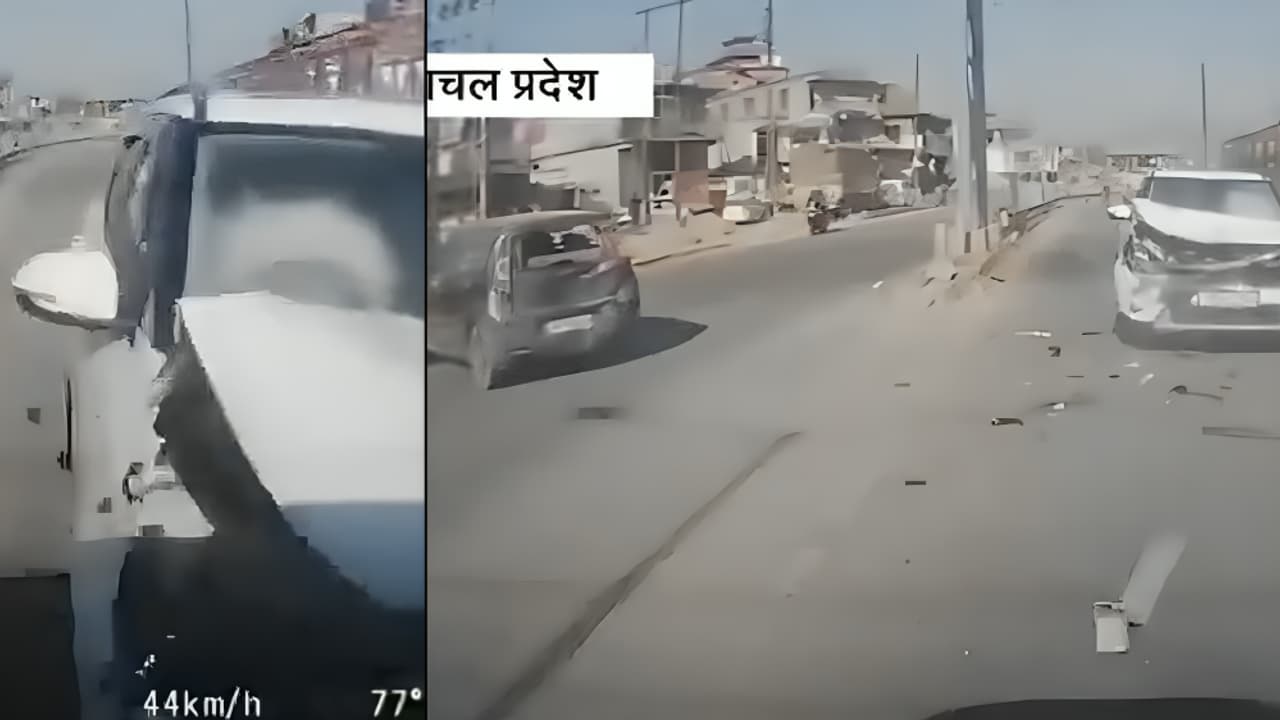
New Delhi, January 10, 2026: The fragile balance between tourism and safety in the Himalayas has been brought under intense scrutiny following a dramatic three-car collision on a narrow mountain pass. On January 10, 2026, a dashcam video from a trailing vehicle captured the moment three SUVs were involved in a high-speed chain reaction near a blind curve in Himachal Pradesh. The footage, which has since amassed millions of views, shows the lead vehicle braking sharply to avoid a landslide patch, only to be rear-ended by two following cars that were unable to shed their momentum on the slippery, steep gradient.
The Physics of the Peak: Speed vs. Braking
A fierce technical debate has been triggered among automotive enthusiasts regarding the role of modern braking systems in high-altitude environments. It was observed in the video that the secondary vehicles suffered from significant “brake fade,” a condition where the stopping power of a car is diminished due to the thin air and overheating on long descents. Experts argued that the drivers appeared to be relying solely on foot brakes rather than utilizing engine braking, a critical technique for mountain driving. The high speed of the convoy, combined with the low-grip surface, created a “physics trap” where a collision became mathematically inevitable once the lead car stopped.
Also Read: Amitabh Bachchan Mobbed by Thousands at Surat Airport
Dangerous Road Design Under the Microscope
Beyond driver error, the viral incident has cast a harsh light on the current state of Himalayan road infrastructure. It was pointed out by civil engineers that the section of the road lacked sufficient safety barriers and “run-off” areas, leaving the vehicles with nowhere to go but into each other or toward the precipice. The absence of convex mirrors at the blind curve was also highlighted as a major design flaw that contributed to the lack of situational awareness. For many, the video serves as a visual indictment of rapid road expansion projects that prioritize connectivity over safety margins.
The Tourism Surge and “Flatland” Driving Habits
The influx of “flatland” drivers—tourists from the plains who are unaccustomed to the nuances of mountain hairpins—was identified as a secondary cause of the tension. It was noted by local residents that visitors often treat the winding Himachal highways like six-lane expressways, failing to maintain the mandatory three-second gap between vehicles. The “overtaking culture” seen in the video, where cars were bunched too closely together, has been criticized as a recipe for disaster. Local authorities have been urged to implement mandatory “Mountain Driving Orientation” or stricter speed monitoring for out-of-state vehicles.
A Wake-Up Call for Himalayan Travelers
As of January 10, 2026, the video continues to circulate as a cautionary tale for those planning winter trips to the hills. While no fatalities were reported in this specific incident, the mangled remains of the luxury SUVs serve as a stark reminder of nature’s unforgiving laws. The debate remains active, with a growing consensus that a combination of stricter licensing, better road engineering, and a fundamental shift in driver behavior is required to prevent the “Devbhoomi” from becoming a site of recurring tragedy. For now, the dashcam footage stands as a silent witness to a disaster that could have been avoided with a simple reduction in speed.