

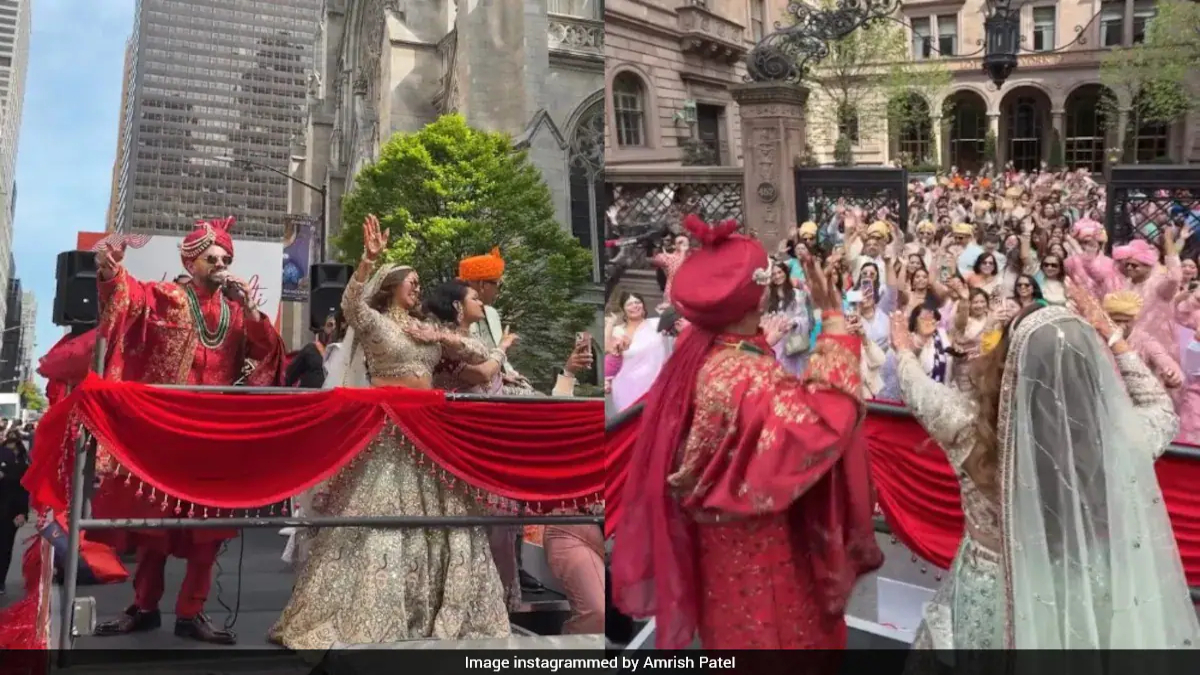
29, April 2026: In a stunning display of cultural fusion and pure, unadulterated joy, the heart of Manhattan—specifically the iconic Fifth Avenue—was recently transformed into a vibrant, high-energy stage. For a few hours, the world’s most prestigious shopping thoroughfare, usually synonymous with high-end luxury, Gucci displays, and the relentless hum of urban traffic, became the backdrop for a spectacular “Big Fat Indian Wedding” procession.
This was not just any baraat (the traditional groom’s wedding procession); it was an impromptu concert, a cultural statement, and a viral sensation that has captured the internet’s imagination across two continents.
A Wedding Like No Other
The stars of this grand spectacle were Pankti Doshi, a genetic counsellor, and Dr. Avish Jain, a medical journalist and professional singer. Rather than opting for a traditional entrance with a pre-recorded playlist or a hired DJ truck, the couple decided to take center stage themselves.
Standing atop an open-air vehicle, the couple led their procession not just as the bride and groom, but as the main performers. With microphones in hand and a crowd of guests in vibrant, traditional Indian ethnic wear dancing joyously behind them, they turned a simple transit from one point to another into a live concert. The groom, Dr. Jain, showcased his vocal talents, belting out popular Bollywood chartbusters that echoed through the canyons of Midtown Manhattan.
The video of the event, captured by renowned wedding content creator Amrish Patel, shows the couple in their element—smiling, singing, and fully immersed in the celebration. The sight of saris and sherwanis swirling against the grey stone architecture of Fifth Avenue offered a surreal and beautiful juxtaposition that quickly went viral on social media platforms like Instagram, clocking in over a million views in just days.
More Than Just a Celebration
While the viral clip highlights the joy of the couple, it also serves as a fascinating case study in how the Indian diaspora is reshaping the urban landscape of global cities. Traditionally, the baraat is a boisterous affair—a sensory overload of rhythmic dhol beats, dancing, and elaborate outfits meant to herald the arrival of the groom at the wedding venue.
To bring this level of energy to the streets of New York is no small feat. Fifth Avenue is not merely a street; it is a global landmark. It is home to some of the world’s most expensive real estate and retail hubs. Hosting an event of this scale here requires meticulous planning. As reports have clarified, the couple did not simply “take over” the street in a disorderly fashion. The event was part of a coordinated effort, involving the necessary city permits and cooperation with local authorities, including the New York Police Department (NYPD).
This level of professional planning is becoming a hallmark of modern destination weddings, where couples increasingly want to balance the authenticity of their cultural traditions with the logistical requirements of major metropolitan cities.
The Digital Reaction: A Mix of Awe and Debate
The internet, as is its nature, has been divided in its reaction to the spectacle. On one hand, there is widespread appreciation for the couple’s courage and creativity. Users across social media have flooded the comments section with praise, calling the entrance “joyful,” “empowering,” and a beautiful example of how culture can transcend borders. Many viewers, particularly those from the Indian diaspora, expressed a sense of pride seeing their heritage showcased on such a prestigious global stage.
However, the event has also sparked a necessary conversation about the use of public spaces in busy cities. Some critics have raised questions regarding the scale of such celebrations and whether it constitutes a disruption to the daily lives of residents and tourists. The debate touches on a larger issue: how do major cities like New York, which are hubs of diverse cultures, balance the rights of communities to celebrate their identity with the need to maintain the flow of a bustling city?
Regardless of the debate, the event has undeniably succeeded in its primary goal: creating a once-in-a-lifetime memory for the couple. In the words of one observer, the baraat wasn’t just a wedding entrance; it was a “declaration of presence.”
A Growing Trend of “Desi” Takeovers
This is not the first time New York City has seen the vibrant colors of an Indian wedding spilling onto its streets. Last year, a similar video made waves when nearly 400 people participated in a baraat that danced through the heart of the Financial District, temporarily turning Wall Street into a celebration of music and dance.
These events underscore a significant shift in how weddings are being perceived and executed. The “Destination Wedding” has evolved from simple beach ceremonies to “Cultural Immersions,” where the destination itself—be it a street in Manhattan or a palace in Rajasthan—becomes a character in the wedding story.
The Takeaway
As the video continues to circulate, it serves as a powerful reminder of the global nature of modern traditions. Pankti and Avish’s wedding was more than just a union of two people; it was a synthesis of East and West, tradition and modernity, and, most importantly, a testament to the fact that when we celebrate with authenticity, the entire world stops to watch.
For those planning their own big day, this viral moment offers a clear lesson: whether you choose a quiet, intimate ceremony or a grand procession down the world’s most famous avenue, the most memorable weddings are those that reflect the true spirit of the couple.
And for the rest of us? We have a new gold standard for wedding entrances. The bar has been set, and it’s singing loudly on Fifth Avenue.