
)
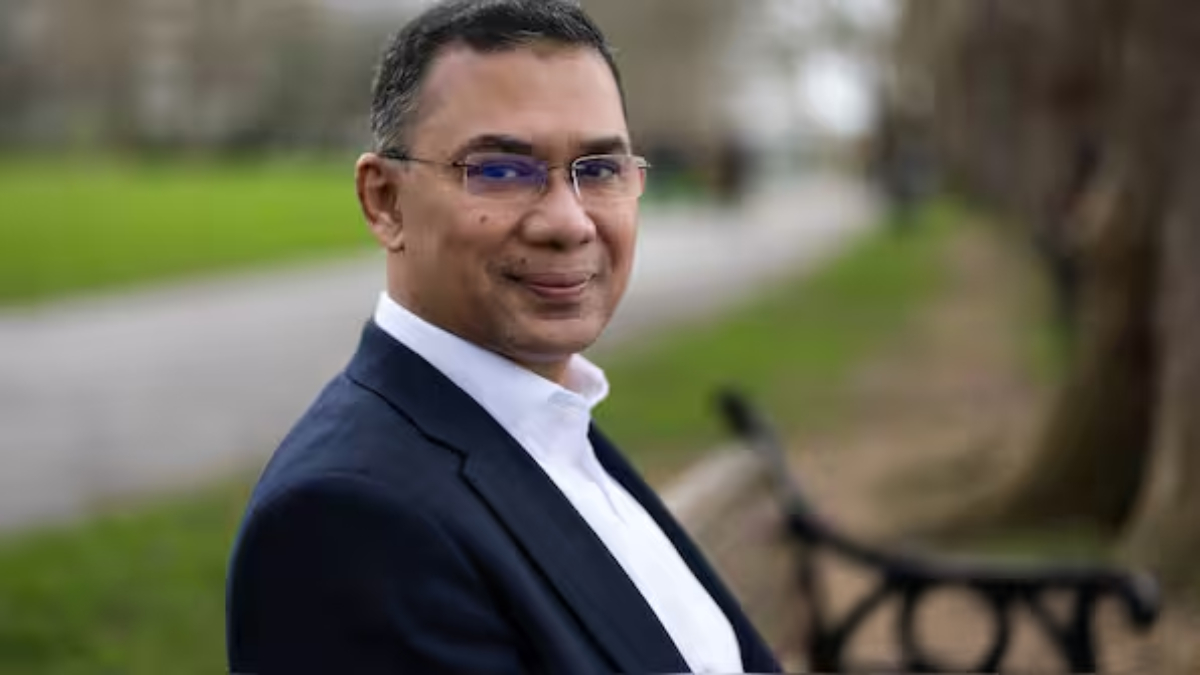
December 25, 2025, a massive wave of red and green flooded the streets of Dhaka as Tarique Rahman, the acting chairman of the Bangladesh Nationalist Party (BNP), touched down at Hazrat Shahjalal International Airport. Ending nearly 18 years of self-imposed exile in London, the man often dubbed the “Dark Prince” has returned to a nation transformed.
While his return marks a lifeline for the BNP, it is also being quietly welcomed in New Delhi as a potential stabilizing force in a region fraught with uncertainty.
A Strategic Reset with New Delhi
For years, the BNP was viewed with suspicion by India due to its historical ties with hardline groups. However, 2025 has seen a remarkable diplomatic thaw. As the interim government under Muhammad Yunus struggled with rising anti-India sentiment and pivoted toward Pakistan, New Delhi began looking for a “third way.”
Why Tarique’s return is seen as good news for India:
- Countering Radicalization: Rahman has recently taken a hard stance against the Jamaat-e-Islami, refusing to form an electoral alliance with them. For India, a strong, nationalist BNP that keeps extremist elements at bay is far preferable to a fractured political landscape where radical groups gain ground.
- The “Bangladesh First” Policy: Rahman has championed a foreign policy stance he calls “Not Dilli, Not Pindi”—emphasizing sovereignty while signaling that he is ready to do business with India on equal terms.
- Direct Engagement: In a rare gesture of warmth, Prime Minister Narendra Modi recently offered medical support for Rahman’s mother, Khaleda Zia. The BNP’s “sincere gratitude” in response signaled that both sides are ready to bury the hatchet of the past decade.
Turning the “Dark Prince” Image Around
Rahman’s legacy was long clouded by the “Hawa Bhaban” era of the early 2000s, synonymous with corruption. Yet, his return suggests he has used his time in London to rebrand. He now pitches the BNP as a party of “national unity” and inclusive democracy.
With the Awami League banned from the upcoming February 12 polls, Rahman is the undisputed frontrunner for Prime Minister. His presence on the ground is expected to transform the BNP from a “party-in-waiting” into a winning electoral machine.
The Road Ahead
The challenges are immense. Rahman must still convince a skeptical youth population—the “Gen Z” of the 2024 uprising—that he represents the future rather than a return to old-school dynastic politics.
For India, the calculation is simple: a stable, democratic Bangladesh led by a leader willing to protect the 4,096 km shared border is a win. If Tarique Rahman can successfully transition from an exiled “prince” to a pragmatic statesman, the “Golden Chapter” of India-Bangladesh ties might not be over—it might just be under new management.