

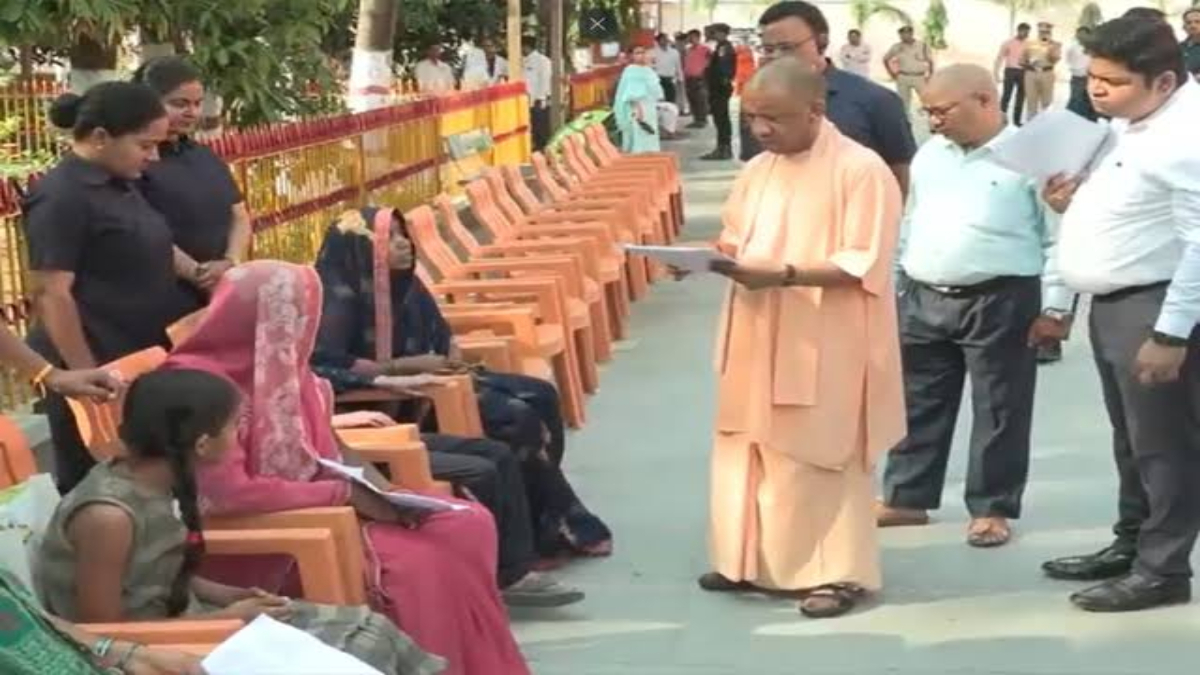
New Delhi, June 26, 2026: Continuing his long-standing commitment to direct grassroots governance, Uttar Pradesh Chief Minister Yogi Adityanath held a high-level Janta Darshan (public audience) at the Gorakhnath Temple complex. Acting in his dual role as the state’s political leader and the head priest (Peethadhishwar) of the Gorakhnath Peeth, the Chief Minister interacted with hundreds of citizens who traveled from various districts across the state to voice their grievances.
The open-air grievance camp serves as a primary pillar of the administration’s localized outreach strategy. During the session, the Chief Minister sat face-to-face with nearly 200 citizens, meticulously reviewing their written petitions. The grievances brought forward spanned several sectors, ranging from complex land disputes and police high-handedness to critical requests for financial aid to support life-saving medical treatments.
Direct Grievance Redressal and Policy Directives
The interaction highlights a stark administrative style built on immediate executive intervention. After listening to each petitioner, Chief Minister Adityanath handed the applications directly to senior administrative and police officials present at the venue, establishing explicit deadlines for resolution.
1. Land Disputes and the ‘Zero Tolerance’ Mandate
A significant portion of the applications involved land revenue complaints, illegal encroachments, and domestic property disputes. Addressing these concerns, the Chief Minister instructed District Magistrates and police chiefs to maintain a strict, non-negotiable policy against land mafias and unlawful property seizures. He emphasized that local administration must handle revenue and police issues with total transparency, warning that negligence or intentional administrative delays would result in swift disciplinary action against the responsible officers.
2. Healthcare Allocations and Discretionary Funding
For citizens seeking financial relief for severe illnesses, the Chief Minister issued an immediate, empathetic directive. He reassured families facing exorbitant medical costs that lack of funds would not disrupt their treatment.
Infrastructure and Security Integration
The Janta Darshan took place alongside key regional security upgrades. Ahead of the public meet, the Chief Minister inaugurated two modern security buildings integrated directly into the Gorakhnath Temple complex. Highlighting the initiative, he noted that robust security infrastructure serves as the fundamental foundation for overall good governance. The state government has structurally scaled its law enforcement frameworks, successfully processing the recruitment of over 219,000 personnel within the Police Department over recent years to handle civic stability and regional public safety.
Community Engagement and Traditional Routine
Beyond structural administration, the visit incorporated the Chief Minister’s traditional socio-religious routines. Before opening the camp to the public, he offered formal prayers at the main temple to Mahayogi Guru Gorakhnath and paid respects at the samadhi of his late guru, Mahant Avaidyanath.
Following the grievance session, Adityanath visited the temple’s dedicated Gaushala (cow shelter) to carry out Gauseva (cow service), a staple of his visits to Gorakhpur, where he personally fed the cattle. Before concluding the day’s program, the Chief Minister also interacted informally with local children present on the temple premises, distributing chocolates and inquiring about their education, balancing high-stakes governance with personal community interaction.