Home Blog Page 215

Maharashtra Suspends IAS Officer for Skipping Minister Meet

0

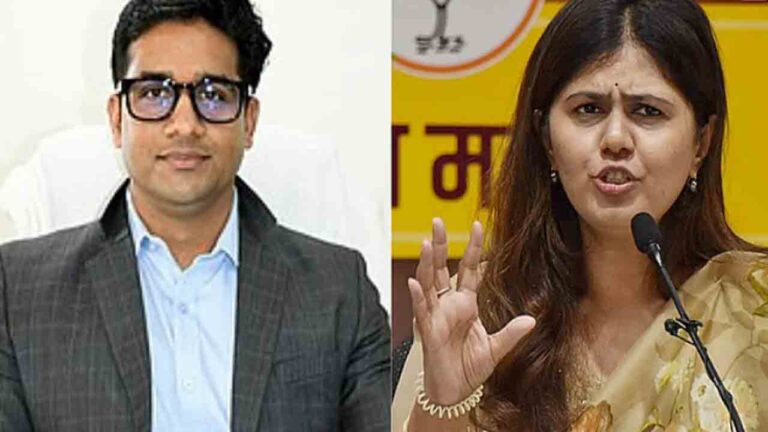
New Delhi, February 28, 2026: In a significant move that has sent ripples through Maharashtra’s administrative and political circles, the state government has suspended a senior Indian Administrative Service (IAS) officer for skipping a high-level briefing called by a cabinet minister.

The action, taken on Friday, February 27, 2026, targets M. Devender Singh, a 2011-batch IAS officer and the Member Secretary of the Maharashtra Pollution Control Board (MPCB). Alongside him, MPCB Joint Director Satish Padval has also been placed under suspension.

The Trigger: A Legislative Standoff

The controversy erupted during the ongoing budget session of the Maharashtra Legislative Assembly. Environment Minister Pankaja Munde expressed her frustration in the House when she was unable to provide a comprehensive response to a discussion regarding pollution in the Chandrapur district.

Munde informed the Assembly that despite repeated reminders, the concerned officials had failed to show up for the preparatory briefing. She further alleged that the IAS officer had reportedly messaged her, stating he would not be attending the meeting—a claim that sparked immediate outrage among lawmakers.

“Murder of Democracy”

The absence of the officials was viewed by the House as a blatant act of insubordination. Pro-tem Speaker Dilip Lande characterized the incident as “gross negligence” and a mark of “disrespect towards the people of Maharashtra,” who are represented by elected members.

Key highlights of the backlash include:

  • Breach of Privilege: BJP MLA Sudhir Mungantiwar moved a breach of privilege motion against the officials, describing their behavior as a “cold-blooded murder of democracy.”
  • Message to Bureaucracy: Mungantiwar emphasized that bureaucrats must remain accountable to the legislature, stating, “A message must be given to all officers that should serve for the next 100 years.”
  • Swift Execution: Following the Speaker’s directive on Thursday evening, the suspension file was cleared by Chief Minister Devendra Fadnavis and implemented within 24 hours.

Undercurrents of Political Friction

While the suspension is officially based on disciplinary grounds under the All India Services Rules, 1969, political analysts suggest deeper tensions within the ruling coalition.

The MPCB is currently chaired by Siddhesh Kadam, a leader from the Eknath Shinde-led Shiv Sena, while the Environment Department is headed by Pankaja Munde of the BJP. This friction between the board’s leadership and the ministry is being viewed by some as a contributing factor to the breakdown in communication.

What Happens Next?

  • Departmental Inquiry: A formal inquiry has been initiated against M. Devender Singh.
  • Restrictions: During his suspension, Singh’s headquarters will remain in Mumbai, and he is prohibited from leaving the city or taking up other assignments without prior government approval.
  • Central Oversight: The state government will send the suspension order to the Department of Personnel and Training (DoPT) for post-facto approval.

This incident serves as a stern reminder of the tightening grip of accountability on civil servants in Maharashtra, reinforcing the principle that administrative roles are fundamentally answerable to the elected government.
Unsung Heroes: Two Men Avert Potential Tragedy on Busy Road

0

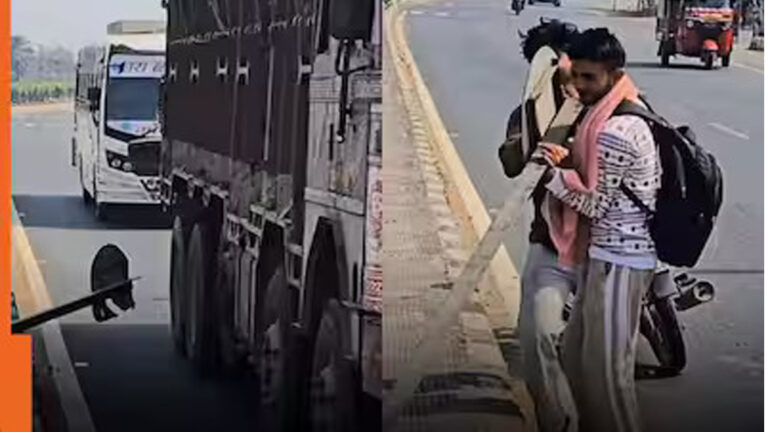
February 28, 2026 — In an era where “viral” usually refers to fleeting entertainment, a powerful video capturing a selfless act of civic duty is making waves across social media. The footage shows two ordinary citizens stepping up to remove a dangerous piece of sharp metal from a bustling road, likely preventing a high-speed accident or even a loss of life.

A Hidden Danger in Plain Sight

The incident, which began circulating early Saturday morning, shows a sharp metal rod—potentially a construction remnant or a piece of debris from a heavy vehicle—jutting out from the asphalt on a high-traffic thoroughfare. As cars, trucks, and buses zoom past, the rod remains a silent, lethal hazard. A single tire puncture at those speeds could have easily triggered a pile-up.

While dozens of vehicles swerved to avoid the object, one motorcyclist decided he couldn’t just ride by. The video shows the man pulling over to the shoulder, braving the passing traffic to inspect the hazard.

Coordination and Courage

Realizing the metal was wedged deep and too heavy to move alone, the man signaled for help. Moments later, another commuter on a motorcycle stopped to assist. What followed was a masterclass in spontaneous teamwork:

  • The Struggle: The duo spent several minutes attempting to wrench the rod free.
  • The Solution: Using their combined strength, they managed to pry the sharp object from the road surface.
  • Safety First: After successfully removing the metal, they didn’t just leave it on the shoulder; they ensured it was placed where it could no longer pose a threat to pedestrians or other motorists.

Why It Matters: The Power of Civic Responsibility

This viral moment comes at a time when road safety remains a critical concern. While local authorities are responsible for maintenance, this video highlights the vital role of civic responsibility. By taking five minutes out of their day, these two men neutralized a threat that could have devastated a family.

The video has already garnered millions of views, with users praising the “quiet heroism” of the individuals involved. It serves as a stark reminder that while infrastructure can fail, the vigilance of the community can act as the ultimate safety net.

DU Recruitment 2026: Dyal Singh College Non-Teaching Vacancies

0

New Delhi, February 28, 2026 – Dyal Singh Evening College (DSEC), a constituent college of the University of Delhi, has officially released its recruitment notification for several non-teaching positions. This recruitment drive, under advertisement reference DSCE/Advt./NT/2026/871, offers a significant opportunity for job seekers looking for permanent government positions within the prestigious Delhi University ecosystem.

The college is inviting online applications from eligible candidates for seven permanent posts across various administrative and technical levels. Notably, the recruitment includes positions suitable for both 12th-pass candidates and university graduates.

Vacancy Details and Pay Scales

The vacancies are distributed across different departments with salary structures based on the 7th Central Pay Commission (CPC). Below is the breakdown of the available posts:

Post NameTotal VacanciesPay Level (7th CPC)Upper Age Limit
Senior Personal Assistant01 (UR)Level 735 Years
Assistant01 (UR)Level 432 Years
Junior Assistant04 (UR-2, EWS-1, PwBD-1)Level 232 Years
Library Attendant01 (EWS)Level 132 Years

Eligibility Criteria

The educational requirements vary depending on the technical nature of the role:

  • Library Attendant: Candidates must have passed 10+2 (12th Grade) or an equivalent examination from a recognized board. Additionally, a certificate in Library Science or Library & Information Science is required.
  • Junior Assistant: Applicants should possess a Bachelor’s Degree from a recognized university. Proficiency in typing is mandatory, with a required speed of 35 w.p.m. in English or 30 w.p.m. in Hindi on a computer.
  • Assistant: A Graduate degree with at least two years of relevant experience as a Junior Assistant or an equivalent post in a government or reputed private organization.
  • Senior Personal Assistant: A Bachelor’s Degree coupled with three years of experience as a Personal Assistant or five years as a Stenographer. High-speed stenography skills (120 w.p.m. in English or 100 w.p.m. in Hindi) are essential.

Application Fee and Dates

The online application window opens today, February 28, 2026, and will remain active for three weeks.

  • Start Date: February 28, 2026
  • Last Date to Apply: March 21, 2026
  • Application Fee (Unreserved/General): ₹800
  • Application Fee (OBC/EWS/SC/ST/PwD/Female): ₹600

Note: The application fee is non-refundable and must be paid through the online recruitment portal.

Selection Process

Candidates will be selected based on a multi-stage process designed to test both theoretical knowledge and practical skills:

  1. Written Test (Paper I): Objective-type Multiple Choice Questions (MCQs).
  2. Written Test (Paper II): Descriptive type (for specific posts).
  3. Skill Test: Typing or Stenography tests where applicable (Qualifying nature).
  4. Document Verification: Final stage for shortlisted candidates.

How to Apply

Interested and eligible candidates are advised to visit the official University of Delhi non-teaching recruitment portal at https://dunt.uod.ac.in/.

Before applying, candidates should ensure they have scanned copies of their educational certificates, experience letters (if applicable), and a recent passport-sized photograph. Detailed instructions and the official syllabus for the examination can be downloaded from the college website at www.dsce.du.ac.in.

NCET 2026: Eligibility, Dates, and Exam Guide

0

The National Testing Agency (NTA) has officially released the notification for the National Common Entrance Test (NCET) 2026. This national-level entrance exam is the gateway for students seeking admission into the prestigious 4-Year Integrated Teacher Education Programme (ITEP) for the academic session 2026-27.

Aspiring teachers can now apply for courses offered at Central Universities, State Universities, and premier institutions including IITs, NITs, RIEs, and Government Colleges.

NCET 2026 Key Dates and Deadlines

The NTA has provided a detailed timeline for the registration and examination process. Candidates are advised to complete their applications well before the closing date to avoid last-minute technical issues.

EventImportant Date
Online Application StartsFebruary 12, 2026
Last Date to ApplyMarch 10, 2026 (up to 11:50 PM)
Last Date for Fee PaymentMarch 11, 2026
Correction WindowMarch 12 – March 14, 2026
NCET 2026 Exam DateApril 17, 2026 (Tentative)
Admit Card ReleaseTo be announced (Expected April)

Eligibility Criteria

Before filling out the form, candidates must ensure they meet the following eligibility requirements:

  • Educational Qualification: Candidates must have passed the Class 12 (10+2) or equivalent examination from a recognized board. Students appearing for their final Class 12 exams in 2026 are also eligible to apply._
  • Age Limit: There is no upper age limit for appearing in NCET 2026. However, candidates must fulfill any specific age criteria set by the individual university or institution they wish to join.
  • Subject Requirements: Applicants should choose subjects in the NCET exam that align with the requirements of the specific ITEP course and university they are targeting.

Exam Pattern and Structure

The NCET 2026 will be conducted as a Computer Based Test (CBT) in 13 languages, including English, Hindi, and several regional languages.

  • Duration: 180 minutes (3 hours).
  • Question Type: Objective Type with Multiple Choice Questions (MCQs).
  • Sections: * Language 1 & 2: Testing proficiency in chosen languages.
    • Teaching Aptitude: Evaluating the candidate’s inclination toward teaching.
    • General Test: Covering General Knowledge, Current Affairs, and Reasoning.
    • Domain Specific Subjects: Three subjects chosen based on the candidate’s Class 12 background and desired course.

How to Apply for NCET 2026

  1. Visit the official NTA NCET portal: exams.nta.nic.in/ncet.
  2. Click on the “New Registration” link and provide basic details to generate credentials.
  3. Log in and fill out the detailed application form (Personal, Academic, and Contact details).
  4. Upload required documents, including a recent photograph and signature.
  5. Pay the application fee online via Net Banking, Debit/Credit Card, or UPI.
  6. Download and save the Confirmation Page for future reference.

Note: The tentative exam date of April 17, 2026, is subject to change based on the national election schedule. Candidates are encouraged to check the official NTA website regularly for updates.

Viral Video of Man Assaulting Woman at Delhi’s Japanese Park Sparks Massive Outrage

0

New Delhi, February 28, 2026: A disturbing video capturing a man repeatedly slapping and verbally abusing a woman at the Swarn Jayanti Park, popularly known as Japanese Park in Rohini, has gone viral, triggering a wave of indignation across social media platforms. The incident has once again turned the spotlight on the normalization of domestic violence and the “bystander effect” in public spaces.

The Incident: A “Toxic” Display in Public

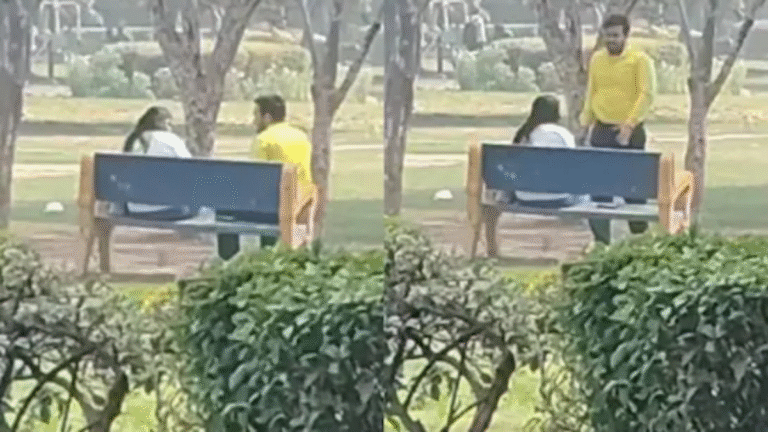
The footage, recorded by a passerby, shows a man sitting on a park bench next to a woman, believed to be his partner. The atmosphere is visibly tense as the man shouts at her before escalating to physical violence.

The individual who filmed the encounter claimed that the assault was not an isolated outburst. In the video’s narration, the witness states:

“I have been watching them for some time. This man has already slapped her 30 to 40 times. It is a deeply toxic situation, and everyone around is just watching.”

The clip shows the man standing up to deliver a forceful slap, while the woman remains seated, seemingly paralyzed or resigned to the abuse.

Social Media Eruption

As the video circulated on platforms like X (formerly Twitter) and Instagram, thousands of users expressed their horror. The discourse quickly moved beyond the specific act of violence to broader societal issues:

  • Normalization of Abuse: Many users criticized the term “toxic relationship,” arguing that it sanitizes what is fundamentally criminal assault.
  • The Bystander Effect: A significant portion of the outrage was directed at the lack of intervention from other park visitors. Comments highlighted the tragedy of people walking by while a woman was being assaulted in broad daylight.
  • Calls for Legal Action: Netizens have tagged the Delhi Police and the National Commission for Women (NCW), demanding the identification and arrest of the aggressor.

The Legal Standpoint

Under the Indian Penal Code (and the Bharatiya Nyaya Sanhita), causing hurt and criminal intimidation are punishable offenses. Legal experts point out that violence in a public park constitutes a breach of public peace in addition to the assault on the individual.

While the Delhi Police have not yet released a formal statement regarding an FIR (First Information Report), the pressure from viral “digital evidence” often leads to swift identification in such cases.

A Reflection on Public Safety

The Japanese Park incident serves as a grim reminder of the challenges women face even in crowded, well-known recreational areas of the capital. It underscores the urgent need for sensitized public patrolling and a society that refuses to look away when “private” violence spills into public squares.

19-Minute Viral MMS: The Truth Behind the Couple

0

New Delhi, February 28, 2026: The internet is a volatile space where content can go viral in seconds, often leaving a trail of misinformation and privacy violations in its wake. Recently, a specific search term—”19 Minute 34 Second Viral MMS”—has dominated social media trends, sparking intense curiosity about the identity and whereabouts of the couple involved.

However, behind the sensationalist headlines lies a complex story of digital safety, potential AI manipulation, and the dark side of viral fame. Here is everything you need to know about the current status of the situation.

The Reality Behind the Video: Fact or Fiction?

As of early 2026, investigations into the “19-minute” video have revealed a troubling trend. While many social media users have been searching for the “real couple,” cybersecurity experts and local authorities have flagged a significant portion of these viral clips as AI-generated deepfakes.

  • Deepfake Scams: Many of the links circulating on platforms like Telegram and WhatsApp are not actual footage but are instead “Season 5” or “AI Deepfake” clips. These are often used as clickbait to spread malware or phishing links.
  • Targeted Influencers: Several high-profile social media influencers, including names like Sweet Zannat, have been falsely linked to the footage. In most cases, these influencers have come forward to clarify that their faces were superimposed onto existing videos using artificial intelligence.

Where Is the Couple Now?

Because the video has been largely identified as either a deepfake or a compilation of unrelated clips, there is no single “couple at the center of this story.

  1. Privacy Protection: In cases where real individuals are involved in leaked content, privacy laws (such as Section 67A of the IT Act) often lead to the removal of their digital footprint for their safety.
  2. Misinformation Traps: Rumors suggesting the couple has “gone missing” or “left the country” are frequently fabricated by gossip sites to drive traffic.
  3. Legal Action: Authorities in several regions have begun tracking the original uploaders of these clips. Those found sharing or hosting the content face severe legal consequences, including imprisonment and heavy fines.

Why Is This Still Trending?

The persistence of the “19 Minute 34 Second” search term is a classic example of “The Streisand Effect.” As authorities attempt to scrub the content, the mystery only grows for curious users. Furthermore, cybercriminals use these specific timestamps to create “bait” posts that lead users to unsecured websites designed to steal personal data or banking information.

Safety Check: What You Should Know

If you encounter links promising the “full 19-minute video,” keep the following in mind:

  • Malware Risk: Clicking these links often installs “Trojan” viruses on your device.
  • Legal Risk: In many jurisdictions, possessing or sharing non-consensual intimate imagery is a non-bailable offense.
  • Ethical Impact: Viral MMS leaks cause profound psychological trauma to the victims, many of whom are innocent targets of AI manipulation.

The Bottom Line

There is no “happy ending” or “where are they now” update because the viral phenomenon is largely built on misinformation and digital exploitation. The influencers whose names have been dragged into the controversy are focusing on legal battles to clear their names and advocating for better AI regulation.

The best way to handle such “viral” news is to avoid clicking the links and report the content to the respective social media platform’s support team.

Toddler’s “Gibberish” Argument with Parents Goes Viral, Melting Hearts Worldwide

0

New Delhi, February 28, 2026: In the vast world of social media, few things capture the collective heart of the internet quite like a toddler with a big personality. The latest digital sensation features a pint-sized powerhouse—a cute baby girl—who has gone viral for a spirited “argument” with her parents, conducted entirely in her own adorable language.

The video, which has amassed millions of views across platforms like TikTok and Instagram, showcases a masterclass in toddler sass and non-verbal communication.

A High-Stakes Debate in “Baby Talk”

The clip begins with the young girl standing her ground in the middle of the living room. Clad in patterned pajamas and sporting a look of absolute conviction, she isn’t just babbling; she is making a point. As her parents calmly pose questions or offer gentle “no’s,” the toddler responds with a flurry of hand gestures, dramatic pauses, and a complex string of “gibberish” that follows the exact rhythm and cadence of a heated adult debate. While the actual words remain a mystery to the English-speaking world, her intent is crystal clear: she is the boss, and she has some very strong opinions about the current situation.

Why the Internet is Obsessed

Psychologists often note that this stage of development is crucial for language acquisition. Toddlers often mimic the intonation and body language of the adults around them long before they master actual vocabulary. This “pseudo-conversation” is what makes the video so relatable.

  • The Passion: Her facial expressions range from mild annoyance to “I can’t believe you just said that” disbelief.
  • The Confidence: She doesn’t back down. Even when her father lets out a suppressed chuckle, she doubles down on her “argument,” pointing her finger for emphasis.
  • The Relatability: Parents everywhere are seeing their own daily struggles reflected in this tiny, vocal human.

Social Media Reacts

The comments section of the viral post is a goldmine of laughter and appreciation. One user wrote, “I don’t know what she’s saying, but I’m on her side. She made some very valid points!” Another commented, “The way she put her hands on her hips… she’s definitely heard that tone from her mom before!”

The video has become a beacon of light in often-heavy news cycles, reminding viewers of the simple, unscripted joy of childhood. It’s a testament to the fact that communication is about much more than just words—it’s about energy, emotion, and the occasional dramatic hand-flap.

A Star is Born

As the video continues to circulate, the “Angry Baby” has become an overnight icon of toddler independence. While she may not have won the argument with her parents (who were likely just trying to get her to eat her vegetables or head to bed), she has undoubtedly won the internet.

In a world of highly produced content, there is something uniquely refreshing about a raw, funny, and heartwarming moment between a child and her family. It serves as a reminder that sometimes, the best way to get your point across is to just say it with your whole heart—even if no one knows exactly what you’re saying.

TMC Nominates Senior Advocate Menaka Guruswamy for Rajya Sabha

0

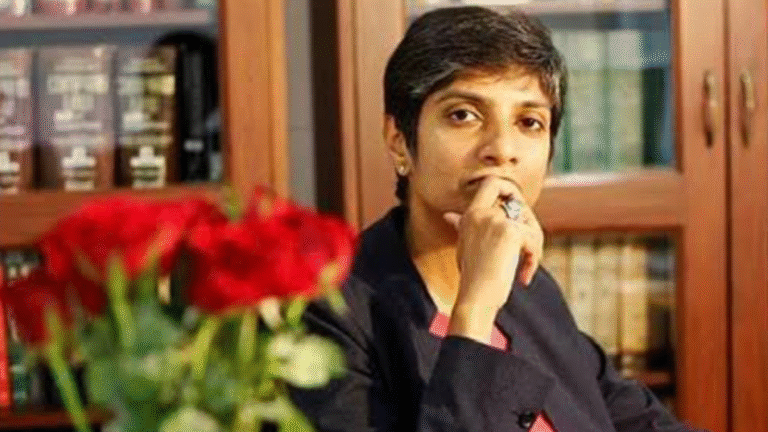
New Delhi, February 28, 2026: In a significant move ahead of the 2026 Rajya Sabha elections, the All India Trinamool Congress (TMC) has announced the nomination of Senior Advocate Dr. Menaka Guruswamy as one of its candidates from West Bengal.

The announcement, made on Friday, February 27, 2026, marks a historic moment in Indian parliamentary history. If elected, Guruswamy is set to become India’s first openly LGBTQ+ Member of Parliament. Her nomination is part of a four-member slate that includes state minister Babul Supriyo, former West Bengal Director General of Police (DGP) Rajeev Kumar, and acclaimed actor Koel Mallick.

A Trailblazer in Constitutional Law

Menaka Guruswamy is widely recognized as one of the most formidable legal minds in India. A Senior Advocate at the Supreme Court, she has built a career defined by high-stakes constitutional litigation and a commitment to civil liberties.

She is perhaps best known for her pivotal role in the decriminalization of homosexuality in India. Alongside her partner, Arundhati Katju, Guruswamy led the legal battle against Section 377 of the Indian Penal Code. Their victory in 2018 not only reshaped Indian law but also earned them a place on TIME magazine’s list of the 100 Most Influential People in the World in 2019.

Beyond LGBTQ+ rights, Guruswamy has been a vocal advocate for:

  • The Right to Education (RTE): Defending the 25% reservation for underprivileged children in private schools.
  • Bureaucratic Independence: Arguing for fixed tenures for civil servants to reduce political interference.
  • State-Agency Disputes: Representing the West Bengal government in various legal battles against central agencies.

Strategic Significance for TMC

The selection of Guruswamy reflects Mamata Banerjee’s “masterstroke” strategy of blending grassroots politics with elite professional expertise. By fielding a constitutional expert of Guruswamy’s caliber, the TMC aims to strengthen its voice in the Upper House, particularly on issues concerning federalism and legal disputes with the Centre.

The party stated on social media:

“We extend our heartfelt congratulations and best wishes to them. May they continue to uphold Trinamool’s enduring legacy of resilience and its unwavering commitment to safeguarding the rights and dignity of every Indian.”

The 2026 Candidate Slate

The TMC’s nominations for the five vacant seats in West Bengal are diverse:

  1. Menaka Guruswamy: Legal and constitutional heavyweight.
  2. Rajeev Kumar: Former DGP, bringing administrative and security expertise.
  3. Babul Supriyo: Former Union Minister and current state IT Minister, providing political experience.
  4. Koel Mallick: Representing Bengal’s cultural and cinematic heritage.

Election Arithmetic

The elections for 37 Rajya Sabha seats across India, including five from West Bengal, are scheduled for March 16, 2026.

In the 294-member West Bengal Legislative Assembly, the TMC holds a dominant majority. Given the current numbers, the TMC is comfortably positioned to win four of the five seats, while the opposition BJP is expected to secure the fifth. Guruswamy’s path to the Rajya Sabha appears clear, barring any last-minute additional nominations that could trigger a formal contest.

Global Recognition

A Rhodes Scholar from Oxford University and a Gammon Fellow from Harvard Law School, Guruswamy has served as a visiting faculty member at prestigious institutions like Yale and Columbia. She also holds the distinction of being the first Indian woman to have her portrait displayed at Milner Hall in Rhodes House, Oxford.

As the political landscape shifts toward the 2026 Assembly elections, Guruswamy’s entry into Parliament is expected to provide the TMC with a sharp, legally-grounded edge in national debates.

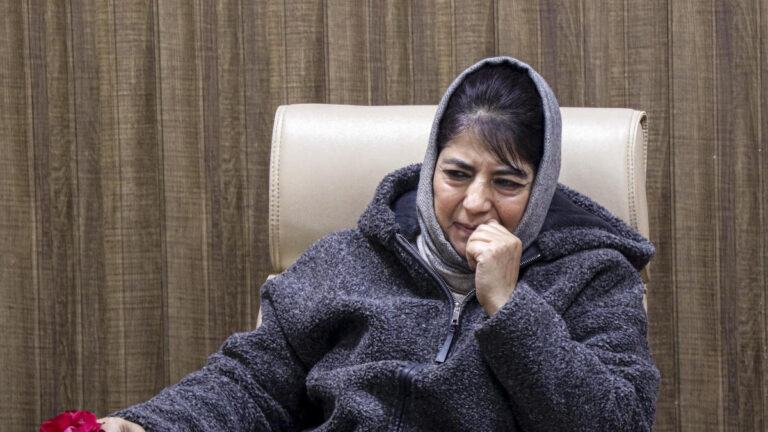
Mehbooba Mufti Slams “High-Handedness” of Agencies After Arvind Kejriwal Discharge

0

February 28, 2026 – Peoples Democratic Party (PDP) President and former Jammu and Kashmir Chief Minister, Mehbooba Mufti, has launched a scathing attack on the functioning of central investigative agencies following the discharge of former Delhi CM Arvind Kejriwal, Manish Sisodia, and BRS leader K. Kavitha in the high-profile excise policy case.

Taking to social media platform X (formerly Twitter), Mufti asserted that the court’s decision to drop charges against the leaders serves as a glaring indictment of the “high-handedness” and “weaponisation” of state institutions for political ends.

“Justice is the First Casualty”

Mufti’s remarks came shortly after a Delhi Special Court refused to take cognisance of the CBI’s chargesheet, citing a lack of credible evidence and significant procedural lapses. In her post, the PDP leader expressed deep concern over the human cost of such legal battles.

“When investigative agencies are wielded like political swords, justice becomes the first casualty, and truth surfaces only after years of pain and tears,” Mufti wrote.

She further highlighted the discrepancy between the severity of the legal action taken and the eventual judicial findings, noting that despite “years of incarceration,” the court found no prima facie case and no credible evidence to sustain the charges.

Key Highlights of the Court’s Decision

The discharge of the AAP leadership and 21 others marks a significant turn in a case that has dominated the national political landscape for nearly three years.

FeatureCourt Observation / Outcome
Evidence QualityLacked “cogent material”; several “misleading averments” in the chargesheet.
Primary AccusedCourt questioned why individuals were implicated without supporting witness statements.
Institutional CritiqueThe judge rapped the CBI for “voluminous” documents that failed to prove a conspiracy.
StatusArvind Kejriwal, Manish Sisodia, and K. Kavitha stand discharged of all corruption charges.

Concerns Over “Weaponisation” of Institutions

Mufti’s critique extends beyond the specific case of the Delhi excise policy. She described the misuse of power as a “dangerous” trend that continues “unabated” in the country. Her comments reflect a broader sentiment among several Opposition leaders who have long accused the ruling BJP-led central government of using the Enforcement Directorate (ED) and the Central Bureau of Investigation (CBI) to stifle dissent and dismantle political rivals.

“Nothing is more dangerous than the misuse of power and the weaponisation of institutions,” she added, warning that such tactics undermine the democratic fabric of the nation.

Broader Political Context

The discharge order has revitalized the Opposition’s narrative regarding “political vendetta.” Other leaders, including Samajwadi Party chief Akhilesh Yadav and RJD’s Manoj Jha, have echoed Mufti’s sentiments, calling the verdict a “moral victory” and a “death sentence” for the credibility of the agencies involved.

For Mehbooba Mufti, who has herself faced multiple summons and investigations in recent years, this verdict is seen as a vindication of the stance that central agencies are increasingly being utilized as tools for electoral strategy rather than impartial law enforcement.

Muted Opening for ‘The Kerala Story 2: Goes Beyond’ Despite Late Legal Clearance

0

February 28, 2026 — The highly anticipated and equally controversial sequel, The Kerala Story 2: Goes Beyond, witnessed a lukewarm start at the domestic box office on its opening day. Despite a last-minute legal victory in the Kerala High Court, the film struggled to replicate the massive opening momentum of its 2023 predecessor.

The film, directed by Kamakhya Narayan Singh and produced by Vipul Amrutlal Shah, collected approximately ₹3.50 crore on Friday. In comparison, the original The Kerala Story had debuted with over ₹8 crore, eventually becoming a massive commercial hit.

A Day of Legal Seesaw

The muted opening is largely attributed to the chaotic legal timeline that unfolded just hours before the scheduled release.

  • The 15-Day Stay: On Thursday, February 26, a single-judge bench of the Kerala High Court imposed a 15-day interim stay on the film’s release. The court criticized the Central Board of Film Certification (CBFC) for a “non-application of mind” and raised concerns that the film could disturb communal harmony.
  • The Special Sitting: The producers moved an urgent appeal, leading to a rare special sitting by a Division Bench.
  • The Green Light: In a dramatic turn of events, the Division Bench lifted the stay late Friday afternoon. However, by the time the clearance arrived, morning and afternoon shows across several major circuits had already been canceled or pulled from booking platforms like BookMyShow.

The Impact on Box Office Numbers

The uncertainty surrounding the release led to a significant “paid preview” effect rather than a full-scale launch.

MetricDay 1 Statistics (Estimates)
Net Collection₹3.50 Crore
Morning Occupancy7.32%
Night Occupancy17.51%
Total Screens~1,500 (Domestic)

Exhibitors reported that while night shows saw a slight uptick in occupancy, the confusion regarding whether the film was actually playing deterred many early ticket buyers. In many regions, the film only effectively began its run after 6:00 PM.

Shift in Audience Sentiment?

Beyond the legal hurdles, trade analysts are questioning if the “propaganda-thriller” genre is seeing a decline in saturation. While the first film thrived on massive word-of-mouth and political endorsement, the sequel faces a more polarized and perhaps fatigued audience.

The film’s narrative—which claims to “go beyond” Kerala to explore alleged conversion rackets in states like Madhya Pradesh and Rajasthan—has been met with sharp criticism from various sectors. Kerala Chief Minister Pinarayi Vijayan labeled the film “poisonous propaganda,” while the filmmakers maintain the story is rooted in rigorous research and documented legal cases.

What’s Next for the Film?

The survival of The Kerala Story 2 now depends entirely on its performance over the Saturday and Sunday window. The makers are hoping that the controversy, which has kept the film in the headlines for weeks, will eventually translate into “curiosity viewing” over the weekend.