Home Blog

West Bengal Gram Panchayat Recruitment 2026: Online Registration Open for Over 11,000 Rural Governance Vacancies

0

New Delhi, June 22, 2026 — In one of the most massive rural employment drives in recent West Bengal history, the Department of Panchayats and Rural Development has officially opened the online portal for the WB Gram Panchayat Recruitment 2026. Aspiring candidates across the state can now create their profiles and initiate the registration process on the newly launched Panchayat Recruitment Management System portal at wbpms.in.

This extensive recruitment campaign aims to fill more than 11,000 approved administrative and technical vacancies distributed across three tiers of rural governance: Gram Panchayats, Panchayat Samitis, and Zilla Parishads. The vacancy count marks a significant bump from earlier government estimates of roughly 6,500 posts, expanding the horizon for job seekers looking to enter secure government services at the grassroots level.

A Direct Boost to Rural Administration

The activation of the portal marks the first phase of an extensive push to strengthen local bodies. The 11,000+ vacancies span a diverse mix of administrative, technical, secretarial, and foundational support roles. Selected personnel will be deployed across all districts of West Bengal, including the specialized hill subdivisions. They will be directly responsible for coordinating basic civic services, implementing welfare programs, and supervising rural infrastructural assets.

The primary job listings include:

  • Executive Assistants and Panchayat Secretaries to handle administrative correspondence and state scheme coordination.
  • Data Entry Operators (DEOs), Clerks, and Lower Division Assistants (LDAs) to manage digitized data systems and office filings.
  • Nirman Sahayaks to oversee infrastructure development, civil works, and technical site planning.
  • Gram Panchayat Karmees and Sahayaks to provide vital village-level field assistance.

Detailed Post-Wise Eligibility and Educational Ratios

Because the recruitment drive aims to engage individuals from varying educational backgrounds, the qualifications for entry fluctuate significantly from elementary schooling to professional engineering diplomas. Candidates are required to be proficient in reading, writing, and speaking Bengali (or Nepali for designated hill tracts).

Age Limits and Relaxations

The baseline age requirements cater widely to young professionals and seasoned job seekers alike. The age window starts at 18 years, with upper limits defined strictly by category regulations:

  • General / Unreserved: 18 to 40 years
  • OBC-A / OBC-B: 18 to 43 years
  • Scheduled Caste (SC) / Scheduled Tribe (ST): 18 to 45 years
  • Persons with Disability (PwD): 18 to 55 years

Understanding the Competitive Exam Structure

The selection protocol is structured to maintain transparency and select highly capable personnel. While a detailed notification breaking down exact post-by-post distributions will hit the web shortly, the primary framework relies heavily on a multi-tiered filtering system.

The evaluation process includes:

  1. Written Examination (85 Marks): A competitive, Multiple-Choice Question (MCQ) based test assessing fundamental subjects. The curriculum typically spans English language basics, Bengali language mechanics, Arithmetic, and a wide section on General Knowledge—focusing deeply on rural life, history, and rural development frameworks.
  2. Skill / Typing Test: For positions like Data Entry Operators, Typists, and Executive Assistants, candidate typing speeds and software command will be tested.
  3. Personal Interview & Document Verification (15 Marks): Shortlisted candidates from the previous rounds will participate in an interview panel to evaluate personality and communication skills, alongside an official cross-examination of certificates.
  4. Final Merit List: The department will formulate a district-wise final merit list based on aggregate metrics across all selection filters.

Financial Remuneration Packages

Successful candidates will receive state-regulated salaries that match the scale of responsibilities given to each office. Ground level support staff like the Panchayat Karmees operate on an initial pay range of Rs. 17,000 to Rs. 41,000. Administrative desks like Clerks and DEOs sit at a scale of Rs. 24,700 to Rs. 63,900. Highly technical personnel, specifically the Nirman Sahayaks, command the highest pay scale in this tier, ranging from Rs. 35,800 up to Rs. 92,100 per month.

Step-by-Step Portal Registration Guide

The West Bengal Panchayat Recruitment Management System (WBPRMS) portal is live for profile creation. The application link itself will turn fully active following the publication of the detailed notification. To prevent structural delays, candidates are strongly advised to complete their fundamental portal registration early.

1.Visit the Official Web Portal:Access Link.

Navigate directly to the official URL: wbpms.in. Ensure you are on a secure web connection to safeguard personal information.

2.Initialize Profile Creation:Register Now.

Locate and click the “Register Now” or “Sign Up” option displayed prominently on the homepage banner.

3.Input Primary Credentials:Verification Phase.

Provide your full legal name, an active mobile number, an email ID, and your exact date of birth. Generate a secure alphanumeric password.

4.Complete Captcha and Submit:Account Setup.

Enter the system security captcha code precisely as displayed. Submit the form to generate your permanent candidate profile.

5.Log In and Document Upload:Finalize Profile.

Return to the homepage, log in with your registered phone number, and prepare clear scanned copies of your passport photo (10-50 KB) and signature (5-20 KB) in JPG/JPEG format for the secondary phase.

Applicants are urged to check the official tracking portal daily for updates regarding the activation of the final post-choice submission link.

For a complete verbal breakdown of the district-specific vacancy distribution, structural syllabus tips, and guidance on navigating the online application, watch this informative WB Panchayat Recruitment Full Guide Video which details everything a candidate needs to know before applying.


Ayodhya Ram Temple Probe: High-Tech Fraud & Systemic Lapses Uncovered

0

New Delhi, June 22, 2026: An intensive investigation by a Special Investigation Team (SIT) has uncovered major security and systemic lapses at the Ayodhya Ram Temple regarding the handling of billions in cash and gold offerings.

Constituted by the Uttar Pradesh government following allegations of embezzlement, the three-member panel—led by Lucknow Divisional Commissioner Vijay Vishwas Pant, Inspector General of Police Kiran S., and Finance Department Special Secretary Neel Ratan—is presenting its preliminary 150-page report to Chief Minister Yogi Adityanath. The initial probe has already resulted in the recovery of approximately ₹2 crore and placed key trust officials, private employees, and security networks under intense scrutiny.

High-Tech Obstacles: Deletion and Tampering of CCTV Footage

The most alarming revelation from the SIT probe involves the temple’s state-of-the-art surveillance network. Investigators uncovered distinct clues indicating deliberate tampering with, and partial deletion of, digital security records.

A central point of interest is a pen drive containing critical digital surveillance data, which investigators believe was compromised to hide illicit activities. The SIT has shifted significant focus toward the personnel managing, maintaining, and supervising the camera network, exploring whether there was systemic collusion within the security apparatus.

Sources close to the probe note that despite nearly ₹10 crore being spent on security management at the temple complex over the prior 11 months, individuals involved in the theft were allegedly able to maneuver around the system. In several instances, workers reportedly stood directly in front of cameras to deliberately block their view before pocketing cash and ornaments.

Lax Security and Uniform Violations in the Counting Room

The day-to-day operations inside the Pilgrim Facilitation Centre—located roughly 200 meters from the main temple—revealed a surprising lack of administrative control. The facility handles a massive volume of funds across two daily shifts, with normal cash collections ranging between ₹8 lakh and ₹13 lakh per day, and surging as high as ₹50 lakh to ₹60 lakh during peak seasons.

The SIT discovered that the State Bank of India (SBI), which oversees banking and deposit operations for the Shri Ram Janmabhoomi Teerth Kshetra Trust, outsourced the note-sorting and cash-counting duties to a private security agency based out of Varanasi. However, instead of deploying independent workers, the agency hired local laborers from Ayodhya based on direct recommendations from people connected to the Ram Temple Trust itself.

The investigation exposed several severe operational lapses:

  • Lack of Frisking: There was no proper gate-checking or verification system to monitor what employees carried into or out of the secure zone.
  • Dress Code Violations: While the trust had established a strict dress code and issued custom uniforms for cash counters, employees were consistently found counting bundles of currency notes in regular personal clothing.
  • Nepotism in Hiring: Nepotism was highlighted when investigators discovered that a trust employee, Anukalp Mishra, had directly facilitated the hiring of his brother-in-law, Lavkush Mishra, for sensitive cash-counting operations.

Unexplained Valuables and Missing Trail of Gold and Silver

Beyond cash, the probe has exposed major discrepancies in the auditing of physical valuables. Devotees from around the globe have donated massive quantities of gold and silver jewelry, diamonds, and precious stones. However, when the SIT cross-referenced physical inventories with the trust’s official accounting ledgers, they found severe documentation gaps.

During grueling multi-hour interrogations, multiple trust office-bearers were unable to provide satisfactory explanations regarding the exact storage location, total inventory weight, or custody chains of these valuable items.

The timeline of the alleged grand-scale misappropriation points aggressively toward the massive Prayagraj Maha Kumbh Mela period in early 2025. During this time, the temple experienced an unprecedented spike in footfall, hosting nearly 10 lakh (1 million) devotees daily. Donation boxes across the complex were filling to the brim with raw cash within two hours of being placed, creating a chaotic environment that insiders allegedly exploited to siphon away unrecorded wealth.

Senior Leadership and Top Trust Officials Under the Scanner

The fallout from the investigation has reached the highest tiers of the temple’s administration. The SIT has interrogated 24 key individuals, including six employees from SBI and six digital systems experts from Tata Consultancy Services (TCS).

Crucially, the probe has trained its sights on Champat Rai, the powerful General Secretary of the Ram Temple Trust, alongside Trustee Anil Mishra (who directly oversees donation management) and Construction In-charge Gopal Rao.

A primary target of the interrogation is Ramashankar Yadav, alias Tinnu Yadav, a close, long-standing aide to Champat Rai. Following multiple rounds of intense questioning, investigators have begun mapped out the financial assets, properties, and bank accounts of Yadav and his immediate family members. An FIR against him is expected as the digital and financial audit trail tightens.

Widening the Scope: Land Scams and Procurement Fraud

As investigators reconstructed the entire financial flow—from the physical opening of the 40 donation boxes down to final bank deposits—they decided to widen the scope of the inquiry. The SIT is now actively investigating the trust’s historical real estate transactions dating back to 2021.

The team is reviewing allegations that the trust purchased approximately 71 acres of land surrounding the temple complex at hyper-inflated rates, sometimes paying between 500% to 800% more than the actual market value. The procurement pipelines for high-end construction materials used in the temple project are also being heavily audited for kickbacks and inflated billing.

Before returning to Lucknow to brief Chief Minister Yogi Adityanath, the SIT issued a strict travel ban, ordering all key trust members, temple functionaries, and suspect employees not to leave Ayodhya under any circumstances.

The public revelation of this investigation has already had a sharp impact on temple operations. Public trust has taken a temporary hit, with local reports indicating that daily donation box inflows have dramatically dropped while the probe plays out. Moving forward, the Uttar Pradesh government is expected to enforce a complete restructuring of the temple’s administration, introducing automated currency-sorting machines, stricter biometric checkpoints, and an independent, professional auditing system to restore the sanctity of the holy site’s financial management.

For a more comprehensive look into the digital manipulation uncovered by investigators, you can watch this breakdown on CCTV Data and Evidence Tampering in the Ram Mandir Case, which details how a key pen drive became central to the SIT’s ongoing inquiry.

Space Sentinel Tracking “Godzilla El Niño” Warm Wave Surging Across Pacific Ocean

0

New Delhi, June 22, 2026 — Advanced space technology has given scientists an unprecedented, front-row seat to a colossal climate shift unfolding deep beneath the ocean surface. Satellite data from the international Sentinel-6 Michael Freilich spacecraft has detected an massive wave of hidden heat surging across the equatorial Pacific Ocean. The findings indicate that a powerful climate pattern is intensifying rapidly, drawing stark comparisons to the historic 1997 “Godzilla El Niño” that caused widespread global weather chaos.

As the planet enters mid-2026, major meteorological agencies — including the World Meteorological Organization (WMO) and the National Oceanic and Atmospheric Administration (NOAA) — have officially confirmed the activation of El Niño conditions. However, it is the sheer depth and volume of the underlying heat reservoir, mapped from hundreds of miles above Earth, that has climate scientists raising urgent flags about the extreme weather events looming for the latter half of the year.

The Invisible Fingerprint: How Satellites Track the Surge

Traditional weather tracking relies heavily on sea surface temperature (SST) measurements collected by floating marine buoys and ships. While useful, surface temperatures only tell part of the story. A thin layer of sun-baked surface water might register as exceptionally warm without possessing the thermal mass required to alter global weather systems.

To map the true extent of the phenomenon, the Sentinel-6 satellite utilizes radar altimetry to track subtle changes in sea surface height. Because water naturally expands as it absorbs heat, a higher ocean elevation is a direct fingerprint of a deep reservoir of stored energy below.

The latest satellite visualizations reveal vast, glowing bands across the central and eastern Pacific where sea levels are more than 5.9 inches (15 centimeters) higher than long-term averages. This massive hump of elevated water is being propelled eastward toward South America by enormous underwater pulses known as Kelvin waves.

These subterranean waves form when the standard equatorial trade winds, which normally blow from east to west, weaken or completely reverse direction. With the wind barriers down, the immense pool of warm water that typically stacks up near Indonesia and Australia behaves like a sloshing bathtub, sliding rapidly toward the coastlines of the Americas.

The Return of the “Godzilla” Phenomenon

The phrase “Godzilla El Niño” was first coined during the historic 1997–1998 event, which remains one of the strongest ocean-warming cycles ever documented in modern human history. That particular cycle triggered catastrophic mudslides in California, severe droughts and wildfires across Indonesia and Australia, and crop failures that impacted global food supplies for years.

NASA Jet Propulsion Laboratory (JPL) researchers analyzing the current space observations note that the structural profile of the current Kelvin waves closely mirrors the early development phases recorded in June 1997. If the current trajectory and wind patterns persist, the Relative Oceanic Niño Index (RONI) could push past a critical threshold, officially classifying this as a “very strong” or “super” El Niño event.

Global Disruptions: What to Expect Globally

The shifting of this immense body of warm water fundamentally alters the circulation of energy, air currents, and moisture throughout the global atmosphere. The downstream impacts behave like falling dominoes, bringing extreme moisture to some regions while stripping it away from others.

In regions like South Asia, the timing of this oceanic surge is causing intense concern. The India Meteorological Department (IMD) has been closely monitoring how this development interacts with other climate variables, such as the Indian Ocean Dipole. A weaker or erratic monsoon season could severely compromise groundwater reserves and impact agricultural output in areas already vulnerable to changing weather baselines.

The Climate Change Multiplier

What sets this event apart from historical occurrences is the baseline environmental state. The emerging El Niño is not developing in a vacuum; it is layering directly on top of a multi-decade global warming trend driven by human industrial activities.

Because a warmer atmosphere holds significantly more moisture and energy, the typical impacts associated with an ocean-warming cycle are magnified. Scientists warn that the combined force of anthropogenic warming and a natural “super El Niño” creates a volatile climate tandem. It increases the probability of record-shattering global average temperatures, making it highly likely that the subsequent year will set new global temperature benchmarks.

While modern agricultural practices, precision satellite forecasting, and disaster risk management frameworks have advanced significantly since the 1990s, the scale of the incoming heat pulse will test global infrastructure. Governments and humanitarian agencies are being urged to utilize these early space-based warnings to implement proactive water management strategies, reinforce coastal defenses, and secure food supply chains ahead of the peak intensity.

This video provides an excellent visual breakdown of the atmospheric shifts and global temperature concerns associated with this extreme climate pattern: Godzilla El Niño Forecast and Climate Impacts

Tragic Midnight Birthday Celebration Ends in Fatal 251 kmph BMW Crash on Unopened Highway Near Badlapur

0

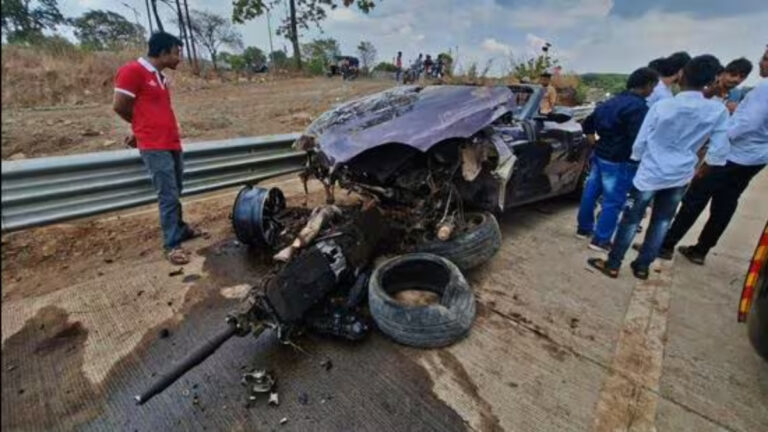
New Delhi, June 22, 2026 — What was intended to be a joyful night out celebrating a friend’s 24th birthday turned into a horrific disaster in the early hours of Sunday, June 21, 2026. A luxury convertible BMW, reportedly travelling at a lethal speed of 251 kmph, spun out of control and violently slammed into a concrete highway divider on an incomplete and unlit stretch of the Mumbai-Vadodara Highway (locally referred to as the Baroda-Panvel Highway). The catastrophic impact split the vehicle apart, claiming the lives of two young passengers and leaving the driver critically injured in the intensive care unit.

The Thane police have launched a comprehensive investigation into the incident, which has sent shockwaves through the local community, especially after chilling details and a viral video surfaced online mapping the final seconds inside the vehicle.

The Fatal Collision and Immediate Aftermath

The accident occurred at approximately 2:39 AM on Sunday near Eranjad, within the jurisdiction of the Badlapur West Police Station. The three companions were returning from a party held to celebrate the birthday of Yogesh Kishan Negi. The vehicle was heading toward Badlapur from the Titwala side when the driver lost absolute control over the high-performance car.

According to senior police officials, the extreme velocity paired with pitch-black conditions on the under-construction expressway left the driver incapable of assessing the road infrastructure. The vehicle struck a concrete highway divider head-on, launching it into the air. The sports car flipped over multiple times across the asphalt before finally grinding to a halt as a mangled heap of metal.

Because the luxury vehicle was a convertible operating with its hood open, the sheer centrifugal force of the rolls ejected all three occupants violently from the cabin. The scene confronted by emergency responders was harrowing. The physical impact was so severe that the luxury vehicle was destroyed entirely beyond recognition, and parts of the car along with the victims were thrown across a half-kilometer radius.

Identification of the Victims

Emergency teams arriving at the crash site recovered two victims who had sustained catastrophic, fatal injuries. They were rushed to the Badlapur Rural Hospital, where doctors officially pronounced them dead upon arrival.

  • Yogesh Kishan Negi (24): A resident of Badlapur and a passionate football player, Yogesh had just transitioned into his 24th year on the day of the crash. The late-night drive was meant to culminate his birthday celebrations.
  • Rebecca Babu Jacob (22/24): A young resident of Bandra, Mumbai, who was traveling with her friends for the weekend outing.

The sole survivor of the crash has been identified as Angad Gill (26), also a resident of Badlapur. Gill sustained severe polytrauma and was transported to the Intensive Care Unit (ICU) at Fortis Hospital in Kalyan. Medical teams report that he remains in critical condition, fighting for his life under close monitoring.

Chilling Speedometer Video Goes Viral

In the hours following the crash, a digital footprint emerged that added a grim perspective to the tragedy. A video recorded on a mobile device inside the cabin moments before the collision surfaced on social media platforms and rapidly went viral.

The video footage, verified by the Thane police, captures the sports car accelerating rapidly on the open asphalt. The digital speedometer instrument cluster is clearly seen tracking and peaking at an astonishing 251 kmph. Investigators believe the occupants were recording the high-speed performance of the vehicle to capture the thrill of the night, entirely unaware that the stretch of highway they were navigating was unfinished and riddled with sudden hazards.

Driver Identified; Severe Charges Filed

Initially, the chaotic nature of the wreckage and the positioning of the ejected victims left investigators confused as to who was actually operating the vehicle at the time of the collision. The BMW convertible was legally registered under the name of Angad Gill’s father, a prominent local manufacturing businessman in Badlapur.

On Monday, Senior Police Inspector Kishore Shinde of the Badlapur West Police Station confirmed that forensic evidence and preliminary reconstructions established Angad Gill as the person behind the wheel.

Consequently, the police have formally registered a First Information Report (FIR) against Gill. The legal charges filed against the surviving driver are severe, reflecting the catastrophic outcome of the event. The police have booked him under various sections of the Bharatiya Nyaya Sanhita (BNS) and the Motor Vehicles Act, including:

  • Culpable homicide not amounting to murder
  • Rash and negligent driving
  • Exceeding permissible speed limits
  • Dangerous driving
  • Operating a vehicle without wearing a mandatory safety belt

Systemic Failures: Unopened Highways and Poor Visibility

As the community mourns the loss of two young lives, the incident has quickly turned into a broader discussion regarding infrastructure safety and unauthorized road access.

Local police noted that the specific segment of the Mumbai-Vadodara Expressway where the crash transpired is explicitly under construction and has not yet been opened to the public. Because it remains an active construction zone, there are absolutely no operational street lamps, rendering the highway pitch black after sunset.

A major focal point of the ongoing police inquiry is determining exactly how a civilian luxury car managed to bypass security protocols, barricades, or entry checkpoints to gain access to an unlit, hazardous, and uncompleted highway sector in the middle of the night.

Ongoing Forensic Analysis

A specialised forensic team visited the Eranjad crash site to meticulously map out the skid marks, analyze the debris field, and collect mechanical components from the shattered BMW. Investigators are examining the case from all possible angles. While extreme speeding is undeniably the primary catalyst, blood samples have been collected from the survivor to conduct toxicological evaluations to determine if driving under the influence of alcohol or substances played a role in the fatal sequence.

As family members of the deceased remain in profound shock and are currently in no condition to record official statements, authorities are waiting for Gill’s health to stabilize to piece together the final decisions that led to one of the most horrific road accidents the regional corridor has witnessed in recent memory.

For a visual breakdown of the vehicle condition and the local reporting on this tragedy, you can watch this Indian Express Report on the BMW Crash which details the severity of the impact and features footage from the scene.

iPhone 18 Pro Leaks: Bigger Cameras, Smaller Island

0

New Delhi, June 22, 2026: The tech world is abuzz with speculation regarding Apple’s next-generation flagships. While an official reveal is months away, a wave of supply-chain leaks, dummy models, and expert reports have painted a vivid picture of what to expect.

If you are wondering whether the camera layout is getting a dramatic visual makeover, the short answer is no, but it is physically growing. Apple isn’t throwing away its familiar design playbook, but major hardware breakthroughs are forcing the company to reshape the camera module to accommodate them.

The Back Design: A Thicker, Heavier “Hump”

If you were hoping for a completely flush back or a brand-new lens arrangement, you might have to temper your expectations. Leaked dummy models and schematics indicate that the iPhone 18 Pro and Pro Max will retain the familiar triple-lens triangular setup resting on a raised square glass plateau.

However, that plateau is about to become more prominent. According to recent schematics, the camera bump on the Pro Max is expected to thicken to around 11.54mm (up from 11.23mm on previous iterations). When you measure from the screen to the absolute tip of the lens rings, the entire camera region could protrude by nearly 13.77mm.

Why is Apple making the “hump” larger? It isn’t a cosmetic choice. The engineering team is hitting the physical limits of smartphone bodies. To deliver better photos, you need larger glass elements and deeper optical paths. The growing camera module is a direct compromise to fit massive upgrades under the hood.

The Front Design: A Shrinking Dynamic Island

The most noticeable design shift won’t actually be on the back of the phone—it will be on the display. Rumors suggest that Apple is finally shrinking the Dynamic Island cutout.

Industry insiders, including prominent display leakers, suggest that the Dynamic Island could become up to 35% to 50% narrower than what we’ve seen on earlier models. Reports indicate it could shrink from its traditional 20.7mm width down to around 13.5mm.

Apple is reportedly achieving this by using new camera miniaturization techniques and successfully moving several Face ID sensor components completely underneath the display glass. While a true “all-screen” iPhone with zero cutouts isn’t ready for prime time yet, this “Mini Dynamic Island” will free up valuable screen real estate, making the display look sleeker and more immersive.

Under the Hood: The “Biggest Leap” in Camera Tech

According to Bloomberg’s Mark Gurman, the internal camera hardware represents one of the most substantial leaps in the history of the Pro series. The physical redesign is entirely built around supporting two groundbreaking technical features:

1. A Variable Aperture Main Lens

For the first time in iPhone history, the primary 48-megapixel camera will feature a variable aperture. Traditional iPhones use a fixed lens aperture (permanently wide open at $f/1.78$), meaning the camera relies entirely on digital software to process light and background blur.

With a variable aperture system, the lens elements will physically open and close, just like a professional DSLR camera. This allows the phone to mechanically adjust light intake. In bright daylight, the lens can narrow to prevent overexposure and capture incredibly sharp landscapes. In low-light environments, it opens wide to swallow every bit of ambient light, drastically reducing image grain and noise without relying on artificial software smoothing.

2. Upgraded Optical Zoom and New Sensors

The telephoto and ultra-wide lenses are also getting physical modifications. Apple is testing a brighter telephoto system with a much wider lens opening, designed to pull in more light for crisp long-distance shots.

Additionally, supply chain whispers suggest Apple is breaking its long-standing exclusivity with Sony by co-developing a new three-layer stacked image sensor with Samsung. This advanced sensor stacks the pixels and processing circuitry on top of one another, resulting in faster data readout, better dynamic range, and cleaner data processing.

Fresh Finishes and Materials

To complement the adjusted camera module, Apple is planning a fresh palette of premium titanium finishes. Leaks point to a deep burgundy-inspired Dark Cherry as the new signature color of this generation, alongside options like a popular Light Blue, Silver, and a traditional near-black Dark Gray.

There are also reports that Apple is utilizing a refined manufacturing process to fuse the rear glass more seamlessly with the titanium frame. This adjustment should make the device feel smoother in the hand, minimizing the sharp edge where the back panel meets the side rail, while simultaneously improving the chassis’s corrosion resistance.

Summary of Leaked Changes

While the overall silhouette of the iPhone remains highly recognizable, the upcoming flagship is a classic case of function driving form. The camera design isn’t changing just to look different—it is expanding to transform the iPhone into a significantly more powerful, professional-grade tool for creators and photographers alike.

Cocktail 2 Weekend: ₹76 Cr Globally, Crosses Half-Century in India

New Delhi, June 22, 2026: Romance, comedy, and a stellar star cast have proven to be the perfect recipe for a rainy weekend at the movies. Director Homi Adajania’s highly anticipated romantic comedy-drama Cocktail 2 has concluded its opening weekend on an exceptionally high note. Despite drawing polarized opinions and a wave of mixed reviews from film critics across the country, the spiritual sequel to the 2012 classic has successfully captured the audience’s imagination. Driven by the star power of Kriti Sanon, Shahid Kapoor, and Rashmika Mandanna, the film has bridged the gap between critique and commercial success, registering a massive ₹76.25 crore gross worldwide collection over its first three days.

The film’s performance serves as a testament to the strong pull of urban romantic dramas in contemporary Indian cinema. While the traditional box office trajectory for mid-range movies usually relies heavily on unanimous praise, Cocktail 2 has relied entirely on youth-driven momentum and vibrant footfalls across multi-screen theaters and major urban metropolitan centers.

Day 3 Surges: Sunday Celebrations at the Ticket Windows

After kicking off its theatrical journey on Friday, June 19, 2026, with a solid double-digit opening, Cocktail 2 maintained a steady and upward trajectory throughout the weekend. The initial foundation was laid on Friday with a domestic net collection of ₹13.50 crore. Showing immediate post-release growth, Saturday saw a 20.4% surge, drawing in ₹16.25 crore net.

However, it was the crucial third day—Sunday—that provided the ultimate crowning glory for the opening weekend. Capitalizing on the weekend holiday crowd, the film registered an impressive ₹17.50 crore to ₹17.75 crore net domestically on Day 3 alone. This steady day-on-day acceleration pushed the overall three-day domestic net collection to an outstanding ₹47.50 crore.

When translated into gross Indian collections, the domestic box office pool wraps up at an incredible ₹57 crore. Coupled with an enthusiastic response from the international Diaspora that added an additional ₹19.25 crore overseas gross, the worldwide cumulative haul reached ₹76.25 crore, signaling strong global acceptance.

Metros Dominate the Footfall Narrative

A deeper dive into the geographical metrics reveals that Cocktail 2 found its strongest anchor within major metro areas. Sunday alone accounted for an aggregate of 10,462 shows across India with an encouraging average theater occupancy rate of roughly 29 percent.

The National Capital Region (NCR) spearheaded the theatrical charge with a whopping 1,170 shows, maintaining vibrant occupancies through the evening hours. Following closely behind was Mumbai with 711 shows, and Ahmedabad with 582 screens. This dynamic heavily favors the metropolitan regions, proving that modern urban relationships, catchy music, and glossy visual aesthetics still remain an easy crowd-puller for gen-Z and millennial theater-goers.

Kriti Sanon and the Powerhouse Trio

A huge chunk of credit for the steady traction is being attributed to the lead trio, particularly Kriti Sanon, who continues her streak of delivered box office hits. The narrative chemistry between Kriti Sanon, Shahid Kapoor, and Rashmika Mandanna has clicked remarkably well with the audiences. While Shahid Kapoor continues to anchor his position as a reliable romantic lead, Rashmika Mandanna’s widespread regional popularity across India added cross-demographic appeal.

The film serves as a spiritual successor to the 2012 Cocktail, which originally starred Saif Ali Khan, Deepika Padukone, and Diana Penty. While the original set a high bar for urban relationship dynamics over a decade ago, Cocktail 2 attempts to introduce a contemporary spin on love, friendship, and choice, allowing it to record an opening weekend that comfortably positions itself alongside some of the biggest openers of the year.

The Monumental Weekday Test and Incoming Storms

While the team behind Cocktail 2 has every reason to celebrate a stellar ₹76.25 crore worldwide weekend, trade analysts remain cautious about the long-term journey. The romantic drama was mounted on a sizeable reported production budget of ₹150 crore. This means that a standard weekend boom will not suffice; the movie requires a prolonged, stable weekday run to officially hit the break-even point and attain a “Hit” status.

The ultimate litmus test begins on Monday. Traditionally, modern urban relationship dramas can experience drops anywhere between 50% to 55% on their first working Monday relative to Friday. If Cocktail 2 holds its footing securely and collects between ₹5.50 crore to ₹6.50 crore today, it will breach the ₹50-crore nett domestic milestone with ease.

Furthermore, time is of the essence for this Homi Adajania directorial. The current box office terrain is bound to get highly competitive in the upcoming days. The film managed to weather the storm of Imtiaz Ali’s holdover hit Main Vaapas Aaunga (which had a strong second-weekend collection), but a massive storm is brewing ahead. This coming Friday, June 26, will witness the theatrical arrival of Ahmed Khan’s star-studded multi-starrer comedy Welcome to the Jungle, featuring Akshay Kumar alongside a massive ensemble cast. With screen counts expected to divide rapidly, Cocktail 2 has a narrow window of four weekdays to maximize its theatrical share.

Whether the footfalls will stand strong on word-of-mouth or yield to weekday exhaustion remains to be seen, but for now, Kriti Sanon and team are firmly riding a wave of commercial victory.

Shaktimaan Meets Latent: Mukesh Khanna and Samay Raina Team Up

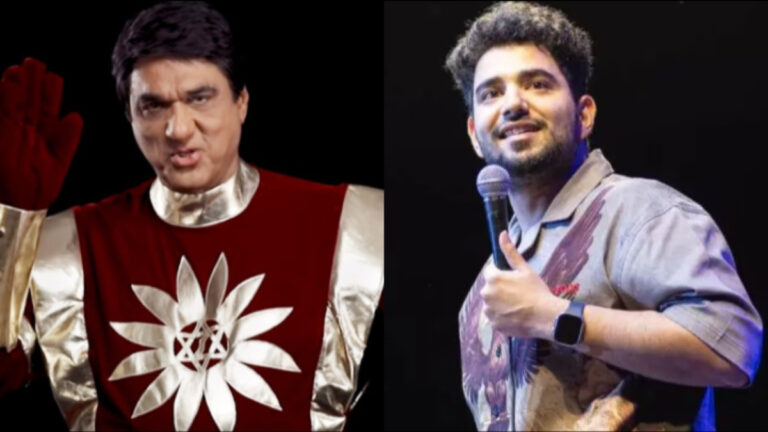
New Delhi, June 22, 2026: The Indian internet has witnessed some wild plot twists, but few could have predicted this one. Veteran actor Mukesh Khanna—the man who came to embody moral righteousness for an entire generation as India’s first television superhero, Shaktimaan—has teamed up with edgy stand-up comedian Samay Raina.

Just months ago, Khanna was leading a fierce public crusade against Raina’s hit YouTube talent hunt, India’s Got Latent, calling the show vulgar, Americanized, and destructive to Indian culture. Today, the internet’s loud critic and its favorite controversial comic are sharing screen space as commercial co-stars.

The Rooftop Reunion That Shocked the Internet

On June 22, 2026, Samay Raina dropped a promotional video on Instagram for a new smartphone launch. It begins with Raina talking on the phone, casually celebrating the launch of India’s Got Latent Season 2. He says, “Thanks, yaar. The show is returning now. As they say, darkness doesn’t prevail for long.”

Suddenly, the camera cuts to a familiar figure standing majestically on Raina’s rooftop. Enter Mukesh Khanna.

Instead of backing away from their very real, very bitter public feud, the commercial leans directly into it. A surprised Samay asks, “What are you doing on my roof, sir?”

Khanna continues to berate Raina’s signature comedic style, adding, “You live in India, but your jokes are vulgar and American style.” The tension builds until the script smoothly transitions into a smartphone pitch. By the end of the commercial, the heavy tension melts away, Raina drops a characteristic joke, and even the stern Mukesh Khanna cracks a smile, prompting Samay to sign off with a cheeky, “Sorry, Shaktimaan.”

Tracing the Feud: How Did We Get Here?

To understand why this collaboration has left social media users completely blindsided, one has to look back at the chaotic timeline of their public fallout.

The trouble began in February 2025 during the explosive first season of India’s Got Latent. A series of dark, unrestricted jokes on the show—including a highly controversial segment involving podcaster Ranveer Allahbadia—triggered immense public backlash. The fallout was severe, resulting in three separate First Information Reports (FIRs) being filed against Samay Raina and others involved for pushing the boundaries of legal and cultural decency.

Among the loudest voices demanding accountability was Mukesh Khanna. The veteran actor, who frequently uses his YouTube channel and social media platforms to critique modern media, did not hold back.

The feud escalated drastically in April 2026, when Samay Raina released his one-hour stand-up special Still Alive. In the special, Raina took direct aim at Khanna, mocking the legacy of Shaktimaan and dismissing old-school critics as “irrelevant people” simply looking to latch onto his massive viewership for digital clout.

Khanna went on to suggest that Raina shouldn’t be allowed on digital screens at all. Instead, he argued, the comedian deserved to be blackened, sat on a donkey, and paraded through the streets while children threw eggs and tomatoes at him for insulting a cultural icon.

When Samay confidently announced the arrival of Season 2 later that month, Khanna told reporters in interviews that authorities should ban the program outright, accusing the show’s producers of “corrupting the youth brigade” for quick ad revenue.

“Shaktimaan Bik Gaya?”: Netizens Divide Over Content vs. Cash

The sudden shift from demanding public humiliation to signing a corporate brand contract together has divided the internet into two distinct, vocal camps.

For Samay Raina’s massive, young fanbase, the collaboration is being viewed as a masterstroke of marketing and digital irony. Many labeled the video a “legendary collab” and joked that they expected the release of Grand Theft Auto 6 before seeing these two in the same frame. Supporters argue that Raina has mastered the art of “internet jujitsu”—turning his harshest haters into content collaborators, much like his previous work with traditional comedian Sunil Pal.

However, the reception for Mukesh Khanna has been considerably less forgiving. Thousands of social media users took to platforms like X and Instagram to call out the 67-year-old actor for what they perceive as blatant hypocrisy.

Many comments echoed a sentiment of exhaustion with online outrage culture, with one viral tweet noting: “Mukesh Khanna was brutally abusing Samay Raina for ‘destroying culture’ just a few weeks back. Today, Shaktimaan is happily shooting a commercial with the same guy. Did he sell his moral values for a quick paycheck?”

The New Era of Internet Marketing

Beyond the gossip and the tweets, this crossover highlights a rapidly growing trend in modern advertising. Brands are no longer avoiding public controversies; instead, they are actively financing them.

By pairing a traditional media purist with a boundary-pushing internet native, the advertisement successfully hacked the attention economy. It forced audiences who normally skip commercials to watch, analyze, and share a product video entirely because of the real-life subtext operating beneath the script.

As India’s Got Latent Season 2 rolls out with a reportedly cleaner, legally filtered format—featuring mainstream Bollywood stars like Alia Bhatt and Sharvari—the storm surrounding its creator refuses to die down. Whether you view the alliance as a brilliant subversion of online hate or a cynical commercial compromise, one thing is undeniable: Samay Raina and Mukesh Khanna just staged the most unexpected ceasefire in modern Indian entertainment.

Why the House of the Dragon Season 3 Premiere Saves the Show

New Delhi, June 22, 2026: If you left the House of the Dragon Season 2 finale feeling a little hungry, you weren’t alone. “The Queen Who Ever Was” was less of a roaring finale and more of an extensive, 70-minute game of chess, leaving audiences dangling just as the armies of Westeros finally began to march. Critics and fans alike called it anticlimactic—an episode that stacked the kindling but refused to strike the match.

But with the arrival of the Season 3 premiere, showrunner Ryan Condal and the team at HBO have achieved a rare television feat. By kicking things off with a massive, 72-minute spectacle that delivers the highly anticipated Battle of the Gullet, Season 3, Episode 1 functions less like a traditional premiere and more like the explosive finale Season 2 desperately deserved.

The Great Set-Up: Why Season 2 Left Us Cold

To understand why the Season 3 premiere feels like such a massive triumph, it helps to look back at the frustrations of Season 2. After the tragic death of Lucerys Targaryen in the Season 1 closer, fans tuned in expecting a swift, devastating civil war. Instead, they got a masterclass in political foot-dragging.

While individual episodes delivered spectacular highlights—most notably the heartbreaking aerial clash at Rook’s Rest that claimed Princess Rhaenys and her dragon Meleys—the overall pacing felt stretched. Queen Rhaenyra Targaryen (Emma D’Arcy) spent much of her time trapped in cautious diplomacy, desperately searching for alternative paths to peace. Meanwhile, Daemon (Matt Smith) was effectively locked in a “haunted house” storyline at Harrenhal, subjected to endless vision quests orchestrated by Alys Rivers.

By the time the finale rolled around, the tension was white-hot. Rhaenyra had successfully recruited the “Dragonseeds”—bastards of Targaryen blood like Hugh Hammer and Ulf White—to claim the faction’s riderless dragons. Across the water, Alicent Hightower (Olivia Cooke) made a secret, late-night trip to Dragonstone, effectively offering to surrender King’s Landing to save her children. The pieces were perfectly aligned on the board. The armies were marching, the Triarchy’s fleet was sailing, and the Winter Wolves of House Stark were heading south. But right as the conflict was supposed to spill over, the screen faded to black. The season ended on a cliffhanger, leaving viewers with a bitter, 48% Rotten Tomatoes score for the finale and a grueling two-year wait.

Striking the Match: The Battle of the Gullet

If Season 2 was all about delayed gratification, the Season 3 premiere completely shatters the inertia. The episode drops viewers directly into the jaws of the Battle of the Gullet, widely regarded by readers of George R.R. Martin’s Fire & Blood as one of the bloodiest and most devastating naval conflicts in Westerosi history.

The scope of this sequence is breathtaking. The Triarchy’s warships, secured by Tyland Lannister’s diplomatic (and mud-wrestling) efforts in Essos, clash violently with the Sea Snake Corlys Velaryon’s blockading fleet. But this isn’t just a battle fought with wood and iron; it is a full-scale draconic slaughter. The premiere wastes no time utilizing the Black faction’s new aerial military advantage. The sheer scale of the visual effects, from roaring dragons raining fire down on warships to the chaotic, water-clogged skirmishes on the decks below, rivals the absolute peak spectacles of Game of Thrones.

What makes the sequence truly spectacular, however, is that the action serves the narrative. The tactical choices made by the characters over the last eight episodes finally carry real weight. The unstable nature of the freshly minted dragonseeds is put to the ultimate test in the crucible of active warfare, shifting the balance of power across the Seven Kingdoms in a matter of minutes.

Emotional Payoffs and Superb Performances

Beyond the visual brilliance of the dragon warfare, the premiere excels because it finally delivers on the emotional promises made in Season 2. The agonizing choices forced upon the characters come home to roost.

Emma D’Arcy’s performance as Rhaenyra continues to be the emotional anchor of the series. After spending an entire season trying to avoid bloodshed, Rhaenyra is forced to confront the brutal reality of open warfare. D’Arcy masterfully balances the weight of grief, power, and the sudden, terrifying realization of what unleashing dragon warfare actually means for the realm.

Equally compelling is the fallout in King’s Landing. With King Aegon II (Tom Glynn-Carney) having been secreted out of the capital by Larys Strong following his horrific injuries at Rook’s Rest, the power vacuum leaves Prince Regent Aemond (Ewan Mitchell) increasingly isolated and volatile. The tragedy of Alicent Hightower also deepens; having essentially committed treason by offering up the gates of the city to Rhaenyra, she must now watch the horrific consequences of a war she can no longer stop. The political poetry of her final conversation with Rhaenyra in the previous season—where she was told that history would paint her as a villain—begins to manifest in devastating fashion.

Looking Ahead: The Dance Is Finally Here

By structuring the Season 3 premiere as a high-octane payoff to the previous year’s build-up, showrunner Ryan Condal has effectively recalibrated the rhythm of the series. The shift from a 10-episode format in Season 1 to a tight, eight-episode structure for Seasons 2 and 3 was initially criticized for creating a rushed and truncated narrative arc. However, this premiere proves that the shorter season layout can work beautifully when the story stops holding back.

With HBO already confirming that House of the Dragon will conclude with its fourth season, the narrative is officially heading into its endgame. The political posturing and side-choosing that defined the first two chapters are over. The realm is on fire, the consequences are real, and the stakes have never been higher.

Ultimately, the Season 3 premiere does exactly what a great piece of episodic television should do: it honors the slow-burn investment of the past while propelling the audience into a thrilling, unpredictable future. For everyone who spent the last two years wishing that the Season 2 finale had featured a little less talking and a lot more fire, this episode is the perfect, blood-soaked apology. The Dance of the Dragons has truly begun, and it was well worth the wait.

Operation Sherawali: Day 31 of Rajouri Search Ops

0

New Delhi, June 22, 2026 — The extensive counter-terrorism mission in the border district of Rajouri has officially hit a significant milestone. Code-named Operation Sherawali, the multi-agency combing operation entered its 31st consecutive day on Monday, June 22, 2026. Security forces have further intensified their search, cordon, and surveillance grids across the highly challenging forest stretches of the region to track down and neutralize holed-up armed infiltrators.

The Landscape and Scope of the Mission

Launched in the final week of May 2026, Operation Sherawali stands out as one of the longest ongoing counter-terrorism operations in the Jammu region in recent years. The mission is primarily focused deep within the dense forest belts of the Dorimal-Gambhir Mughlan sector, located inside the Manjakote area of Rajouri district.

The geography of the area presents a formidable challenge to the troops on the ground. The terrain is characterized by:

  • Steep, unforgiving mountain slopes.
  • Jagged rocky ridges and natural cave hideouts.
  • Extremely thick vegetation that limits natural visibility.

To counter these environmental obstacles, the Indian Army, the Jammu and Kashmir Police Special Operations Group (SOG), and the Central Reserve Police Force (CRPF) have deployed a highly coordinated multi-layered dragnet. Joint teams are utilizing advanced technological assets, including high-resolution surveillance drones and thermal imaging cameras, alongside specialized canine units to map out suspicious movements beneath the heavy forest canopy.

Timeline of Significant Events

The month-long campaign has seen critical spikes in tactical activity, alongside moments of profound sacrifice by the security personnel navigating the harsh wilderness.

First Contact and Heavy Engagements

Late May 2026

The operation commenced following specific intelligence inputs regarding a group of heavily armed infiltrators. On May 28, a major tactical phase erupted as heavy firing and shelling were exchanged in the Dorimal forest area. Security forces rushed massive reinforcements to the site, creating an impenetrable cordon to prevent the targets from breaking through toward nearby residential zones.

Tragic Loss in Rugged Terrain

June 7, 2026

The uncompromising nature of the landscape claimed the life of an Indian Army soldier. While maneuvering through a slippery, rocky slope during active operational duties, the jawan lost his footing and suffered severe injuries from a fall. He was quickly evacuated to a medical facility but ultimately succumbed to his injuries, highlighting the extreme physical hazards faced by the troops.

Heightened Regional Alert and LoC Incidents

June 16, 2026

While Operation Sherawali maintained its pressure in Manjakote, regional tensions remained high. In the nearby Nowshera sector along the Line of Control (LoC), a Junior Commissioned Officer (JCO) and three soldiers from the 4 Kumaon regiment sustained injuries due to an accidental landmine blast during a routine anti-infiltration patrol. The injured personnel were airlifted to the Army’s Command Hospital in Udhampur for specialized treatment.

31st Day Grid Reinforcement

June 22, 2026

The operation crossed the one-month mark. Security officials confirmed that fresh area domination patrols, vehicle checkpoints, and deep-woods combing have been reinforced to completely choke any potential escape routes for the remaining subversives.

Tactical Strategy and Current Ground Reality

As the operation enters its second month, the strategy has shifted toward a sustained war of attrition and precise area containment. Security officials indicate that the initial intelligence pointed to the presence of two to three highly trained terrorists hiding within the natural limestone formations and thick undergrowth. Because these groups rely on stealth and defensive positioning, forces are moving systematically rather than rushing the dense pockets, minimizing the risk of walking into ambushes.

Area domination patrols have set up static observation posts on the higher ridges overlooking the Gambhir Mughlan sector. Simultaneously, mobile check-posts have been erected on all connecting roads and mountain passes leading out of the Manjakote area. Every vehicle passing through the district highways is undergoing thorough inspections, and identification logs are being strictly maintained.

Community Impact and Public Cooperation

The prolonged nature of Operation Sherawali has naturally kept the local population on edge, yet the relationship between residents and the military remains resilient. Authorities have frequently interacted with village elders and local bodies in Rajouri, urging the public to maintain a high state of civil alertness.

Residents have been advised to avoid entering the deep forest zones of Dorimal until the area is officially declared clear. Local communities are actively cooperating with law enforcement, reporting any unfamiliar faces or unusual activities in the periphery of their villages. Security heads have emphasized that public cooperation is the foundational pillar required to achieve a definitive breakthrough and restore complete normalcy to the border belt.

The continuous presence of troops has also served as a reassurance to border villages, ensuring that regular socio-economic activities outside the active search zones face minimal disruption. The determination shown by the combined forces over the past 31 days underscores a broader national security directive to firmly secure the Pir Panjal region against cross-border infiltration and maintain institutional stability across Jammu and Kashmir.

TGSRTC Electric Bus Gutted by Fire Near Karimnagar; All 41 Passengers Safe

0

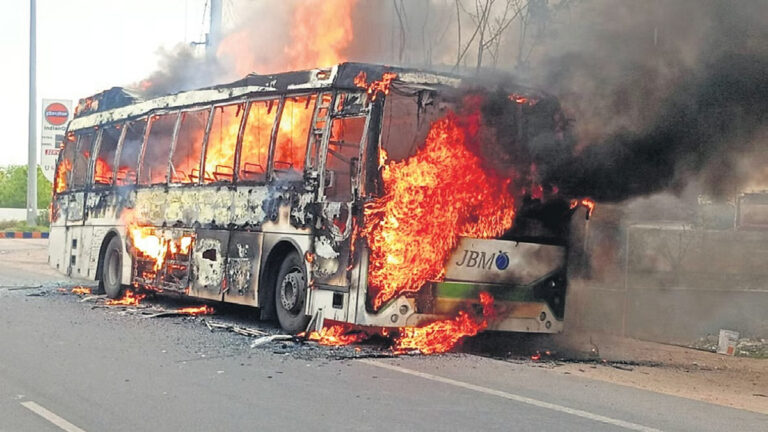
New Delhi, June 22, 2026: A major disaster was averted on the Rajiv Rahadari (State Highway-1) on Sunday morning when a Telangana State Road Transport Corporation (TGSRTC) Super Luxury electric bus caught fire and was completely destroyed near Karimnagar. Thanks to the quick reflexes and presence of mind of the driver, all passengers and crew members evacuated safely without a single injury.

Here is a breakdown of how the incident unfolded and the key details:

The Incident at a Glance

  • Date & Time: Sunday, June 21, 2026, at approximately 8:20 AM.
  • Location: Near Chepala Colony / Algunur outskirts, close to the Kakatiya Canal near Karimnagar.
  • Route: From Karimnagar-II Depot heading toward Jubilee Bus Station (JBS) in Hyderabad.
  • Vehicle Number: TG 02T 1138 (Electric Super Luxury Bus).
  • Occupants: 41 passengers (including two children) along with the driver and conductor.

Timely Action Averts Catastrophe

The electric bus had departed from the Karimnagar bus station at around 8:00 AM. Roughly twenty minutes into the journey, while crossing the Kakatiya Canal on Rajiv Rahadari, the driver, Boini Prasanth, noticed a burning smell and fumes emerging from the High Voltage (HV) battery compartment.

Recognizing the imminent danger, Prasanth immediately acted:

  1. Strategic Parking: He steered the vehicle away from a nearby Indian Oil petrol pump to prevent a massive secondary explosion and brought the bus to a halt safely on the roadside.
  2. Rapid Evacuation: He activated the emergency alert system, opened the main doors, and manually assisted in clearing the emergency exit. All 41 passengers managed to disembark within a few minutes.
  3. Firefighting Attempt: After ensuring passengers were clear, Prasanth attempted to douse the rapidly spreading flames using the onboard fire extinguishers, though the blaze quickly grew out of control.

Within five minutes of the initial stop, the flames completely engulfed the vehicle. A fire tender from the Fire and Emergency Services rushed to the spot and brought the blaze under control, but the electric bus was reduced to a charred metal frame.

Technical Inspection & Recognition

The LMD Colony police have registered a case and cleared the highway to resume normal traffic flow. A high-level technical investigation has been launched by the Transport Department, led by Joint Commissioner Chandrasekhar Goud and District Transport Commissioner Ravinder, to ascertain whether the fire was triggered by a short circuit or a specific battery malfunction.