Home Blog Page 247

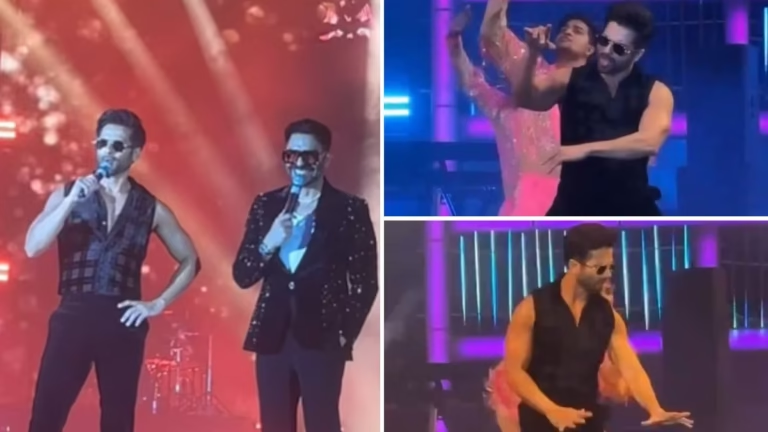
Shahid Kapoor Shines at Haldiram’s Viral Nagpur Wedding

0

New Delhi, February 17, 2026: The recent “Haldiram wedding” in Nagpur has taken the internet by storm, blending billionaire-level opulence with high-octane Bollywood energy. The event celebrated the marriage of Vivek Agrawal—son of Kamal Agrawal (MD of Haldiram Group) and grandson of Chairman Shivkishan Agrawal—to Kenisha Paliwal.

The celebration, held at the Le Meridien Nagpur over the weekend of February 14-15, 2026, became a viral sensation for several reasons:

1. Shahid Kapoor’s High-Energy Performance

Shahid Kapoor was the undisputed star of the sangeet night. Dressed in a sleek all-black ensemble, he performed a high-energy medley of his greatest hits. Fans were particularly thrilled to see him recreate his iconic moves to “Mauja Hi Mauja” (from Jab We Met), proving it remains his ultimate wedding anthem nearly 20 years later.

2. The “Upside-Down” Chandelier Cake

Perhaps the most shared detail was the eight-tier wedding cake. Far from a traditional stand, it was an upside-down chandelier cake that literally descended from the ceiling. Handcrafted by a local Nagpur bakery (The Cake Affair), the white-and-gold masterpiece featured intricate pearl beads and was lowered via a motorized chandelier for the couple to cut.

3. Spectacular Fireworks & Decor

The scale of the production was described by guests as “royal.” Key highlights included:

  • Pyrotechnics: Massive firework displays lit up the Nagpur sky during the sangeet and the main ceremony.
  • Palatial Decor: The venue featured towering floral arrangements, glistening ice sculptures, and massive chandeliers to create a palace-like atmosphere.
  • The Guest List: Beyond Shahid Kapoor, other celebrities like Rakul Preet Singh and Vaani Kapoor were in attendance, along with political figures like BJP leader Hansraj Ahir.

4. A Cinematic Coincidence

Interestingly, the wedding took place just as Shahid Kapoor’s latest film, O’ Romeo (directed by Vishal Bhardwaj and co-starring Triptii Dimri), released in theaters on February 13, 2026. His appearance in Nagpur served as an impromptu celebration of the film’s successful opening weekend.

The “Haldiram wedding” has set a new benchmark for “big fat Indian weddings” in 2026, combining the heritage of one of India’s most famous snack empires with modern-day viral spectacle.

Apple Announces March 4 Event

0

New Delhi, February 17, 2026: Apple has officially broken its silence for 2026, sending out invitations for a “Special Apple Experience” scheduled for March 4. Moving away from the traditional high-octane keynotes at Apple Park, this event appears to be a globally distributed affair, with simultaneous in-person gatherings hosted in New York, London, and Shanghai.

The branding of the event as an “experience” rather than a “launch” has sparked intense speculation. Industry analysts suggest this indicates a more hands-on, intimate showcase for the media, potentially focusing on how Apple’s latest hardware integrates with its rapidly evolving AI suite, Apple Intelligence.

The Star of the Show: A “Budget” MacBook

The most buzzing rumor surrounding the March 4 date is the debut of an entirely new laptop category: a low-cost MacBook.

  • Silicon Shift: To achieve a lower price point—rumored to be between $699 and $799—Apple may ditch the M-series chips for this model, instead utilizing an A18 Pro chip (the same powerful silicon found in the iPhone 16 Pro).
  • Design & Color: The invitation features a 3D Apple logo with a vibrant yellow, green, and blue gradient. This has led experts to believe the new MacBook will move away from “Space Gray” toward a playful, multi-color palette reminiscent of the iconic iMac G3.
  • Target Audience: With a rumored 12.9-inch display, this device is expected to target the education sector and entry-level users, providing a more premium alternative to Chromebooks.

Mac Updates: The Powerhouse M5 Transition

For the professional crowd, March 4 is expected to mark the next chapter in Apple Silicon.

  1. MacBook Pro (M5 Pro / M5 Max): Apple is likely to refresh the 14-inch and 16-inch MacBook Pro models. While a major redesign isn’t expected until 2027, the jump to M5 chips will focus on enhanced AI processing power and thermal efficiency.
  2. M5 MacBook Air: Following the success of the M3 and M4 variants, the world’s most popular laptop is tipped for an M5 upgrade, maintaining its fanless design while boosting performance-per-watt.
  3. Mac Studio & Displays: Some reports suggest we might see a sneak peek at an M5 Mac Studio or a long-overdue update to the Studio Display, potentially featuring mini-LED technology.

Beyond the Mac: iPhone 17e and New iPads

While the Mac is the headliner, Apple’s spring cycle usually includes several “supporting acts.”

  • iPhone 17e: The successor to the budget-friendly iPhone 16e is expected to debut. Rumors point toward the inclusion of the A19 chip, the introduction of the Dynamic Island (finally retiring the notch), and the addition of MagSafe charging.
  • iPad Refreshes: The iPad Air is slated for a jump to the M4 chip, while the base-model 12th-Gen iPad will likely receive the A18, bringing Apple Intelligence to the company’s most affordable tablet.

Software and AI: The Siri Overhaul

The timing of the event aligns with the anticipated release of iOS 26.4. This update is rumored to include the first major “Siri 2.0” features, backed by a partnership with Google Gemini. This “Experience” might be the first time the public sees Apple’s virtual assistant performing complex, on-screen actions with true contextual awareness.

How to Watch

Unlike the September iPhone launches, Apple has not yet confirmed a public livestream for the March 4 event. With the focus being on “experiences” in three different time zones, the company may opt for a series of press releases and localized demo videos rather than a single pre-recorded film.

Ukraine and Russia Enter U.S.-Brokered Talks Amid Intensified Frontline Pressure

0

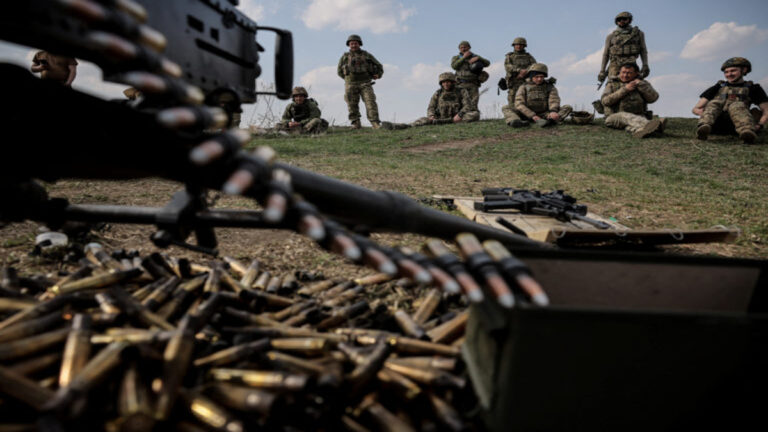
New Delhi, February 17, 2026: As the fourth anniversary of Russia’s full-scale invasion looms, a high-level Ukrainian delegation has arrived in Switzerland for a fresh round of peace negotiations. The talks, scheduled for February 17–18, 2026, represent a critical attempt by the United States to mediate an end to Europe’s bloodiest conflict since World War II. However, the diplomatic mission is unfolding against a backdrop of severe military escalation and hardening rhetoric from both Moscow and Kyiv.

A Shifting Diplomatic Landscape

The transition of the talks from Abu Dhabi to the lakeside city of Geneva marks a pivot toward more “substantive” political issues. While previous rounds focused primarily on humanitarian efforts and prisoner swaps—including a recent exchange of 157 prisoners—the Kremlin has indicated that the Geneva agenda will tackle the war’s most contentious disputes.

  • Key Mediators: The negotiations are being spearheaded by U.S. envoys Steve Witkoff and Jared Kushner, acting on behalf of the Trump administration, which has reportedly set a June 2026 deadline for a final settlement.
  • Delegation Leads: Ukraine’s team is led by Rustem Umerov, Secretary of the National Security and Defense Council, alongside intelligence chief Kyrylo Budanov. Russia has sent Vladimir Medinsky, a nationalist advisor to President Putin who previously led the 2022 Istanbul talks.

The “Land for Peace” Deadlock

The central sticking point remains territorial integrity. According to Kremlin spokesperson Dmitry Peskov, the talks will address a “broader range of issues,” specifically territory.

“The main issues concern both the territories and everything else related to the demands we have put forward,” Peskov told reporters on Monday.

Reports suggest Russia is demanding that Ukraine formally cede the remaining 20% of the Donetsk region—territory Moscow has yet to fully capture. Conversely, President Volodymyr Zelenskyy has remained firm that any deal must include “sustainable and lasting” security guarantees, warning that Ukraine faces immense pressure to make concessions that could undermine its sovereignty.

Military Pressure as a Negotiating Tool

As diplomats gather in climate-controlled rooms, the situation on the ground remains brutal. Both nations appear to be using military force to gain leverage at the bargaining table:

  • Russian Aerial Offensive: On the eve of the talks, Russia launched a massive barrage of 62 strike drones and six missiles across Ukraine. President Zelenskyy noted that the strikes demonstrate Russia’s lack of genuine interest in a peaceful resolution, stating that the Russian army currently has “no orders other than to continue striking.”
  • Energy Infrastructure Under Fire: Continued Russian strikes on the power grid have left hundreds of thousands of Ukrainians without heating during a harsh winter, a tactic many observers describe as “energy terrorism” intended to break civilian morale.
  • Ukrainian Resilience: Despite the pressure, Ukrainian forces have maintained a “steel porcupine” defense. Recent reports indicate the fastest battlefield gains for Ukraine in over two years in certain sectors, even as Russia prepares for a potential spring offensive.

Obstacles to a Breakthrough

Expectations for a breakthrough remain low. Deep-seated mistrust defines the relationship between the two delegations. Ukrainian officials have historically criticized Medinsky for his “maximalist” demands and historical revisionism regarding Ukrainian identity.

Furthermore, significant gaps remain regarding:

  1. Security Guarantees: Kyiv is seeking a 30-to-50-year commitment from the U.S., while the current administration has reportedly proposed a 15-year window.
  2. Nuclear Safety: The control of the Zaporizhzhia Nuclear Power Plant remains a volatile issue with no clear consensus.
  3. Future Elections: U.S. pressure for Ukraine to hold presidential elections by May 15 has met resistance in Kyiv, where officials argue that current security conditions make a fair vote impossible.

Looking Ahead

The Geneva talks are a test of whether “shuttle diplomacy” can survive a war of attrition. While the international community watches with bated breath, the proximity of the February 24 anniversary serves as a somber reminder of the human cost of the stalemate. Whether the parties can move beyond performative dialogue to a genuine ceasefire remains the defining question of 2026.

Indian Army NCC Special Entry 2026: 70+ Posts Announced

0

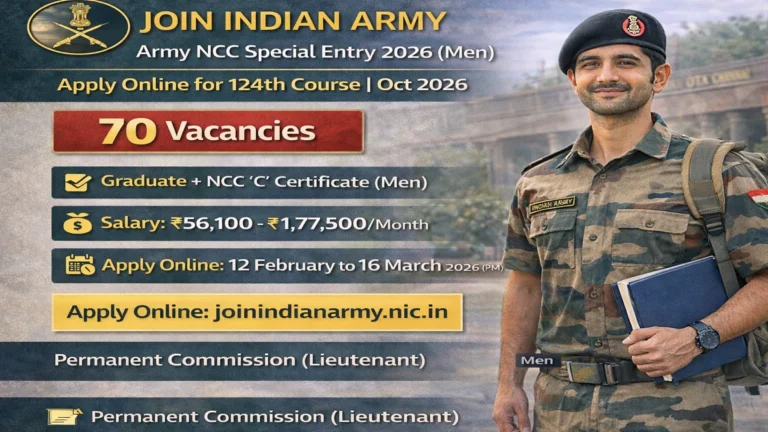
New Delhi, February 17, 2026: The Indian Army has officially released the notification for the NCC Special Entry Scheme 124th Course (October 2026). This prestigious recruitment drive offers a direct pathway for National Cadet Corps (NCC) cadets to join the Indian Army as commissioned officers without appearing for a written entrance examination.

Applications are invited from unmarried male and female candidates, including the Wards of Battle Casualties of Army personnel. The recruitment aims to fill a total of 76 vacancies (70 for Men and 6 for Women) for the Short Service Commission (Non-Technical).

Key Highlights of the Recruitment

FeatureDetails
Recruitment NameNCC Special Entry Scheme 124th Course
OrganizationIndian Army
Total Vacancies76 (Men: 70, Women: 6)
Training AcademyOfficers Training Academy (OTA), Chennai
Commission TypeShort Service Commission (NT)
Course CommencementOctober 2026

Important Dates

Candidates are advised to adhere to the following timeline to ensure their applications are submitted on time:

  • Online Application Start Date (Men): February 12, 2026
  • Online Application Start Date (Women): February 13, 2026
  • Last Date to Apply: March 16, 2026 (by 3:00 PM)
  • SSB Interview Period: Expected between June and August 2026
  • Course Starts: October 2026

Eligibility Criteria

To be eligible for the NCC Special Entry 2026, candidates must meet the following requirements:

1. Age Limit

Applicants must be between 19 and 25 years of age as of July 1, 2026. This means candidates must have been born between July 2, 2001, and July 1, 2007 (both dates inclusive).

2. Educational Qualification

  • NCC ‘C’ Certificate Holders: A Graduate Degree from a recognized university or equivalent with an aggregate of at least 50% marks (considering marks of all years).
  • Final Year Students: Candidates in their final year can apply, provided they have secured a minimum of 50% aggregate in the previous years and can produce their degree by the commencement of the course.

3. NCC Certificate Requirements

  • Candidates must have served for a minimum of two or three academic years in the Senior Division/Wing of the NCC.
  • Must have obtained a minimum of a ‘B’ Grade in the NCC ‘C’ Certificate Examination.

4. Wards of Battle Casualties

For the wards of battle casualties, an NCC ‘C’ certificate is not mandatory. However, they must possess a degree with a minimum of 50% aggregate marks.

Selection Process

The selection for the Indian Army NCC Special Entry is a multi-stage process that emphasizes personality and leadership qualities over academic rote learning.

  1. Shortlisting of Applications: Initial screening is based on academic performance and NCC grading. The Army reserves the right to fix a cutoff to limit the number of candidates called for the SSB.
  2. SSB Interview: Shortlisted candidates will undergo a two-stage Service Selection Board (SSB) interview lasting five days. This includes psychological tests, group tasks, and personal interviews.
  3. Medical Examination: Candidates recommended by the SSB will undergo a thorough medical examination by a board of service doctors.
  4. Final Merit List: A merit list is prepared based solely on the marks obtained in the SSB interview (provided the candidate is medically fit).

Training and Benefits

Selected candidates will undergo 49 weeks of rigorous military training at the Officers Training Academy (OTA) in Chennai. Upon successful completion, they will be commissioned as Lieutenants.

  • Stipend: During the training period, cadets receive a stipend of approximately ₹56,100 per month.
  • Salary: Post-commissioning, a Lieutenant’s pay starts at Level 10 of the Pay Matrix (₹56,100 – ₹1,77,500), plus Military Service Pay (MSP) and various allowances.

How to Apply

Eligible candidates can apply online through the official recruitment portal:

  1. Visit the official website: [suspicious link removed].
  2. Click on ‘Officer Entry Appln/Login’ and then ‘Registration’.
  3. Fill in the registration details and verify your account.
  4. Once logged in, click on ‘Apply Online’ under the Dashboard.
  5. Find the link for ‘Short Service Commission NCC Special Entry Course’ and fill out the application form carefully.
  6. Upload the required documents, review the details, and click ‘Submit’.
  7. Take a printout of the application form for future reference and for the SSB interview.

Neena Gupta Calls Out Deep-Rooted Patriarchy and the Obsession with ‘Virgin Brides

0

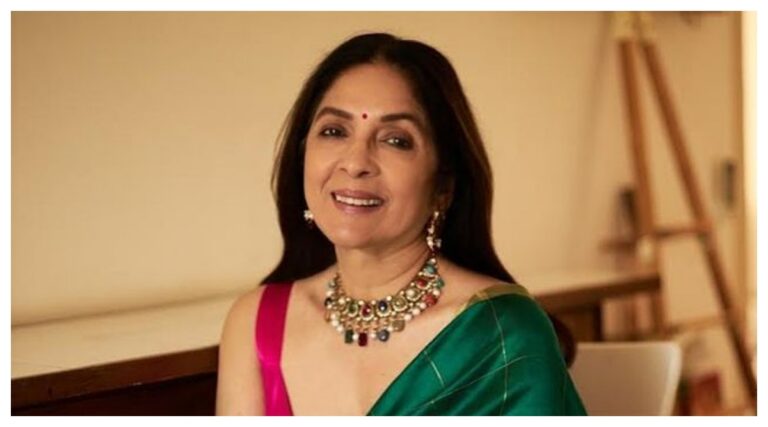
New Delhi, February 17, 2026: Veteran actor Neena Gupta has never been one to mince words. Known for her trailblazing life choices and her “tell-it-like-it-is” persona, the Panchayat star recently sparked a fresh conversation on the regressive mindsets that continue to plague Indian society. In a candid interaction, Gupta highlighted that despite the outward appearance of progress, the fundamental expectations placed on women—especially regarding marriage and purity—remain shockingly stagnant.

The Myth of the ‘Modern’ Indian Man

During a recent interview with Shubhankar Mishra, Neena Gupta addressed the uncomfortable reality of the Indian marriage market. When asked if the traditional obsession with virginity has faded in the modern era, her response was a blunt reality check.

“What has changed now? Are you talking about India? Who says that people are open? A lot of things have not changed in our country,” she remarked.

Gupta argued that the “progressive India” we see in metropolitan bubbles represents only a tiny minority. According to her, the “real India” still adheres to age-old patriarchal norms where a woman’s worth is often tied to her past. She emphasized that “they want a virgin wife,” suggesting that even well-educated men often carry these deep-seated prejudices into their private lives.

The Case of the Forbidden Family Photo

To illustrate how control is exercised over women in domestic spaces, Gupta shared a poignant anecdote involving her own niece. She revealed that even minor personal choices are often dictated by in-laws under the guise of “tradition” or “family values.”

  • The Incident: Gupta recalled how her niece was prohibited by her mother-in-law from keeping a family photograph (featuring her own parents and relatives) on her bedside table.
  • The Power Dynamics: In another instance, a relative was reportedly stopped from keeping a picture of her preferred deity, Sai Baba, and told to replace it with the guru worshipped by the husband’s family.

“We have a long way to go when it comes to changing the condition of women in the country,” Gupta added, pointing out that these are not isolated incidents but reflections of a system designed to strip women of their individual identity post-marriage.

“Strong Women are Not Marriage Material”

This isn’t the first time Gupta has touched upon the “quiet cost” of being an independent woman in India. In a separate conversation with Humans of Bombay earlier this year, she claimed that nearly 95% of men are intimidated by “strong women.”

Gupta noted that men often prefer “helpless women” because it allows them to maintain a sense of power and control. “They hate women who have their own thoughts, who work, who are committed to their own careers,” she observed.

A Legacy of Defying Norms

Neena Gupta’s critique carries weight because she has lived the consequences of defying these very norms. In the late 1980s, she made headlines for her relationship with West Indian cricketer Vivian Richards and her decision to raise her daughter, Masaba Gupta, as a single mother—a move that was practically unheard of in the social landscape of that time.

While she has often stated she wouldn’t necessarily “recommend” her path to everyone due to the immense hardships involved, she continues to use her platform to challenge the hypocrisy of a society that demands modernity in public but enforces medieval restrictions behind closed doors.

The Takeaway

Neena Gupta’s comments serve as a sobering reminder that financial independence and education are only half the battle. As she puts it, until the domestic “power play” changes and the obsession with a woman’s “purity” and “submissiveness” ends, the claim that India has changed will remain a surface-level illusion.

Jaya Bachchan Attends Prayer Meet for Anand Sagar; Urges Paparazzi for Space

0

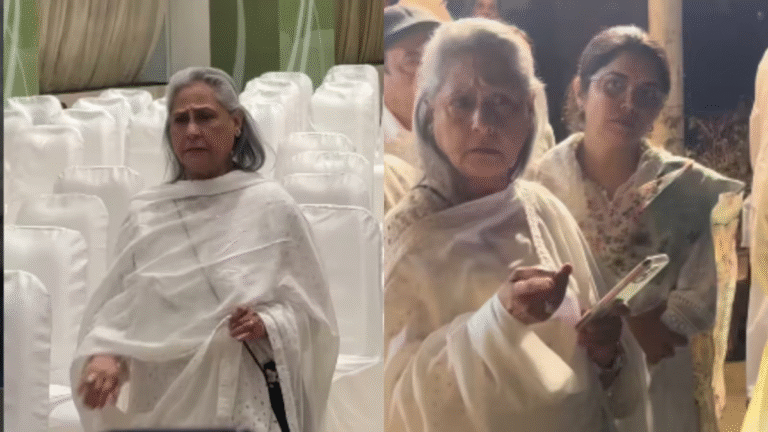
New Delhi, February 17, 2026– Veteran actress and Member of Parliament Jaya Bachchan was among the prominent figures from the Indian film industry who attended the prayer meeting for the late filmmaker Anand Sagar, son of the legendary Ramanand Sagar. The solemn event, held in Mumbai, saw a gathering of close friends, family, and industry colleagues paying their final respects to the director known for his significant contributions to Indian television.

A Somber Occasion

Anand Sagar, who carried forward the monumental legacy of the Sagar family, passed away recently, leaving a void in the fraternity. He was best known for directing the 2008 remake of the cult classic Ramayan, among various other successful television ventures.

Jaya Bachchan, known for her long-standing relationship with the Sagar family, arrived at the venue dressed in simple traditional attire to offer her condolences. Her presence underscored the deep-rooted ties between the veteran actors of the “Golden Era” and the visionary creators who shaped Indian broadcast history.

“Rasta Dijiye Please”: A Brief Encounter with the Press

As is common at high-profile gatherings in the city, a large contingent of paparazzi and media personnel was stationed outside the venue. Bachchan, who has a well-documented history of advocating for personal space and decorum in public settings, found herself navigating a dense crowd of photographers upon her exit.

In a video that has since circulated on social media, the actress can be seen maintaining a composed but firm demeanor. As the cameras crowded the entrance, she was heard saying:

“Rasta dijiye please” (Please make way), She requested the media to step back and allow her to reach her vehicle. Unlike previous instances where the veteran star has expressed visible frustration with aggressive “paparazzi culture,” this interaction was noted for its directness and restraint, as she focused on the solemnity of the afternoon.

The Legacy of Anand Sagar

The prayer meet served as a reminder of the Sagar family’s impact on Indian storytelling. While Ramanand Sagar became a household name with the original Ramayan in the 1980s, Anand Sagar successfully modernized the epic for a new generation, proving that the family’s knack for mythological storytelling remained unparalleled.

Prominent attendees at the meet included:

  • Family members of the Sagar production house.
  • Veterans from the television industry who worked under Anand Sagar’s direction.
  • Close associates from the film fraternity who shared a decades-long bond with the family.

A Call for Decorum

The incident has once again sparked a conversation online regarding the boundaries of celebrity journalism, especially during private moments of grief. Fans of the actress took to social media to support her request for space, noting that prayer meetings require a level of sensitivity that is often lost in the rush for “viral” content.

As the industry mourns the loss of a seasoned director, Jaya Bachchan’s brief interaction serves as a gentle reminder of the human element behind the headlines—a request for dignity amidst the flashbulbs.

Indian Stock Market Bounces Back: Sensex and Nifty Erase Early Losses Led by Infosys, ITC

0

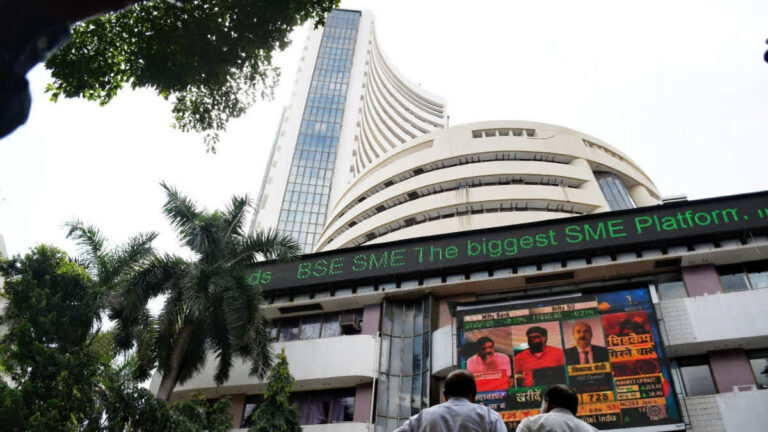
February 17, 2026 – The Indian equity benchmarks, the BSE Sensex and NSE Nifty 50, demonstrated significant resilience on Tuesday, staging a sharp recovery to trade in the green after a shaky start. The turnaround was primarily fueled by robust buying in heavyweights like Infosys and ITC, alongside a broader rebound in the information technology sector.

Market Performance at a Glance

After opening with a downward bias due to weak global cues and thin trading volumes in Asia, the domestic indices quickly found their footing.

  • BSE Sensex: After dropping nearly 290 points in early trade to hit a low of 82,987.43, the 30-share index surged back to gain over 116 points, trading near the 83,393 level.
  • NSE Nifty 50: The 50-share index recovered from an early low of 25,570.30, erasing a 112-point deficit to trade comfortably above the 25,690 mark.

Key Market Drivers: The “Big Two”

The recovery was anchored by two of the market’s most influential stocks, each benefiting from specific fundamental and technical triggers.

1. Infosys Leads IT Rebound

Infosys emerged as the top gainer, surging over 3%. This rally comes as a major relief for the IT sector, which had faced a brutal sell-off over the past two weeks.

  • The Catalyst: Investor sentiment was bolstered by Infosys’s strategic collaboration with Anthropic, a leading AI safety and research company.
  • Sectoral Impact: This partnership helped soothe fears that generative AI would disrupt the traditional IT services model. Peer stocks like TCS, HCL Tech, and Tech Mahindra also saw gains, lifting the Nifty IT index by nearly 2%.

2. ITC Shows Defensive Strength

FMCG giant ITC provided the necessary cushion to the indices, rising over 2.5%.

  • Trading Activity: ITC was among the most active stocks by value, with massive delivery volumes indicating strong institutional interest.
  • Technical Reversal: Despite a cautious outlook on the broader FMCG sector, ITC’s ability to hold key support levels triggered short-covering, helping the stock trade near its intraday high of ₹328.

Winners and Laggards

While the tech and FMCG sectors led the charge, the market breadth remained a tug-of-war between various sectors.

Top GainersTop Laggards
Infosys (+3.5%)Eternal (Zomato) (-2.9%)
ITC (+2.6%)Hindalco (-2.4%)
HCL Tech (+1.8%)Shriram Finance (-2.1%)
Asian Paints (+1.7%)Tata Steel (-1.6%)
State Bank of India (+1.1%)Reliance Industries (-1.1%)

Global and Domestic Context

The recovery is particularly notable given the lack of support from international markets.

  • Global Cues: US markets were closed on Monday for Presidents’ Day, leaving a vacuum in global leadership. Several Asian markets, including China and South Korea, remained shut for the Lunar New Year holidays.
  • Institutional Activity: Domestic Institutional Investors (DIIs) continued to be the “white knights” of the Indian market, purchasing equities worth ₹1,666.98 crore on Monday, which effectively countered the ₹972.13 crore sold by Foreign Institutional Investors (FIIs).

Expert Outlook

Market analysts suggest that the recovery indicates a “buy-on-dips” mentality among domestic investors.

“The rebound in IT stocks, specifically Infosys, is a crucial signal. It suggests that the market is beginning to differentiate between AI disruption and AI adoption,” said a senior equity strategist. “While the trend remains cautious due to technical resistance, the recovery from early lows shows that the underlying liquidity remains strong.”

Investors are now keeping a close eye on the US-Iran nuclear negotiations in Geneva and upcoming domestic economic data, which are expected to dictate the market’s trajectory for the remainder of the week.

Karisma Kapoor & Queen Rania: A Power Meet in Mumbai

0

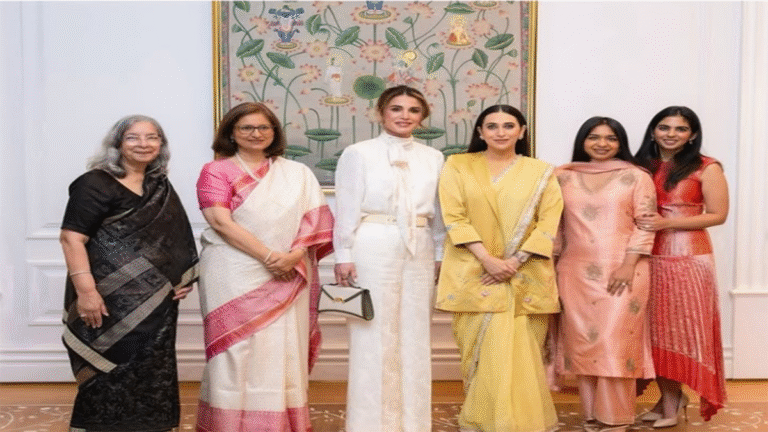
February 17, 2026 — In a powerful convergence of global royalty and Bollywood heritage, actress Karisma Kapoor participated in a high-profile private roundtable discussion alongside Her Majesty Queen Rania Al Abdullah of Jordan. The event, hosted by Isha Ambani, brought together a select group of influential women to discuss leadership, social impact, and the future of female empowerment.

The gathering took place at the Nita Mukesh Ambani Cultural Centre (NMACC) in Mumbai, serving as a focal point for Queen Rania’s recent visit to India.

A Dialogue on the Future

The roundtable, titled “Celebration of Women Leadership in India,” provided a platform for participants to share insights on how women are reshaping the landscape of business, arts, and social change. Karisma Kapoor, a veteran of Indian cinema, shared the table with other prominent figures, including entrepreneur Navya Naveli Nanda and fashion designer Masaba Gupta.

Taking to Instagram to share a glimpse of the evening, Karisma described the experience as an “honour and privilege.” She posted a series of photographs, including a notable shot of her in a graceful soft yellow traditional ensemble standing alongside Queen Rania.

“Moments like these are a powerful reminder that when women come together with purpose, honesty, and vision, they don’t just shape conversations—they help shape the future for the next generation,” Karisma wrote in her caption.

Queen Rania’s India Visit

Queen Rania, globally recognized for her advocacy in education and cross-cultural dialogue, used her visit to India to emphasize the value of humility in leadership. Before the Mumbai event, she delivered a keynote address at the ET Now Global Business Summit in New Delhi, where she spoke about the necessity of building resilient systems that prioritize human dignity.

In Mumbai, Her Majesty’s itinerary included:

  • A Visit to Antilia: Meeting with the Ambani family, including Mukesh and Nita Ambani.
  • Exploring Indian Craftsmanship: Visiting the Chanakya School of Craft and Swadesh, where she observed traditional hand-embroidery and weaving techniques.
  • Meaningful Exchange: Engaging with Indian women leaders to discuss the transformative role of women in the global south.

Karisma Kapoor: A Voice for the Arts

Karisma’s presence at the roundtable highlights her continued relevance not just as an actor, but as a representative of the Indian film industry on the global stage. Having defined an era of Bollywood with films like Dil To Pagal Hai and Zubeidaa, she has transitioned into a role as a cultural icon who frequently engages in philanthropic and social discussions.

The evening concluded with Karisma expressing her gratitude to Isha Ambani for organizing such a “meaningful and memorable” exchange. As images of the event circulate online, it stands as a testament to the growing synergy between international leadership and India’s creative and business sectors.

Regina Cassandra Slams Bollywood’s “Snooty” Bias

0

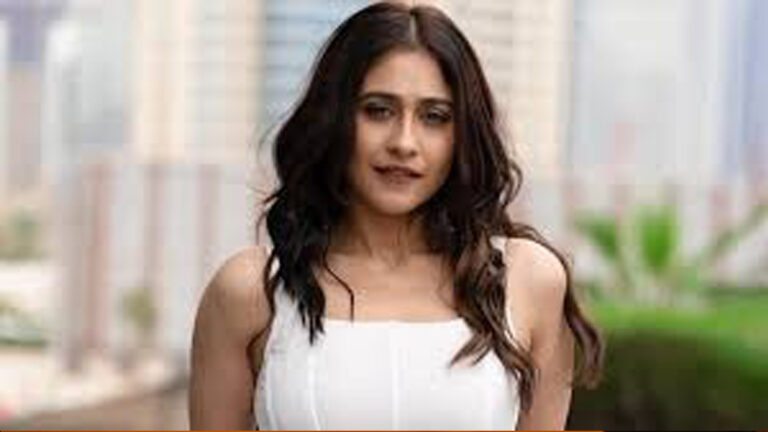
New Delhi, February 17, 2026: In a series of candid interviews spanning late 2024 and early 2026, actor Regena Cassandrra has shed light on the subtle yet pervasive regional biases within the Indian film industry. Despite a career spanning two decades across Tamil and Telugu cinema, Cassandrra’s transition into Bollywood has been marked by what she describes as “derogatory treatment” and a “snooty” outlook toward talent from the South.

Breaking the “Foreigner” Barrier

In a recent conversation with Hindustan Times (February 2026), Regena shared that her entry into Hindi cinema was not as seamless as her filmography might suggest. Despite her fluency in Hindi—a language she reads, writes, and dubs for herself—she noted that she was often made to feel like an outsider.

“A lot of people treated me in a derogatory manner, not just with words, but with actions,” she revealed. “It’s a sort of derogatory outlook… I was being put down in a certain way.”

She further highlighted a double standard in casting: while North Indian actors are frequently cast in South Indian roles without knowing the local languages, South Indian actors are often denied North Indian roles due to perceived “language barriers” or regional “looks.”

  • The Punjabi Paradox: Regena pointed out the irony where a Punjabi actress can easily be cast as a South Indian lead, yet she is told she cannot play a Punjabi character despite her linguistic proficiency.
  • The Fluency Myth: While she has hired tutors and writes her scripts in Devanagari to perfect her pronunciation, she feels the “South Indian” tag still precedes her talent in the eyes of many Mumbai-based casting directors.

A “Snooty” Past vs. a Pragmatic Present

According to the actress, the Bollywood landscape was “pretty snooty” toward Southern stars before the pandemic. However, the global success of films like Baahubali, RRR, and Kantara has forced a shift in dynamics.

“Now, they don’t have a choice,” she stated in an interview with News18. She believes the industry’s sudden warmth toward South Indian stars is less about an organic change of heart and more about a desperate need to tap into the massive audience base that Southern cinema now commands.

Key Differences in Industry Operations

Regena also highlighted the structural differences that make Bollywood feel “unforgiving” to outsiders:

  • Networking Culture: Unlike the South, where work is often managed through PROs and long-term associations, Bollywood relies heavily on aggressive networking and casting agents.
  • Sync Sound vs. Dubbing: She noted that the North is “unforgiving” with language because of the prevalence of sync sound, whereas the South is generally more accommodating to actors who struggle with the language.

Looking Ahead: The Power of Versatility

Despite these hurdles, Regena Cassandrra remains a formidable force in the pan-Indian space. Her 2025–2026 lineup demonstrates her refusal to be pigeonholed into “regional” slots.

ProjectIndustryRole / Context
JaatBollywoodStarring alongside Sunny Deol
VidaamuyarchiTamilA high-octane thriller with Ajith Kumar
The WivesBollywoodA Madhur Bhandarkar film exploring the lives of star wives
Section 108BollywoodA suspense drama featuring Nawazuddin Siddiqui

Regena’s journey is a testament to the evolving identity of the “Indian Actor.” By speaking out, she aims to normalize a two-way street where talent transcends geography, ensuring that the next generation of actors is judged by their craft rather than their roots.

U.S. Ambassador Sergio Gor Experiences Bengaluru’s Iconic Culture with Tejasvi Surya

0

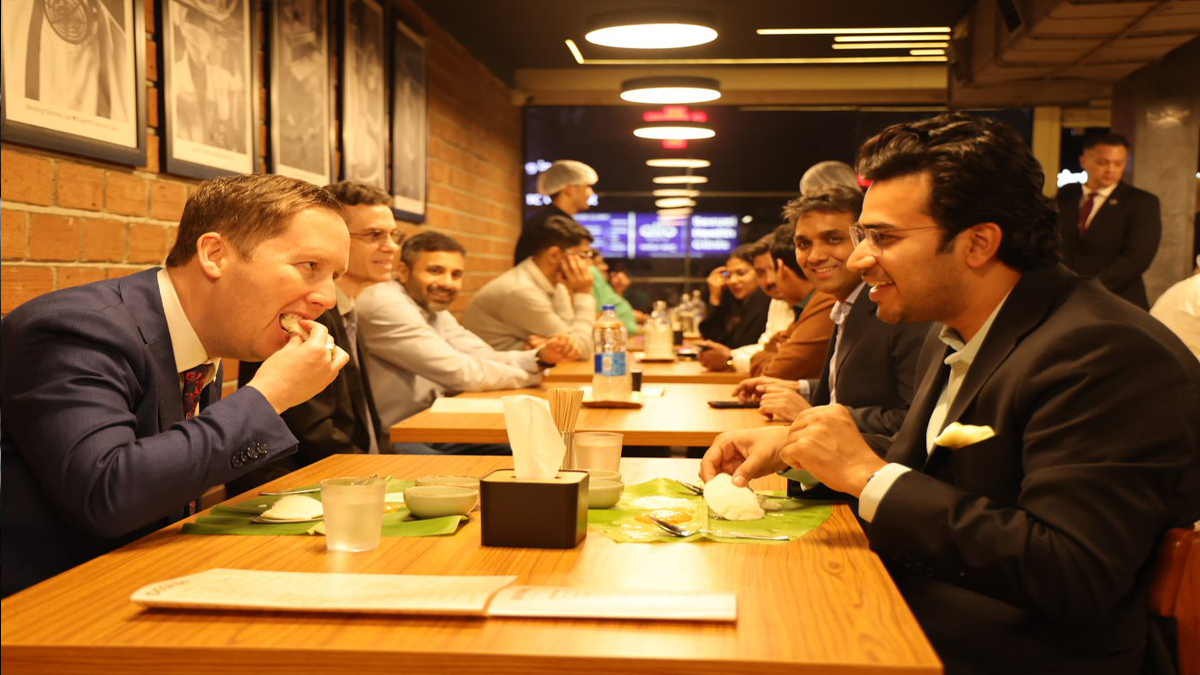
New Delhi, February 17, 2026: In a blend of high-level diplomacy and local tradition, the United States Ambassador to India, Sergio Gor, recently spent a day immersing himself in the vibrant cultural fabric of Bengaluru. Eschewing the usual formalities of diplomatic convoys, the Ambassador took to the streets of India’s Silicon Valley, accompanied by Bengaluru South Member of Parliament, Tejasvi Surya.

The visit, which has since gained significant traction on social media, highlighted the “true essence” of Bengaluru, focusing on its world-renowned culinary scene and its unique urban transit.

A Morning of South Indian Delicacies

The diplomatic tour began at one of the city’s legendary local eateries, where Ambassador Gor was introduced to the quintessential Bengaluru breakfast. Guided by Surya, the Ambassador enjoyed a crisp Masala Dosa, a staple of Karnataka’s heritage.

Following the meal, the duo engaged in the time-honored tradition of drinking Filter Coffee. Images shared online showed the Ambassador observing the technique of pouring the frothy beverage, a ritual that many locals consider an art form. Observers noted that Gor appeared to thoroughly enjoy the authentic flavors, marking a departure from the standard continental fare usually served at official functions.

Navigating the City in a ‘Tuk-Tuk’

Adding a dash of adventure to the itinerary, the Ambassador opted for a ride in a local Auto-rickshaw (commonly known as a ‘tuk-tuk’). For many foreign dignitaries, the three-wheeled vehicle represents the heartbeat of Indian urban mobility.

Navigating through the city’s bustling traffic, Ambassador Gor and MP Tejasvi Surya used the ride as an opportunity to discuss the growing ties between the United States and Bengaluru, particularly in the sectors of technology, innovation, and people-to-people exchanges.

Strengthening Indo-US Ties through Culture

Taking to social platform X (formerly Twitter), MP Tejasvi Surya expressed his delight in hosting the Ambassador. He noted that such interactions are vital for building a deeper understanding of India’s regional diversity and the daily lives of its citizens.

“Bengaluru is a city that bridges tradition with the future,” Surya commented, highlighting how the city’s local flavors and tech-driven economy make it a unique destination for global leaders.

Ambassador Gor’s visit comes at a time when Bengaluru continues to be a focal point for American investments and diplomatic interest. By “soaking in the flavor” of the city, the Ambassador’s outing signaled a warm and approachable chapter in the ongoing partnership between the two nations.

Public Reaction

The sight of a high-ranking diplomat enjoying a roadside coffee and an auto ride resonated deeply with the residents of Bengaluru. Local netizens praised the gesture, stating that such “soft diplomacy” does more to strengthen international bonds than boardroom meetings alone.

As the U.S. continues to expand its footprint in India’s tech hub, experiences like these underscore the mutual respect and shared values that define the modern Indo-US relationship.