Home Blog Page 9

First Responders Smash Window to Save Survivors in Fierce Texas Plane Crash

0

New Delhi, June 17, 2026 — A routine evening commute turned into a scene of chaotic devastation and astonishing bravery late Tuesday night when a private business jet carrying six people crashed directly onto a busy highway in Laredo, Texas. The aircraft, which immediately burst into flames upon impact, triggered a frantic, race-against-time rescue operation as both passing motorists and arriving first responders desperately fought through thick smoke and intense fire to pull survivors from the burning wreckage.

The incident occurred shortly after 10:00 p.m. on Loop 20, a major roadway located near the Texas-Mexico border and a short distance from the Laredo International Airport. Authorities have confirmed that one person tragically lost their life in the accident. However, due to the selfless and rapid actions of bystanders and local police officers—who put their own lives at risk to smash open the cockpit windows and pry open the aircraft’s doors—five other individuals miraculously managed to escape the burning fuselage.

A Night of Chaos on the Highway

The aircraft involved in the crash was identified as a Cessna Citation Latitude twin jet, operated by the fractional private aviation company NetJets. According to flight tracking data from FlightAware, the plane had departed from Los Cabos International Airport in Mexico at 6:19 p.m. and was approaching its destination in Laredo when something went terribly wrong.

Dashcam footage captured by nearby drivers and shared widely across social media platforms paints a terrifying picture of the aircraft’s final moments. The jet can be seen careening heavily down Loop 20, slicing through a highway light pole before slamming hard into a concrete highway barrier. The force of the impact nearly sheared the multi-million-dollar business jet in half. The plane’s tail section was completely ripped from the main fuselage, plunging over the barrier and coming to a rest on a lower-level road below, while the main body of the aircraft tipped precariously onto its side on the highway deck.

As fuel ignited, a fierce fire rapidly began to engulf the crumpled wreckage, sending plumes of heavy, toxic black smoke into the night sky. For the drivers traveling along Loop 20, the scene was completely surreal.

“It looked like part of a movie. I was in shock,” said Zayra Garza, a local resident who was driving her co-workers home when she came upon the crash. Garza pulled her vehicle over and began recording the unfolding disaster, quickly realizing that this was not just a fire—there were people trapped inside, fighting for their lives.

The Race to Break the Cockpit Window

As smoke filled the cabin, those trapped inside began desperately hammering on the glass from the interior. Seeing the movement through the windows, the initial shock of the surrounding motorists instantly shifted into a collective rescue effort. Drivers abandoned their cars on the highway and ran directly toward the blazing wreckage.

The scene quickly turned into an extraordinary display of civilian heroism. Two bystanders rushed toward the nose of the plane armed with a sledgehammer and a shovel. In dramatic video footage captured at the scene, these citizens can be seen repeatedly striking the reinforced cockpit glass in a frantic bid to create an escape hatch for the flight crew, while others used heavy rods to try and prop open the main cabin door, which was jammed due to the severe structural deformation of the fuselage.

“What was worrying me was the fire,” Garza later recounted, noting that her husband was among those who jumped out of their car to sprint into the danger zone. “I was concerned that it could have just exploded at any time.”

Within moments, Laredo police officers and first responders arrived at the scene, immediately joining the civilian effort. Facing blistering heat and breathing in thick, dark fumes, officers took turns striking the windows and pulling at the doors. The working conditions were so punishing that several officers had to repeatedly dart away from the immediate perimeter of the plane, doubling over in intense coughing fits as the toxic smoke overwhelmed them.

A Miraculous Escape Amid Devastation

Thanks to the combined, relentless efforts of the first responders and civilians, the jammed cabin door was finally pried open far enough to allow an escape. Garza watched in relief as three passengers, who appeared to be teenagers, rushed out of the opening, closely followed by a person who appeared to be the ship’s pilot.

However, the rescue was far from over. Another crew member was seen struggling to pull an unconscious passenger from the choking interior. With the fire intensifying and spreading across the fuselage, a Laredo firefighter utilized a small ladder to physically climb up and into the burning, tilted aircraft to pull the remaining passenger to safety, while fellow firefighters blanketed the wreckage with water from emergency hoses.

Investigation Underway

As dawn broke over Laredo, Loop 20 remained completely closed in both directions as federal and local agencies secured the crash site. The National Transportation Safety Board (NTSB) and the Federal Aviation Administration (FAA) have launched a comprehensive investigation to determine exactly what caused the twin jet to come down on a public highway.

While official findings will take time, Gilberto Sanchez, the Director of the Laredo International Airport, told local television station KGNS-TV that preliminary indications suggest the aircraft experienced a critical mechanical failure during its final approach. NetJets released a brief statement confirming that one of its aircraft was involved in the accident and stated that the company is fully cooperating with federal investigators and local authorities.

The Laredo highway crash marks the third significant aviation accident in the United States within a span of just three days, putting a stark spotlight on private aviation safety protocols. Yet, while the investigation into the mechanical failure begins, the community of Laredo is focusing on the remarkable bravery displayed on Loop 20. Had it not been for the split-second decisions of ordinary drivers and the sheer determination of first responders to smash through the cockpit glass, the loss of life would have undoubtedly been far worse.


Alia Bhatt Shuts Down ‘Alpha’ Teaser Backlash With Hilarious Sharvari Post

New Delhi, June 17, 2026: The online chatter surrounding Yash Raj Films’ upcoming spy-thriller Alpha just took a highly entertaining detour. Bollywood superstar Alia Bhatt chose the perfect way to address intense social media criticism regarding the film’s first teaser: a healthy dose of sarcasm. Leaning into the viral backlash head-on, Alia shared a playful, stylish photo alongside her co-star Sharvari on Instagram, captioning it with a deadpan question that had been dominating the internet for days: “Where is Sharvari?”

The witty comeback immediately turned what started as mild internet outrage into a celebratory moment of camaraderie, proving that both actresses know exactly how to handle the hyper-analytical world of social media fandom.

The Teaser Outrage: What Sparked the “Missing” Debate?

The controversy kicked off earlier this month when YRF dropped the highly anticipated, 115-second teaser for Alpha. Directed by Shiv Rawail, the movie is the first strictly female-led installment in the massively successful YRF Spy Universe, which shares DNA with blockbusters like Pathaan, Tiger, and War. Naturally, anticipation was through the roof.

However, when the promo finally aired, fans and internet sleuths immediately noticed a massive omission. While the teaser leaned heavily into high-octane action—showcasing Alia Bhatt’s character, Sita, being trained by a menacing Bobby Deol to become a ruthless killing machine—it featured absolutely zero footage of Sharvari.

Given that Sharvari was heavily promoted as the co-lead of this explosive action feature, her complete absence rubbed many fans the wrong way. Platforms like X (formerly Twitter) and Reddit were quickly flooded with complaints. Angry comments piled up under the teaser, with users demanding to know why the film was advertised as a two-heroine ensemble if the promotional material treated it like a solo character piece for Alia. Unverified internet rumors even began to swirl, claiming that Sharvari’s role had been drastically reduced or cut in the editing room.

Inside the Look: Alia’s “Oh, There She Is!” Reply

Instead of issuing a formal statement or ignoring the digital noise, Alia chose to diffuse the situation by joining the joke. Taking to Instagram just ahead of the film’s formal trailer launch, she posted a collaborative series of photos with Sharvari that served as the ultimate tongue-in-cheek response.

In the photos, the Alpha girls are seen looking incredibly cool and synchronized. Both are sporting matching white t-shirts emblazoned with the bold Alpha logo, paired with dark, oversized sunglasses. Sharvari styled her look with casual denim, while Alia opted for a high-waisted skirt featuring a sharp asymmetrical hemline and a slit.

The visual layout of the carousel post was purely intentional comedy. In the first picture, Alia looks slightly confused and looking around, matching her caption: “Where is Sharvari?” In the very next slide, the focus shifts entirely to a glowing Sharvari, as if to say, “Oh, look, found her!”

Sharvari herself didn’t miss a beat. She quickly jumped into the comment section to play along, typing out a hilarious, school-style response: “Preeessseeeenttt miss!!!”

The lighthearted exchange sent fans into a frenzy, effectively neutralising the online negativity. Industry observers praised the move, noting that the off-screen bond between the two actors completely shuts down any manufactured narrative of an on-set rivalry or screen-time disputes.

Marketing Strategy or Genuine Oversight?

While fans were busy trolling, film industry experts suggested that keeping Sharvari hidden from the first teaser was likely a calculated, tactical marketing decision by YRF head Aditya Chopra. In a cinematic universe where plot twists and character reveals are everything, hiding a main character’s look or exact allegiance is a tried-and-tested way to build suspense.

By centering the teaser strictly around Alia’s origin story—revealing her 18th birthday scene where her father (Bobby Deol) inducts her into a dangerous, top-secret espionage program—the studio established the core stakes of the film without giving away how the rest of the puzzle pieces fit. Sharvari’s character remains a massive wildcard, which means her eventual reveal in the upcoming theatrical trailer will likely carry twice the impact.

What We Know About Alpha So Far

With a global theatrical release locked in for July 3, 2026, Alpha is shaping up to be one of the biggest blockbusters of the summer. The film also features veteran actor Anil Kapoor in a pivotal role. The official synopsis promises an edgy, gritty origin story of an elite soldier built to survive under extreme physical and mental circumstances.

The movie has seen its fair share of shuffling behind the scenes, having moved from its initial 2025 timeline to various dates in mid-2026. Ultimately, YRF advanced the premiere by a week, settling on the early July slot to maximize its box office run.

Despite the initial teaser hiccups, support from within the film fraternity remains absolute. High-profile peers like Katrina Kaif, Priyanka Chopra, and Vicky Kaushal have all taken to social media to praise the film’s gritty visual tone, with Kaushal playfully nicknaming his co-star “Alpha Bhatt.”

By addressing the “Where is Sharvari” chatter with style and humor, Alia and Sharvari have successfully shifted the narrative. The focus is no longer on internet complaints, but rather on the formidable on-screen duo ready to rewrite the rules of Bollywood action.

Snap Unveils SPECS Standalone AR Glasses

0

New Delhi, June 17, 2026 — Defying investor skepticism and carving out its own path in the spatial computing landscape, Snap Inc. has officially pulled back the curtain on SPECS, its first standalone, consumer-facing augmented reality (AR) glasses. Unveiled by CEO Evan Spiegel at the Augmented World Expo (AWE), the device represents a bold $3.5 billion bet on a post-smartphone future. Rather than functioning as a mere camera accessory or a tethered notification screen, SPECS operate as a fully untethered “face computer,” blending real-time artificial intelligence with an advanced optical display to fundamentally change how users interact with their environments.

Moving Beyond the Smartphone Screen

For years, technology giants have wrestled with a critical tradeoff: building AI glasses that are lightweight but limited, or developing mixed-reality headsets that are incredibly powerful but isolated and heavy. With SPECS, Snap aims to introduce an entirely new product category. Spiegel emphasized a growing societal fatigue with staring down at small, opaque smartphone screens—a habit that disrupts human connection and detaches people from their physical surroundings.

SPECS are engineered to let technology fade gracefully into the background. The device does not require a pocketed compute “puck,” physical cables, or a smartphone connection to operate. By packing all processing, battery life, and spatial sensors directly into the frame, Snap allows users to keep their heads up, interacting with digital elements that are securely anchored to the physical world around them.

Premium Hardware Beneath the Frame

To achieve a completely standalone experience, Snap utilized premium, high-performance materials and a dual-chip architecture. Crafted from lightweight Swiss TR90 polymer, the eyewear is available in two sizes—a 47 mm version weighing 132 grams and a 52 mm version weighing 136 grams. While they retain a slightly chunky, geometric profile to accommodate their massive technical stack, they are roughly 40% lighter than Snap’s previous developer prototypes, making them far more viable for extended daily wear.

The visual experience is anchored by Snap’s proprietary Liquid Crystal on Silicon (LCoS) miniature projectors and a completely redesigned optical waveguide system. This technology utilizes billions of microscopic nanostructures—thin enough that 10,000 can sit on the tip of a single human hair—to project vivid digital imagery with minimal distortion.

The resulting 51-degree diagonal field of view represents a 30% increase over previous generations. This enables a visual canvas that feels like a crisp 24-inch desktop monitor when sitting at a desk, or scales up to simulate a massive 115-inch home theater screen projected ten feet away. Furthermore, because real-world environments change, the glasses feature advanced electrochromic lenses. These lenses can automatically transition from crystal clear to a dark sunglass tint in just 10 seconds, ensuring optimal display contrast whether indoors or under direct sunlight.

Dual Processing and Spatial AI

The internal engine driving SPECS relies on two distinct Qualcomm Snapdragon processors dividing the computational heavy lifting. One processor is entirely dedicated to continuous computer vision and high-speed hand tracking, while the second chip handles the rendering of interactive AR “Lenses.” By separating these tasks, Snap has achieved an incredibly low 7-millisecond motion-to-photon latency. This means digital graphics update virtually instantly as the wearer moves their head, preventing the motion sickness often associated with early spatial hardware and making digital objects feel genuinely physical.

Operating on the newly upgraded Snap OS, interaction with the device relies entirely on natural human inputs: intuitive hand gestures and voice commands. This system allows generative artificial intelligence to transcend the traditional text box. Because the built-in cameras allow the AI to see exactly what the wearer sees, the device acts as a contextual assistant.

If a user is repairing a household appliance, instructions can appear floating next to the machine; if they are walking through a new city, navigation arrows map directly onto the pavement. Additional day-to-day applications include instant spatial measurements, real-time live translation during face-to-face conversations, and interactive learning tools.

Cultivating a Developer Ecosystem

Snap acknowledges that hardware is only as strong as the experiences built for it. Alongside the consumer rollout, the company launched a comprehensive suite of developer tools to accelerate the creation of spatial applications. Through an upgraded version of Lens Studio, creators can access agentic AI development platforms—including integrations with cutting-edge coding assistants like Claude Code and Cursor—to rapidly prototype, debug, and optimize new AR experiences.

Furthermore, Snap introduced a Native Development Kit (NDK), allowing software engineering teams to port their own existing code libraries directly into the Snap OS ecosystem. Hundreds of shared, multi-user Lenses are already available, allowing multiple people wearing SPECS to interact with the same digital objects simultaneously, whether playing a tabletop game or collaborating on a 3D design workspace.

Market Availability and Outlook

With a premium retail price of $2,195, Snap is intentionally positioning SPECS as a high-end vanguard device for tech enthusiasts, developers, and early adopters. Pre-orders have officially opened on the company’s website with a $200 refundable deposit, and the hardware is scheduled to begin shipping to customers in the United States, United Kingdom, and France later this year.

While competitors like Meta find massive commercial success with audio-only and notification-based smart glasses, Snap is taking the harder, more complex route of full environmental synthesis. By successfully combining standalone computing, physical comfort, and multi-modal AI into a single pair of glasses, SPECS clear a definitive path toward an era where our digital and physical realities exist seamlessly as one.

RBI Young Professional Recruitment 2026: Apply for 12 Posts at ₹1.5 Lakh/Month

0

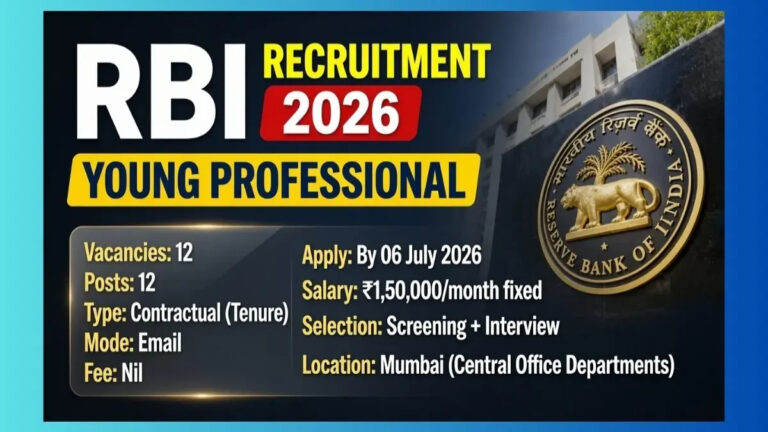
New Delhi, June 17, 2026: The Reserve Bank of India (RBI) has officially opened the application window for its highly competitive Young Professional (YP) recruitment drive for 2026. This year, India’s central bank is looking to onboard 12 exceptional young professionals across various high-impact, specialized domains at its Central Office in Mumbai. Offering a lucrative, fixed monthly stipend of ₹1,50,000, this program represents one of the most prestigious early-career opportunities in the public financial sector. Eligible candidates must act quickly, as the deadline to submit applications is July 6, 2026.

This initiative is designed to inject fresh academic perspective and cutting-edge technical expertise into the central bank’s core decision-making frameworks. Selected candidates will gain rare, hands-on experience by actively contributing to short- and medium-term policy assignments, quantitative research, and strategic technological implementations.

Specializations and Available Posts

The 2026 recruitment drive covers a broad array of modern financial and technological areas, signaling the RBI’s focus on future-ready central banking. The 12 open positions are spread across the following specialized roles:

  • Technology & Security: Young Professional roles in Artificial Intelligence (AI), Quantum Technology, and Cyber Security & Information Technology Risk.
  • Analytics & Supervision: Positions dedicated to Policy Analytics (within the Department of Supervision), Credit Risk Analytics & Regulatory Policy, Data Analysis, and Data Analytics & Policy Research.
  • Payments & Markets: Roles targeting the Payment Ecosystem, Policy and Research in Domestic & Cross-Border Payment Systems, and Financial Markets.
  • Sustainability & Macroeconomics: Specialized slots for Climate Change Risk and Sustainable Finance, alongside Policy and Research within the Department of Economic and Policy Research (DEPR).

Salary, Contract Tenure, and Working Conditions

The financial package is highly competitive. Selected candidates will receive a fixed monthly stipend of ₹1,50,000, subject to statutory tax deductions. However, the RBI has explicitly clarified that Young Professionals are hired strictly as independent contractors and will not be eligible for standard allowances, medical benefits, housing perks, or regular employee privileges enjoyed by permanent staff.

The initial engagement is scheduled for a tenure of three years. Depending on individual performance evaluations and the central bank’s operational requirements, this contract can be extended by mutual agreement. However, the total duration cannot exceed a maximum cap of five years under any circumstances.

Because this is a prestigious, full-time commitment, the RBI enforces strict operational guidelines. Young Professionals are explicitly barred from holding dual professional commitments or undertaking any external part-time work, consultancy, or business activities. Furthermore, candidates will receive 15 days of leave per calendar year allocated on a pro-rata basis. The RBI also maintains a strict attendance policy, warning that unauthorized absences spanning eight consecutive working days or more can lead to immediate contract termination.

Eligibility Criteria: Age and Education

Before applying, candidates must ensure they meet the baseline eligibility demands specified by the central bank:

  • Nationality: The applicant must be a citizen of India.
  • Age Limit: Candidates must be between 21 and 30 years old as of the final application date (July 6, 2026).
  • Educational Qualifications: Educational benchmarks vary heavily depending on the specific post. The RBI requires advanced professional degrees, postgraduate qualifications, or research backgrounds in relevant streams:
    • For AI, Cyber Security, and Quantum Tech: Post-graduate degrees or technical engineering qualifications (B.E./B.Tech/M.Tech) in Computer Science, Cyber Security, Physics, or Quantum Computing.
    • For Analytics and Economics: Master’s degrees or PhDs in Economics, Statistics, Finance, Data Science, or Econometrics. For the DEPR role, a course paper in quantitative subjects during post-graduation is mandatory.
    • For Payment and Policy roles: Postgraduates in Public Policy, Commerce, Finance, or qualified Chartered Accountants (CAs).

Detailed Step-by-Step Application Process

The application process is unique as it is conducted via official email correspondence rather than a standard web portal. Candidates must meticulously compile their documents to avoid automated rejection during preliminary screenings.

1.Download the Official Form:Step 1.

Visit the official Reserve Bank of India website opportunities section and download the recruitment notification. Locate and print out the prescribed application form labeled as Annexure-VI, filling out all the required informational fields cleanly.

2.Assemble the Document Package:Step 2.

Gather all supporting documents. You will need a detailed Curriculum Vitae (CV), academic certificates/transcripts spanning your undergraduate and postgraduate studies, a written Statement of Interest explaining your motivation, a formal recommendation/reference letter from a professional referee, and a relevant sample of your academic or policy writing.

3.Convert to a Single PDF:Step 3.

Scan the filled application form and all assembled supporting documents. Merge them into a single, unified PDF file. Ensure that the final file size does not exceed the mandatory 5 MB threshold, as attachments heavier than this will be blocked.

4.Email Your Application:Step 4.

Compose an email addressed to the official recruitment inbox: yphrmdco@rbi.org.in. You must use a strictly formatted subject line: YP Application – [Post Code] – [Name of the Candidate]. Ensure all details are accurate, and note that if you wish to apply for multiple distinct positions, you must send entirely separate emails for each post.

Selection and Onboarding Timeline

Once the application window closes on July 6, 2026, the RBI will initiate a rigorous screening process. Due to the high volume of applications expected for just 12 vacancies, the bank reserves the right to set strict benchmarks to limit the number of candidates progressing further.

Official interview call letters will be dispatched solely via email to shortlisted candidates. Following successful interviews, selected individuals must pass a medical fitness examination and a comprehensive police verification check verifying clean criminal histories. The tentative onboarding and joining timeline at the Mumbai Central Office is slated between August and October 2026.

Aishwarya Rajesh Explains the Quirky Electric Twist in ‘Oh Sukumari’

June 17, 2026: Following her spectacular stint in the 2025 festive blockbuster Sankranthiki Vasthunam, versatile actress Aishwarya Rajesh is back in the limelight, sending literal shockwaves through Tollywood. At the highly anticipated grand teaser launch of her upcoming film Oh Sukumari, the actress took center stage to reveal the bizarre, high-concept element driving the narrative: an electric curse. Styled as a sprawling, multi-lingual rural fantasy romantic comedy, the film introduces a protagonist whose very touch delivers a massive, static jolt to anyone who dares to make physical contact. The announcement has immediately ignited conversations across social media platforms, making Oh Sukumari one of the most intriguing cinematic properties of 2026.

Choosing the Spark: Why Aishwarya Waited After Blockbuster Success

For an actress of Aishwarya Rajesh’s caliber, consecutive projects are usually a given. However, following the overwhelming commercial triumphs of her late 2025 ventures, she intentionally hit the brakes. Addressing the media and a packed hall of cheering fans during the teaser event, she shed light on her brief hiatus, expressing her refusal to fall into a routine pattern of safe, predictable cinema.

The actress further elaborated on her penchant for playing unconventional women dealing with out-of-the-box physical dilemmas. Drawing a witty parallel to her previous movie DeAr, where her character famously grappled with an uncontrollable snoring problem that threatened her marriage, she mentioned how Oh Sukumari takes biological quirks to a cosmic, supernatural level. “In DeAr, my problem was snoring. In Oh Sukumari, the twist is entirely electrifying. If anyone touches the female lead, they will literally get a high-voltage shock. It’s an incredibly fresh, funny concept that South Indian cinema hasn’t explored in this specific way.”

High Voltage Romance: The Teaser Breakdown

The official promotional footage launched by Ganga Entertainments unveils a brilliantly vibrant, color-drenched world situated in a picturesque rural backdrop. Directed by debutant filmmaker Bharath Darshan, Oh Sukumari weaves a complex tapestry where folklore, high-concept fantasy, and everyday village antics collide.

Aishwarya Rajesh portrays Damini, a young woman who carries a mystical, involuntary bio-electric defense mechanism. Enter Yadagiri—played by the talented Thiruveer—a simple, good-hearted village youth whose life takes a chaotic and agonizingly painful turn when he falls head-over-heels for her. The narrative core revolves around the agonizing irony of a blooming romance where the simple act of holding hands or sharing an embrace results in physical agony, resulting in a goldmine of physical comedy, smart dialogue, and touching vulnerability.

Beyond the core romance, the film boasts a formidable comedic and emotional ensemble, including heavyweights like Muralidhar Goud, Jhansi, Amani, and the breakout sensation Vishnu Oi (famed for his comedic timing in Mad). The project’s musical landscape is shaped by composer Bharath Manchiraju, whose background score in the teaser seamlessly shifts from rustic folk beats to high-energy sci-fi synth tones during the “shocking” moments.

Production Scale and Pan-Indian Ambitions

Produced by Maheswara Reddy Mooli under the banner of Ganga Entertainments, Oh Sukumari marks a major developmental milestone for the production house. Coming fresh off the massive profits of their previous hit venture Pre Wedding Show, the studio is pulling out all stops to guarantee that this fantasy caper appeals across regions.

With a meticulously designed pan-Indian release strategy, the film is actively being mounted in five distinct languages: Telugu, Tamil, Kannada, Malayalam, and Hindi. The visual grammar, crafted by cinematographer CH Kushender, relies heavily on natural landscapes while incorporating seamless, modern visual effects to depict the sparkling arcs of electricity whenever Damini’s defense mechanism triggers.

Industry insiders suggest that Oh Sukumari is positioning itself perfectly to capture the multi-generational family audience. By anchoring a massive fantasy concept inside a relatable, warm, and highly humorous village setup, director Bharath Darshan is targeting the sweet spot between high-concept storytelling and traditional mass-masala entertainment.

As the teaser continues to rake in millions of views within hours of its upload, the palpable excitement surrounding Aishwarya Rajesh’s “shocking” new avatar confirms that her patience has paid off. Moviegoers won’t have to wait too long to experience the sparks themselves, as the theatrical release schedule is expected to be finalized within the coming weeks.

To watch the cast share behind-the-scenes stories and experience the crowd’s energetic reaction firsthand, check out the Oh Sukumari Teaser Launch Event Live Stream to see Aishwarya Rajesh and Thiruveer detail their on-screen chemistry.

Ranveer Allahbadia & Juhi Bhatt Make it Vlog Official: “Just Be Kind”

New Delhi, June 17, 2026: Popular digital creator, entrepreneur, and prominent podcaster Ranveer Allahbadia, famously known to millions as BeerBiceps, has officially introduced his girlfriend, actor and content creator Juhi Bhatt, in a brand-new, deeply personal vlog. Moving past months of subtle social media hints, public sightings, and Instagram “hard launches,” Ranveer took to his video platform to speak directly to his audience. In an emotional segment of the vlog, the creator made a heartfelt appeal to his massive fanbase and the wider internet community, simply asking them to “just be kind” as the couple steps into the public spotlight together.

The couple’s relationship transition from private moments to the glare of digital mainstream media has kept social media feeds buzzing. Fans have eagerly welcomed this open introduction, seeing a softer, more candid side of Ranveer as he navigates this major milestone in his personal life alongside Juhi.

From Subtle Clues to the Big Reveal: A Relationship Timeline

The official vlog introduction is the latest chapter in a romance that internet sleuths and fans have been tracking for months. The journey of their relationship entering the public eye unfolded over several distinct stages:

  • The Diwali 2025 Hints: Rumors first sparked during Diwali in late 2025. Sharp-eyed followers noticed identical background props and matching rangoli designs in festive posts uploaded separately by Ranveer and Juhi. Ranveer later shared a Studio Ghibli-inspired, AI-generated artwork to hide her identity, giving fans their earliest “soft launch.”
  • The Casual IPL Confirmation (April 2026): The relationship transitioned into real-world reality when the duo attended an Indian Premier League (IPL) cricket match together at Mumbai’s Wankhede Stadium. Dressed in coordinated white and blue outfits, they were spotted laughing and cheering in the stands. The defining moment happened outside the gates; when an enthusiastic fan approached Ranveer for a selfie, the podcaster politely declined, saying, “Bhai, abhi girlfriend ke saath hoon” (Brother, I am with my girlfriend right now). The casual declaration went instantly viral across platforms like Reddit and Instagram.
  • The Masai Mara Hard Launch (Late April 2026): Weeks after the stadium appearance, Ranveer officially sealed the deal on Instagram. He uploaded a gorgeous romantic carousel from their safari vacation at the Masai Mara National Reserve in Kenya. Featuring pictures of them posing closely against an African sunset, the caption read: “Sun, moon, stars & everything in between. Ever met someone whose light can burn away all of the world’s negatives? I have.” He punctuated the post with the hashtag #HardLaunchFromTheMara, attracting congratulations from industry friends like Orry, Farah Khan, and Kajal Aggarwal.
  • The Official Vlog Introduction (June 2026): Bringing the narrative full circle, Ranveer has now dedicated a segment of his latest vlog to introduce Juhi directly on camera, allowing fans to see their real-time chemistry and asking for positive energy from his viewers.

Who is Juhi Bhatt?

For those unfamiliar with Ranveer’s new partner, Juhi Bhatt is an established professional in her own right within the digital and entertainment ecosystems. Hailing originally from Dehradun and currently operating out of Mumbai, Juhi has carved out a stable career across digital media, modeling, and acting.

Beyond her on-screen presence, Juhi is widely recognized for her commercial collaborations, working alongside popular mainstream lifestyle brands like OPPO, Skechers, and Dot & Key. She is also an outdoor sports enthusiast with a keen interest in pilates and surfing.

“Just Be Kind”: Why Ranveer’s Message Matters

Stepping into the public domain as the partner of one of India’s most recognized internet personalities comes with its own set of heavy challenges. Ranveer’s digital empire spans millions of subscribers across The Ranveer Show and BeerBiceps, meaning his personal life is subject to intense scrutiny, speculative commentary, and occasional internet trolling.

Recognizing the potential pressure this sudden spotlight could place on Juhi, Ranveer used his latest vlog to set clear boundaries while remaining vulnerable with his audience. By explicitly stating “just be kind,” he addressed the toxic side of internet culture that frequently targets the partners of major influencers or celebrities.

The appeal has resonated strongly within the digital community. Over the last year, Ranveer has experienced his own share of online turbulence, including highly publicized internet debates and roasting sequences surrounding digital shows. Having navigated the ups and downs of internet fame himself, his proactive stance to shield Juhi from online negativity marks a mature, protective step forward.

Fan and Community Reactions

Following the release of the vlog, comment sections across YouTube and Instagram have been flooded with immense warmth and support. Fans are praising Ranveer for being so transparent about his happiness and for acknowledging his relationship with such pride and respect.

Many viewers noted how happy and grounded the podcaster appeared in the video alongside Juhi. Fellow content creators, digital influencers, and long-time subscribers have poured in with blessings, praising the couple’s chemistry and hailing them as “couple goals.”

As Ranveer and Juhi begin this public chapter of their lives together, their combined fanbases are excited to see if this introduction paves the way for more collaborative content, travel vlogs, and behind-the-scenes glimpses into their shared journey. For now, the internet seems to be taking Ranveer’s advice to heart, meeting the big reveal with celebratory energy and kindness.

Minecraft Java 26.2 “Chaos Cubed” Update Unleashes Toxic Caves and Modern Tech Overhauls

0

New Delhi, June 17, 2026: The landscape of the Overworld has shifted once again. Mojang Studios has officially deployed the Minecraft Java Edition 26.2 update, formally titled “Chaos Cubed.” Moving away from the traditional, once-a-year massive expansion schedule, this release is the second focused “game drop” of the year. True to its name, Chaos Cubed brings a brilliant mix of eerie underground exploration, highly chaotic physics-based entity interactions, and long-awaited technical modernizations to the Java platform. Whether you are an explorer braving dangerous depths, a builder looking for a fresh color palette, a social player trying to keep up with friends, or a performance enthusiast looking for better framerates, the 26.2 update offers something substantial.

Deep Dive into the Sulfur Caves Biome

The absolute centerpiece of the Chaos Cubed update is the introduction of the Sulfur Caves, the fourth major underground biome to grace the Overworld. Typically found generating directly beneath new Sulfur Springs surface features, these caverns ditch the familiar dark, stony aesthetic for a stunningly vibrant yet hazardous environment.

The biome introduces two primary stone families that will undoubtedly rewrite the handbook for underground builders:

  • Sulfur Blocks: A pale, distinct yellow material.
  • Cinnabar Blocks: A deep, rich crimson stone.

Both materials arrive with fully realized block families. Players can craft them into polished variants, brick variants, stairs, slabs, walls, and unique chiseled designs. These additions provide the community with an unmatched palette for creating industrial factories, volcanic fortresses, or alien landscapes.

However, beauty in the Sulfur Caves comes with an environmental tax. The biome is littered with Sulfur Pools filled with Potent Sulfur. When submerged in water, Potent Sulfur releases a thick, swirling cloud of gas across the water’s surface that inflicts players and mobs with the Nausea status effect.

Furthermore, these caves introduce dynamic verticality through customizable Geysers. By placing Potent Sulfur under water sources and backing it with a Magma Block, a geyser is formed, erupting at random intervals to violently launch players and entities into the air. Replacing the Magma with a Lava block turns it into a continuous steam launcher. These geysers also trigger game events that can be picked up by Sculk Sensors, handing Redstone engineers a brand-new way to construct automated vertical elevators or player launchers. Watch your step while looking up, though—Sulfur Spikes hang from the ceilings as deadly stalactites that can drop on unsuspecting mining expeditions.

Meet the Sulfur Cube: Minecraft’s Most Dynamic Mob

The namesake of the “Chaos Cubed” update is a bizarre, yellowish, slime-like creature called the Sulfur Cube. Spawning naturally inside the toxic depths of the Sulfur Caves alongside Cave Spiders, these passive mobs skip around aimlessly until a player interacts with them. What makes the Sulfur Cube uniquely complex is its ability to absorb blocks.

When a player hands a block to a Sulfur Cube (or when the creature slides over a dropped item), it physically consumes the material. Doing so completely alters the cube’s AI, turning it into a physical, pushable object that mimics the characteristics of whatever it ate. Depending on the block absorbed, the Sulfur Cube shifts into a variety of gameplay-altering archetypes:

  • Wood/Slime: Transforms the creature into a incredibly bouncy object.
  • Ice: Causes the cube to slide around rapidly with little friction.
  • Magma Block: Yields a “Hot” archetype that burns anything touching it.
  • TNT: Turns the cube into a volatile explosive that can be primed with fire, Redstone, or adjacent blasts, earning players the new “Uh Oh” advancement.

If you ever need your building block back, you can simply use a pair of Shears on the cube to pop the item out and re-enable its natural wandering AI. When defeated, a large Sulfur Cube splits into two smaller versions, which can then be raised back to full size using Slimeballs. For players who love building complex mob traps, automated sorting systems, or moving physics puzzles, the utility of the Sulfur Cube—which can even be transported around inside an empty bucket or loaded into Minecarts—is practically limitless.

Connecting the Community: The New Native Friends List

On the social front, Java Edition players are receiving a feature that brings the platform up to parity with modern multiplayer standards. For the first time, a native Friends List tab has been added directly to the Java interface, accessible straight from the Title Screen, the Pause Menu, or via a new customizable keyboard shortcut (defaulting to the ‘O’ key).

This system allows players to smoothly manage their social circles without relying entirely on third-party server plugins or Discord overlays. Inside the menu, you can track your friends’ online status, accept or decline pending friend requests through clean toast notifications, and effortlessly join friends across LAN worlds, Realms, and standard multiplayer servers.

Mojang has also built an array of privacy configurations into the Online Options menu. Players can set their visibility to Full, Limited, or Hidden, and dictate exactly who is allowed to send them incoming friend requests. It is a massive quality-of-life upgrade that strips away the historic friction of trying to link up with friends on Java servers.

Technical Evolution: Experimental Vulkan Support Shines

Under the hood, Chaos Cubed lays down the foundational bricks for Minecraft’s future performance. The 26.2 update introduces experimental support for rendering the game using the Vulkan API, marking the official beginning of Mojang’s transition away from the aging OpenGL framework.

Accessible via a new Graphics API” toggle in the Video Settings menu, players can choose between Default, Prefer OpenGL, or Prefer Vulkan. While still strictly experimental and prone to minor visual quirks, Vulkan 1.2 integration promises a major shift in how Minecraft utilizes modern PC hardware. Crucially, the Vulkan backend fundamentally changes how the game interacts with systems featuring multiple graphics processors; it aggressively prioritizes dedicated graphics cards over weak integrated graphics, a long-standing headache that frequently plagued casual Java players on laptops.

For macOS users, the system utilizes MoltenVK to translate these Vulkan instructions seamlessly into Apple’s native Metal framework. If the game encounters a catastrophic crash while attempting to load under the experimental Vulkan renderer, an automated safety fallback system instantly reverts the game to OpenGL on the next startup, ensuring players are never softlocked out of the client.

Auditory Additions and Fine Details

To tie the entire thematic experience together, Chaos Cubed features a wave of atmospheric audio. Acclaimed composer fingerspit lends six brand-new audio tracks to the game. This includes five background tracks (“Shores”, “Memories”, “Nightly”, “Home”, and “Ebb”) alongside a highly sought-after music disc titled “Bounce”, which players have a rare chance of looting from Mineshaft Chest Minecarts buried deep within the Sulfur Caves.

The update rounds out its comprehensive package by adding native language support for several global dialects—including Swiss French, Chuvash, Gallo, Uzbek, and Võro—and altering particle limits so that massive, concurrent geyser explosions selectively drop visual particle counts rather than lagging the client out completely. Chaos Cubed stands as a phenomenal testament to Minecraft’s modern direction, brilliantly executing a drop that is as mechanically wild as it is technically forward-thinking.

Jio Mega IPO Set to Break India’s Market Drought

0

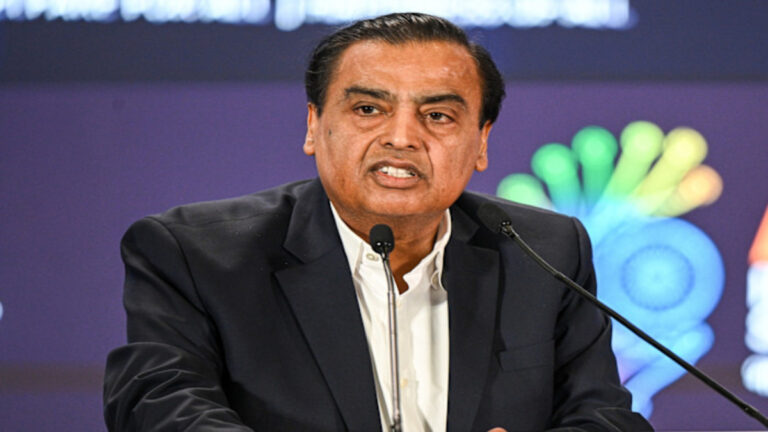
New Delhi, June 17, 2026 — India’s primary capital markets are on the verge of a historic awakening. Billionaire Mukesh Ambani’s telecom and digital giant, Reliance Jio Infocomm, is reportedly preparing to fire the starting gun on its long-awaited initial public offering (IPO). According to people familiar with the matter, the company could file its Draft Red Herring Prospectus (DRHP) with the Securities and Exchange Board of India (SEBI) within days.

The timing is highly strategic, aimed right before Ambani’s marquee annual speech to shareholders at the Reliance Industries Limited (RIL) Annual General Meeting (AGM) scheduled for Friday, June 19, 2026. This blockbuster listing is being closely watched not just because of its scale, but because it could single-handedly reverse a devastating dry spell in what was once one of the world’s hottest IPO pipelines.

Breaking the Listing Drought

For the past several months, India’s IPO landscape has felt like a ghost town. The absolute volume of mainboard listings has plummeted significantly compared to the record-breaking years of 2024 and 2025. This sudden stagnation was triggered by an unexpected cocktail of macroeconomic pressures. Chief among them is the intense geopolitical conflict in the Middle East involving the U.S., Israel, and Iran.

Because India relies heavily on foreign energy—importing nearly 90% of its crude oil—the threat of a wider conflict sent a wave of panic through currency markets and local indices. Global volatility skyrocketed, causing foreign institutional investors to pull out a staggering, record-breaking net $30.7 billion from Indian equities since the start of the year. The benchmark Nifty 50 index slipped roughly 8%, and top-tier listings like Walmart-owned PhonePe were forced to hit the pause button.

Amid this nervous, low-liquidity backdrop, Jio’s imminent multi-billion-dollar filing is being hailed as the ultimate “market opener.” Market analysts believe that a successfully executed mega-IPO of this quality acts like an injection of adrenaline into the secondary markets, restoring both retail and foreign investor confidence and encouraging a massive queue of nearly 250 sidelined companies to step back into the public arena.

The Scale, Structure, and Jaw-Dropping Valuation

If the latest internal details hold true, the Jio IPO will smash existing records to become India’s largest-ever stock market debut.

Key IPO Specifications

  • Expected Fundraise: Approximately $4 billion (around ₹37,500 crore).
  • Estimated Target Valuation: An astronomical $133 billion to $180 billion (roughly ₹11 lakh crore to ₹15 lakh crore).
  • Initial Public Float: Approximately 2.5% equity dilution.

The structure of the IPO marks a major tactical pivot. While early discussions pointed toward a standard Offer for Sale (OFS)—where existing global backers would cash out—Reliance recently restructured the plan into a 100% fresh issue. This shift followed valuation discussions behind closed doors with external stakeholders. By choosing an all-fresh issue, every single rupee raised from public investors will flow directly back into Jio’s balance sheet. This capital will be aggressively deployed to pay down debt, scale up its massive 5G infrastructure, and bankroll its next-generation Artificial Intelligence (AI) and cloud computing frameworks.

A crucial regulatory amendment passed late last year by SEBI has also paved the smoother runway required for a listing of this size. The capital markets regulator adjusted the minimum public float framework, allowing mega-corporations with a post-issue market cap exceeding ₹5 lakh crore to dilute just 2.5% of their equity initially, rather than the traditional 10% mandate. This single rule change made the filing logistically and financially viable for Jio Platforms.

More Than a Telecom Story

When Reliance Jio commercially launched back in 2016, it disrupted the landscape by aggressively dropping data prices and forcing a rapid national shift toward 4G. A decade later, Jio has evolved into an entirely different beast. Having officially crossed the monumental milestone of 500 million subscribers, Jio is no longer evaluated as just a wireless carrier; it is a full-blown digital ecosystem.

The public listing of Jio Platforms will serve as a massive test of how public markets value an integrated tech empire. Jio’s current portfolio covers:

  • Massive national 5G rollouts, alongside home internet services like JioFiber and JioAirFiber.
  • A deep consumer footprint in digital entertainment, financial payments, and lifestyle apps.
  • Heavy investment into localized enterprise cloud systems and cutting-edge AI architecture.

A successful public debut will bring immediate transparency to the true valuation of Reliance’s crown jewel consumer asset. Furthermore, because a public market value will now be pinned directly to Jio, equity analysts widely anticipate a dramatic “re-rating” of the parent entity, Reliance Industries. This comes at a welcome time for RIL, whose stock has dipped roughly 15% this year due to weak refining margins in its legacy oil-to-chemicals business. Existing RIL retail shareholders are also anticipating a dedicated shareholder quota in the upcoming IPO, sweetening the deal for loyal domestic investors.

Looking to the Horizon

While the immediate news has generated immense excitement across Mumbai’s financial hubs, investment banks remain deeply aware that the market has grown far more discerning. Over the past two years, nearly 40% of newly listed Indian stocks delivered negative returns within their first month of trading, creating an atmosphere of caution. Investors are no longer jumping blindly onto speculative growth stories; they want proven profitability and reasonable pricing.

Thankfully, Jio is backed by robust fundamentals, reporting an impressive 14.5% year-on-year climb in annual operational revenue to ₹1,46,885 crore for the fiscal year 2026. This financial health, combined with a parallel mega-filing expected from the National Stock Exchange (NSE) in the exact same week, could mean that the second half of the year will undergo a spectacular rebound.

If Mukesh Ambani confirms the filing timeline during Friday’s highly anticipated AGM address, it will signal to the entire corporate world that India’s premier digital powerhouse is ready for the world stage—and that India’s capital markets are officially open for business once again.

Sensex Rallies, Nifty Scales Past 24,000 as Tech, Durables Lead

0

June 17, 2026: The Indian equity benchmarks expanded their winning streak for the fourth consecutive session today, with the NSE Nifty 50 comfortably scaling past the monumental 24,000 mark. Dalal Street remained firmly in the grip of bulls as a confluence of easing geopolitical tensions, tumbling crude oil prices, and robust buying in heavyweights from the Information Technology (IT) and Consumer Durables pockets injected fresh optimism into the market.

In early trade, the 30-share BSE Sensex rallied over 300 points to trade near 77,136.79, while the broader Nifty 50 advanced past 24,080, locking in a critical psychological milestone. The positive momentum reflects a dramatic turnaround for Indian equities, which are breaking out of a prolonged period of consolidation.

Global Tailwinds: The US-Iran Peace Framework & Reopening of Trade Routes

The single biggest catalyst driving the structural shift in market sentiment is the monumental breakthrough in West Asia. The recent announcement of a peace agreement framework between Washington and Tehran has effectively dissolved months of intense geopolitical anxieties that previously rattled global supply chains and energy markets.

As part of the initial implementation, digital tracking data confirmed that multiple Iranian state-owned supertankers have legally exited the U.S. Navy blockade perimeter, signaling the restoration of standard shipping routes. The anticipation of a normalized oil supply and the planned reopening of the crucial Strait of Hormuz caused global oil benchmarks to retreat sharply.

Brent crude fell safely below the $80 per barrel threshold, touching lows near $78. For an import-dependent economy like India—which sources over 80% of its crude requirements externally—lower oil prices serve as an immediate macro economic booster. It significantly reduces the country’s import bill, keeps a tight lid on corporate input costs, and dramatically eases structural inflation concerns.

IT Stocks Rebound

The Nifty IT index was among the primary growth drivers of the day, gaining nearly 1.8%. Major tech heavyweights including Infosys, Tata Consultancy Services (TCS), Tech Mahindra, and HCL Technologies saw aggressive accumulation. Analysts attribute this turnaround to two factors: a stabilizing global macroeconomic environment post the West Asia truce, and a cooling off in international bond yields, which historically favors high-valuation growth sectors like technology.

Consumer Durables & Discretionary Spurt

With raw material inflation taking a back seat due to lower crude and chemical derivatives, consumer-facing companies saw strong buying interest. Leading retail and lifestyle major Trent emerged as one of the top gainers on the benchmark. The easing of domestic inflationary pressures is expected to fuel a strong resurgence in urban discretionary spending, giving consumer durables a clean runway for earnings growth in the upcoming quarters.

Conversely, defensive pockets like Nifty Pharma and global cyclical spaces like Nifty Metal traded with a soft bias, as risk-on capital rotated out of safe havens into high-beta expansionary sectors.

Eye on the Federal Reserve: The Kevin Warsh Era Begins

While domestic tailwinds are strong, seasoned institutional market participants maintain a degree of tactical caution. All eyes are glued to the conclusion of the ongoing U.S. Federal Open Market Committee (FOMC) meeting later today.

This particular policy meeting carries monumental weight as it marks the first rate-setting session chaired by the newly sworn-in Federal Reserve Chair, Kevin Warsh. The global financial community is assigning a near 97% probability that the Fed will hold the federal funds target rate steady in the 3.50% to 3.75% range.

However, the real test lies in the central bank’s updated economic projections and Chair Warsh’s debut press conference. Given that U.S. consumer inflation accelerated to a three-year high of 4.2% in May, investors want to see if the Fed will maintain its historic easing bias or pivot toward a more hawkish stance to curb persistent pricing pressures. Any unexpected commentary regarding liquidity or future rate trajectories could instantly alter global fund flows.

Outlook for Retail Investors

The sudden shift from a geopolitical crisis to a diplomatic resolution highlights how quickly market narratives can change. With Foreign Portfolio Investors (FPIs) covering their aggressive short positions and domestic retail liquidity continuing to flow via systematic investment routes, the structural undertone of the Indian market is resilient.

For retail participants, experts suggest avoiding chasing individual stock momentum blindly at lifetime highs. Instead, the current macroeconomic setup favors focusing on quality large-cap spaces—specifically in domestic consumption, IT service leaders, and private banking—where stable valuations are well-supported by robust corporate balance sheets and visible earnings delivery.

Qatar Moves LNG Fleet Back to Middle East as Strait of Hormuz Prepares to Reopen

0

New Delhi, June 17, 2026 — In a major sign that regional tensions may finally be easing, Qatar is moving its massive fleet of Liquefied Natural Gas (LNG) ships back to the Middle East. The tactical repositioning comes just ahead of the anticipated reopening of the Strait of Hormuz, the world’s most critical maritime energy choke point. The strategic waterway has been effectively blocked for over three months, causing severe disruptions to global energy markets and forcing energy-dependent nations to brace for supply shortages.

Following a period of intense diplomatic back-and-controlling, the United States and Iran are scheduled to sign an interim peace agreement this Friday in Switzerland. This landmark memorandum of understanding (MoU) is widely expected to lift the de facto naval blockade on the Strait of Hormuz, allowing standard commercial traffic to resume safely.

For Qatar—one of the world’s largest suppliers of LNG—the reopening is an opportunity to reclaim its position at the center of global energy trade. State-owned QatarEnergy has quietly alerted global buyers that it intends to rapidly boost production and export volumes as soon as safe passage through the strait is formally guaranteed.

The Road to Recovery: A Staged Ramp-Up

While the physical return of the shipping fleet sends a strong signal to global markets, restarting the flow of gas will not happen overnight. The effective closure of the Strait of Hormuz in March, triggered by regional warfare, heavily damaged key infrastructure. Specifically, the Ras Laffan LNG complex—Qatar’s primary export hub which accounts for nearly one-fifth of the world’s total LNG supply—was hit by Iranian missile strikes that wiped out roughly 17% of its total operating capacity.

Despite these setbacks, industry insiders report that Qatar has been quietly doing the legwork to facilitate a swift operational comeback. Since April, engineers at Ras Laffan have been conducting rigorous equipment tests, carrying out essential maintenance, and running several production lines (“trains”) at a heavily reduced capacity to ensure they are primed for an immediate ramp-up.

According to internal reports shared with major trading partners, QatarEnergy has outlined an aggressive timeline to restore its export operations:

  • Month 1 Following Reopening: Qatar expects to quickly scale up production to roughly 50% of its overall capacity.
  • Month 2 Following Reopening: The country aims to lift production further, targeting approximately 80% of its total capacity.
  • The Long-Term Picture: The remaining 20% of capacity, equivalent to two major production trains damaged in the March attacks, will require intensive engineering work. Officials estimate that fully repairing this infrastructure will cost around $26 billion and could take anywhere from three to five years to complete.

Global Markets Anticipate Relief

The news of Qatari tankers returning to their home ports has already sent ripples of relief through international energy boards. The three-month blockade of Hormuz severely strained global gas supplies, keeping fuel prices elevated in both Europe and Asia.

During the worst weeks of the conflict, Qatar resorted to occasional high-risk shipments, ordering select tankers to turn off their satellite transponders to mask their locations while slipping through the contested waters under security arrangements mediated by third-party nations like Pakistan. However, these covert voyages represented only a tiny fraction of Qatar’s normal export volume, which typically sees about three massive LNG carriers exit the Persian Gulf every single day.

The primary beneficiaries of a fully reopened strait will be Asian economies, which rely heavily on Qatari energy contracts. Data shows that Qatar’s core export exposure is deeply oriented toward Asia, with critical shares going to major industrial hubs:

A swift resumption of trade will provide vital economic relief to these nations, helping to lower electricity and manufacturing costs that spiked over the spring months.

lingering Questions and Security Realities

While political optimism is high ahead of the Friday signing in Switzerland, energy analysts and shipping companies remain deeply cautious. Shipping logistics and safety protocols will be the main initial hurdles. Bringing dozens of ultra-large LNG vessels back into the narrow gulf, coordinating loading schedules, and securing marine insurance for war-torn waters will take meticulous planning.

Furthermore, military experts warn that declaring the strait “open” on paper is very different from making it safe in reality. A senior Western defense official noted that even if a political agreement is signed on Friday, naval forces will still need to scan the shipping lanes and remove underwater naval mines before insurance companies will permit commercial vessels to sail through freely.

Additionally, political fractures remain. While U.S. leaders have expressed high confidence that trade routes will be completely unimpeded by the weekend, European allies have voiced more measured skepticism, noting that broader deep-seated diplomatic disputes between Washington and Tehran will take far longer to resolve than a few days of talks.

For now, the visible movement of Qatari LNG ships back to the Middle East offers a concrete glimmer of hope. It signals that energy producers are betting heavily on peace, positioning their assets so they can immediately fuel a global market starved of stability.