

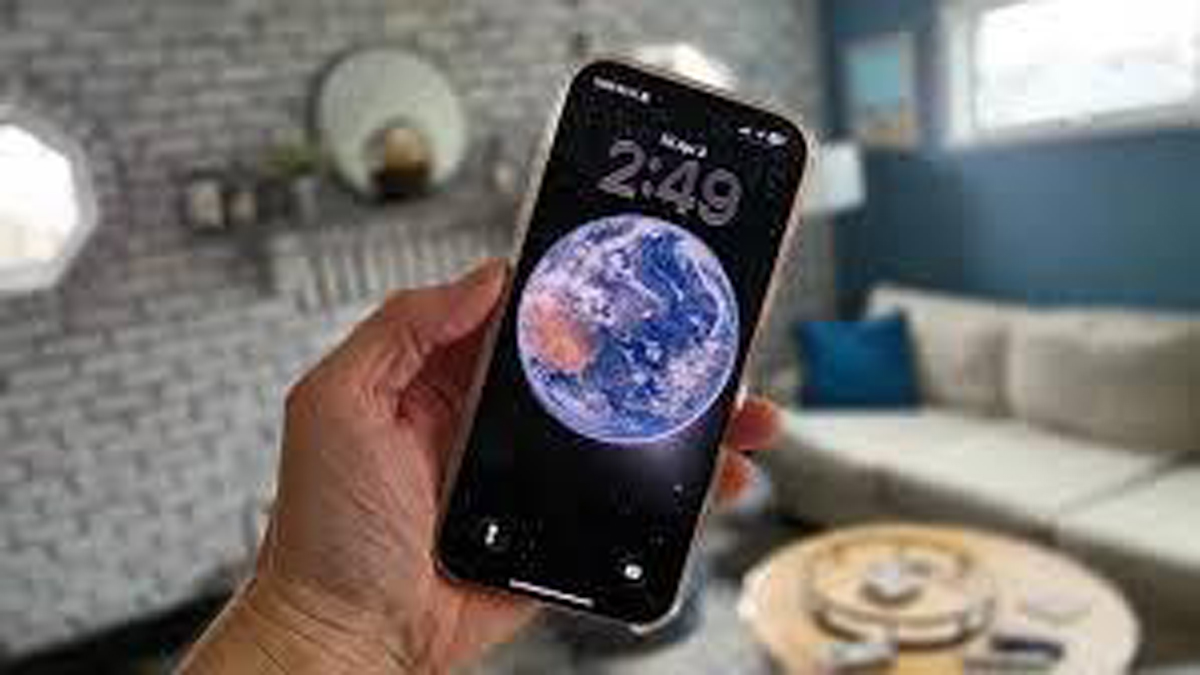
New Delhi, April 6, 2026: In a historic convergence of consumer technology and deep-space exploration, NASA has officially certified the iPhone 17 Pro Max for use aboard the Artemis II mission. While the spacecraft Orion carries its crew of four toward the Moon, it also carries four units of Apple’s latest flagship, marking the first time a consumer smartphone has been fully qualified for a crewed mission beyond Earth’s orbit.
The decision represents a significant shift in NASA’s hardware policy. Traditionally, the agency relies on specialized or legacy equipment, such as the Nikon D5 and GoPro HERO series, which often lag years behind the commercial market due to lengthy certification cycles. By fast-tracking the iPhone 17 Pro Max, NASA aims to provide the public with more relatable, high-definition imagery of humanity’s return to the lunar frontier.
The Brutal Road to Certification
Bringing a “store-shelf” device into the vacuum of space is far more complex than it appears. The iPhone 17 Pro Max had to survive a rigorous four-phase safety protocol designed to ensure it wouldn’t jeopardize the Orion crew or the spacecraft’s sensitive electronics.
- Hardware Introduction: The device was first presented to a safety review panel to evaluate its basic architecture.
- Hazard Identification: Engineers looked for potential “lethal” failures. A primary concern was the glass. In microgravity, shattered glass doesn’t fall to the floor; it floats as tiny, razor-sharp projectiles that can be inhaled by astronauts or short-circuit equipment.
- Mitigation Strategy: NASA evaluated the Ceramic Shield 2 technology. Apple’s latest glass was tested for its shatter-resistance limits, and storage protocols were developed—such as zipping the phones into flight suit leg pockets rather than using traditional Velcro mounts.
- Verification: The final stage proved that these safety measures worked under simulated launch and orbital conditions.
A “Neutered” Supercomputer
While the iPhone 17 Pro Max is a powerhouse of connectivity on Earth, in deep space, it has been transformed into a highly specialized, offline camera. To prevent any chance of interference with Orion’s critical flight systems, NASA has permanently disabled all wireless connectivity, including:
- Wi-Fi
- Bluetooth
- Cellular Data
The astronauts, including Reid Wiseman and Christina Koch, are using the devices exclusively for personal photo and video documentation. This provides a “human-centric” perspective of the mission, capturing the same kind of candid snapshots that billions of people take daily, but with the lunar surface as the backdrop.
Why the iPhone 17 Pro Max?
NASA’s choice wasn’t just a PR move; it was a testament to the device’s hardware evolution. Several key factors made it the ideal candidate for the mission:
| Feature | Space Application |
| Ceramic Shield 2 | Superior shatter resistance in a pressurized microgravity cabin. |
| Vapor Chamber Cooling | Essential for heat dissipation where natural convection (rising hot air) doesn’t exist. |
| Advanced Optics | High-performance low-light sensors capable of capturing the high contrast of the lunar environment. |
| Aluminum Frame | Durable yet lightweight, minimizing the “payload penalty” for the mission. |
A New Era of Space Documentation
On April 2, 2026, NASA released the first stunning images captured on these devices. One shot features Christina Koch gazing through Orion’s portal at a receding Earth, the clarity of the image rivaling professional-grade scientific cameras.
The presence of the iPhone 17 Pro Max on Artemis II bridges the gap between the monumental and the everyday. As humans venture 400,000 kilometers away from home for the first time in over 50 years, they are doing so with the same technology we use to document our own lives, making the vastness of space feel just a little bit closer to home.