

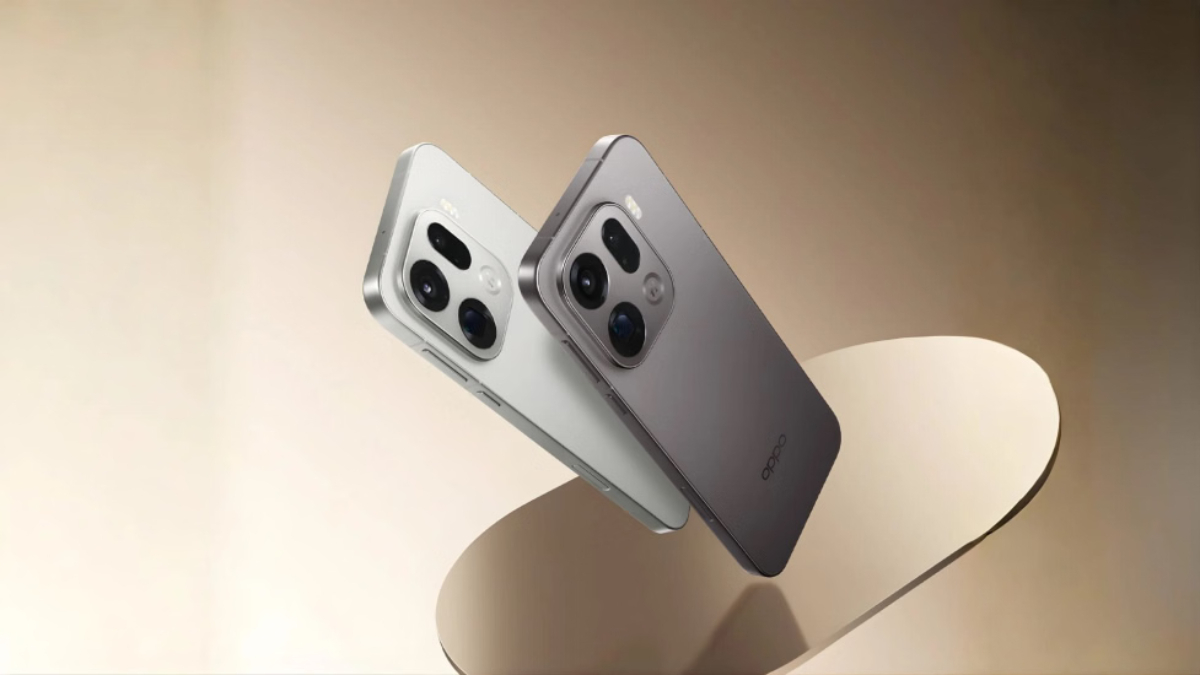
NEW DELHI — May 16, 2026 — For years, the “final frontier” of smartphone engineering has been the struggle between physics and form factor. Professional photographers have long relied on massive, protruding telephoto lenses to capture distant subjects. In contrast, smartphones have historically relied on digital trickery—cropping and AI sharpening—to make up for what they lacked in physical depth.
That era of compromise officially ended this month. With the global launch of the Find X9 Ultra, OPPO has unveiled its industry-first Quintuple Prism Periscope Structure (QPPS). This breakthrough re-engineers how light moves within a phone, delivering a staggering 10x optical zoom without the bulky camera bump.
The Physics of the Fold: What is QPPS?
To understand QPPS, one must first look at the limitations of standard periscope lenses. In a traditional periscope system, light enters the lens and is reflected once by a single prism, sending it sideways across the width of the phone to hit the sensor. This “folds” the camera, allowing for a longer focal length than a flat lens could provide.
However, even a single-fold system has limits. To reach 10x magnification, you typically need a very long physical path, which often results in a phone that is either too thick or a camera module that takes up half the internal battery space.
OPPO’s solution? The Quintuple Prism.
Instead of one reflection, the QPPS system bounces light across five separate prism surfaces before it ever reaches the sensor. Think of it as a high-tech game of “optical pinball.” By bouncing the light five times, OPPO has managed to fold a massive optical path into a compact 29mm space.
“The QPPS allows us to achieve a 230mm equivalent focal length,” explains an OPPO Lead Optical Engineer. “We are effectively fitting the power of a professional sports lens into a device that still fits comfortably in your pocket.”
Engineering Purity: The “Pristine” Path
Bouncing light five times is an incredible feat of spatial engineering, but it presents a major challenge: Light Degradation. Every time light hits a surface, you risk losing brightness or introducing “stray light” (flare and ghosting).
To solve this, OPPO introduced the Pristine Optical Path Architecture. This system utilizes:
- Nanometer-scale Diaphragms: These tiny internal shields block unwanted reflections between the five prisms.
- Active Optical Alignment (AOA): During manufacturing, high-precision robotic cameras align the lens, sensor, and prisms in real-time. This ensures that even with five bounces, the light remains perfectly centered, maintaining edge-to-edge sharpness.
The result is an image that doesn’t look “processed.” It looks optical. When you zoom into a performer on a stage or a bird in a distant tree, the details—the texture of clothing or the individual barbs of a feather—are preserved by the glass, not recreated by an algorithm.
Stability at the Edge: Sensor-Shift OIS
At 10x optical zoom (and up to 20x “optical-quality” hybrid zoom), the slightest tremor in a user’s hand is amplified into a shaky mess. Traditional lens-based stabilization often isn’t enough when the focal length is this long.
The Find X9 Ultra introduces a sophisticated Sensor-Shift Optical Image Stabilization system. Instead of just moving the lens elements, the hardware physically moves the 50MP sensor itself to counteract hand movements. This allows for steady, handheld 10x shots that would typically require a tripod.
The Hasselblad Partnership & LUMO Engine
Hardware is only half the story. OPPO’s continued collaboration with Hasselblad ensures that the colors captured through the QPPS system remain natural and “filmic.”
Powering the backend is the new LUMO Image Engine. This proprietary platform manages the massive data stream from the Find X9 Ultra’s quad-camera array:
- Main: 200MP Sony LYTIA 901 (1-inch class sensor)
- Short Telephoto: 200MP 3x Zoom (f/2.2)
- Ultra-Long Telephoto: 50MP 10x QPPS Zoom (f/3.5)
- Ultra-Wide: 50MP with 5cm Macro
By utilizing the 200MP sensors alongside the 10x optical QPPS lens, the phone can achieve “seamless” zoom transitions. The LUMO engine intelligently blends data from multiple sensors to ensure that when you pinch-to-zoom, the color temperature and detail levels remain perfectly consistent.
Why This Matters for the Average User
For most people, QPPS technology isn’t just about “seeing further.” It’s about perspective.
Longer focal lengths (like the 230mm provided by the QPPS) create background compression. This is the “pro look” where the background appears closer to the subject, creating a beautiful, natural bokeh (blur) that software-based “Portrait Modes” often struggle to emulate.
Whether you are capturing:
- Concerts: Getting a clear shot of the artist from the back row.
- Travel: Photographing architectural details on the top of a cathedral.
- Wildlife: Keeping a safe distance from a subject while still filling the frame.
…the QPPS technology ensures the final image is a “true” photograph, rich in optical data and free from the “watercolor” effect of heavy digital zooming.
Looking Ahead: The Future of the Find Series
With the Find X9 Ultra set to hit Indian and global shelves on May 21, 2026, OPPO has sent a clear message to the industry: the future of mobile photography is in the glass. While AI is a powerful tool, it cannot replace the fundamental laws of optics.
By re-engineering the periscope from the ground up, OPPO hasn’t just added a new feature; they’ve effectively shrunk a camera bag’s worth of lenses into a single, sleek device. The “Wild” is finally within reach, and it’s never looked clearer.
Key Specifications at a Glance:
| Feature | Detail |
| Zoom Tech | Quintuple Prism Periscope Structure (QPPS) |
| Optical Range | 10x Optical (230mm equivalent) |
| Stabilization | Advanced Sensor-Shift OIS |
| Main Sensor | 200MP Ultra-Sensing (Sony LYTIA 901) |
| Processor | Snapdragon 8 Elite Gen 5 |
| Battery | 7,050mAh Silicon-Carbon |
The OPPO Find X9 Ultra is expected to retail above ₹1,00,000, positioning it as the premier choice for mobile creators and photography enthusiasts who refuse to compromise on reach.