

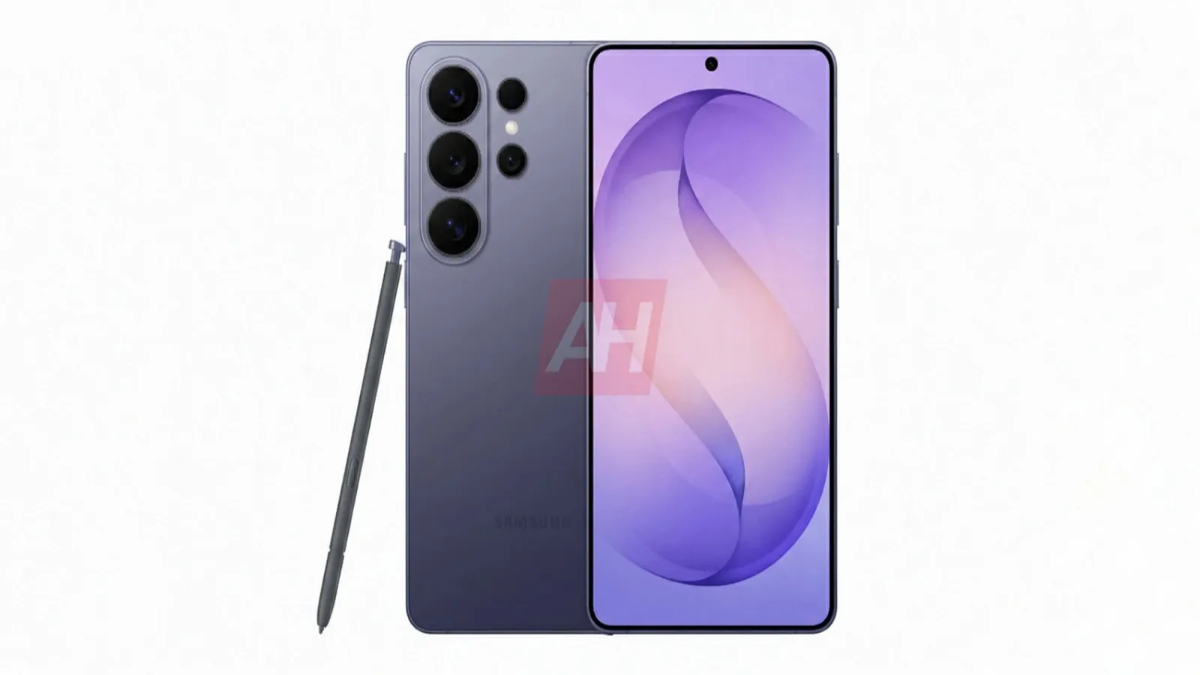
New Delhi, February 2, 2026: The tech world is buzzing as “leaked” official renders and detailed specifications for the upcoming Samsung Galaxy S26 and Galaxy S26+ have surfaced online. With a rumored launch date of February 25, 2026, the latest reports suggest that while Samsung is sticking to its winning formula, a few key design and hardware changes are on the horizon.
Refined Design: The Return of the Camera Island
The most striking revelation from the leaked renders is a shift in the rear design. For the past few years, Samsung opted for a “floating lens” look where each camera sat individually on the back. According to recent reports, the Galaxy S26 and S26+ will move toward a unified camera island—a raised section that houses all three lenses, similar to the recently teased “Edge” models.
- Build: Both phones will feature flat displays and flat frames, maintaining the sleek, modern aesthetic of the S25 series.
- Dimensions: The base S26 is expected to be incredibly light at 137 grams, while the S26+ tips the scales at 190 grams.
Power and Display
Samsung appears to be continuing its dual-chip strategy. Depending on your region, the devices will likely be powered by either the Qualcomm Snapdragon 8 Elite Gen 5 or Samsung’s own Exynos 2600 (predominantly in Europe).
| Feature | Galaxy S26 | Galaxy S26+ |
| Display | 6.3-inch FHD+ AMOLED | 6.7-inch QHD+ AMOLED |
| Battery | 4,300mAh | 4,900mAh |
| RAM | 12GB LPDDR5X | 12GB LPDDR5X |
| Software | Android 16 (One UI 8.5) | Android 16 (One UI 8.5) |
A significant change for 2026 is the rumored removal of the 128GB storage tier. Reports suggest both models will now start with 256GB as the base configuration, bringing Samsung in line with other flagship competitors.
Camera Capabilities: The 50MP Standard
The “headline” leak confirms that both the standard and Plus models will feature a 50-megapixel primary camera. While the megapixel count remains the same as previous years, industry insiders suggest Samsung is utilizing a newer, larger sensor (likely the ISOCELL GN3 or an evolution of it) to improve low-light performance and dynamic range.
The triple-camera array on the back is expected to include:
- Main: 50MP with Optical Image Stabilization (OIS).
- Ultra-Wide: 12MP for expansive landscape shots.
- Telephoto: 10MP with 3x optical zoom.
- Selfie: A 12MP front-facing sensor housed in a centered punch-hole.
Battery and Charging
The Galaxy S26+ remains the choice for power users who don’t want the bulk of the Ultra, featuring a robust 4,900mAh battery and 45W wired charging. Interestingly, leaks suggest the entire S26 lineup may finally adopt Qi2 magnetic wireless charging, making them compatible with a new ecosystem of “MagSafe-style” accessories.