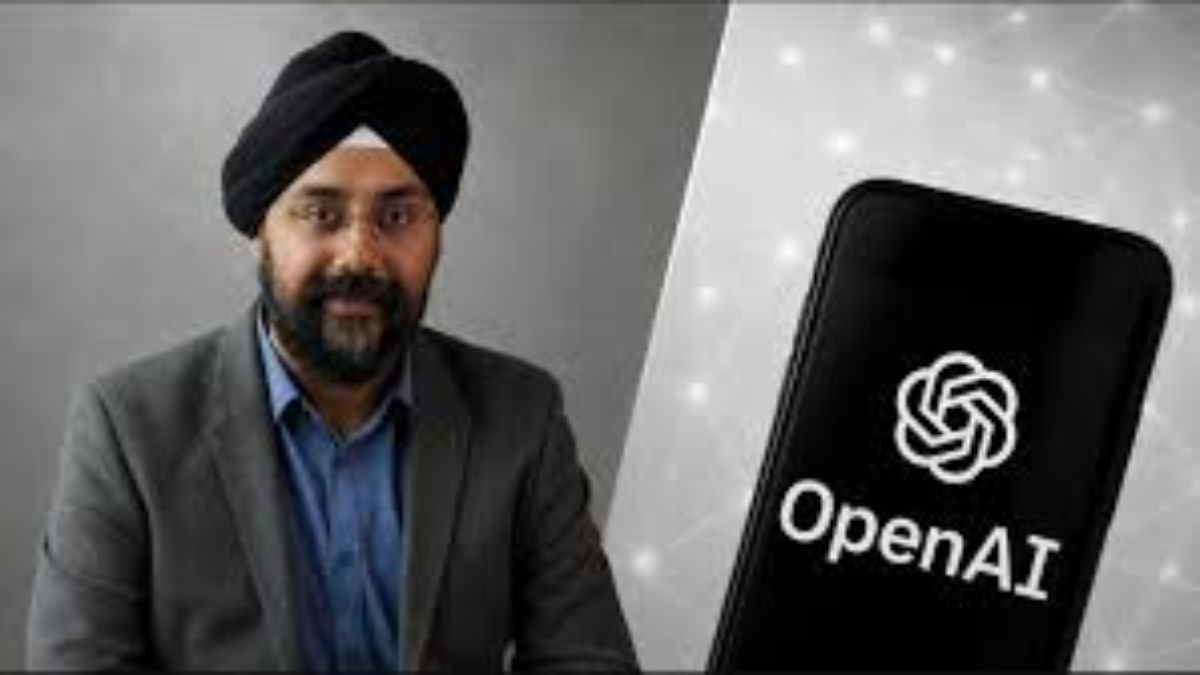
New Delhi, June 27, 2026 — In a major move that highlights the explosive growth of artificial intelligence in South Asia, OpenAI has appointed Prabhjeet Singh, the former President of Uber India and South Asia, as its first-ever Managing Director for India.
Singh, a seasoned corporate leader who spent over a decade scaling Uber’s ride-hailing network across the subcontinent, stepped down from his role at Uber on Friday. He is slated to officially take charge at the ChatGPT-maker in September 2026. Reporting directly to OpenAI’s Asia Pacific Managing Director, Kiran Mani, Singh will step into the role of the company’s most senior executive in the country.
His mandate is clear and far-reaching: oversee OpenAI’s commercial operations, accelerate enterprise adoption, drive consumer growth, and navigate India’s evolving regulatory landscape.
From Uber to Frontier Tech: Why the Move Matters
Singh’s transition from a major ride-hailing company to the frontier of generative AI sent ripples through India’s tech ecosystem. In an internal email sent to Uber employees, Singh characterized the decision not as an exit, but as an irresistible leap toward the future.
During his 11-year tenure at Uber, Singh successfully navigated fierce regional competition, shifted models through pandemic lockdowns, and spearheaded the brand’s pivot toward electric mobility with Uber Green. This extensive operational experience in managing complex logistical, digital, and governmental frameworks is precisely why OpenAI sought him out. India is a unique market with massive scale, intense regulatory scrutiny, and complex payment ecosystems—challenges that Singh has already solved at scale.
India Emerges as OpenAI’s Second-Largest Market
The timing of the appointment emphasizes India’s critical importance to global AI labs. OpenAI has officially identified India as its second-largest market by user volume globally, trailing only the United States.
The adoption rates in the country are staggering, particularly among younger demographics. Indian users, especially those aged 18 to 24, have emerged as primary adopters of ChatGPT’s advanced capabilities, including data analysis, image generation, and education. Furthermore, India ranks among the top five global markets for Codex, OpenAI’s AI coding agent, which has seen its active user base in the country grow 27-fold since the beginning of the year.
OpenAI CEO Sam Altman has frequently praised the velocity of India’s tech adoption, noting the country’s unique conviction to invest across the entire AI stack—from foundational infrastructure layers to consumer applications. To support this momentum, OpenAI has moved rapidly to establish a physical footprint, setting up its first local office in New Delhi late last year, with plans underway to expand offices to Mumbai and Bengaluru.
The Strategic Blueprint: Infrastructure, Partnerships, and Policy
Singh is not entering a vacuum; OpenAI has been quietly laying the groundwork for a massive enterprise push. The company’s strategy in India stretches far beyond distributing consumer software, focusing heavily on deeper corporate and infrastructure alignments:
- Infrastructure Bets: OpenAI is collaborating with the Tata Group on a massive 100-megawatt (MW) data center initiative, establishing a localized backbone for heavy AI computing.
- Corporate Alliances: Global AI players are racing to integrate their models with India’s massive IT services sector. Singh’s role will involve cementing partnerships with local tech giants to deploy enterprise AI at scale.
- Policy and Advocacy: Singh will work alongside an established local policy team, which includes Pragya Misra (Head of Strategy and Global Affairs) and Rishi Jaitly (Senior Adviser for Government Engagement), to align OpenAI’s goals with India’s public sector initiatives.
Academic Excellence and Career Trajectory
Singh brings an elite academic and professional pedigree to OpenAI. A graduate of Delhi Public School, R.K. Puram, he earned his B.Tech in Electronics and Communication Engineering from the Indian Institute of Technology (IIT) Kharagpur. He followed this with an MBA from the Indian Institute of Management (IIM) Ahmedabad, where he graduated in the top 2% of his class and received the prestigious Young Alumni Achiever Award.
Before his decade-long run at Uber, Singh began his corporate journey as a senior analyst at Lehman Brothers in London, followed by a distinguished nine-year stint at McKinsey & Company, where he rose to the position of Associate Partner, advising public and private entities on digital payments and banking.
The Global AI Race Coils Around India
Singh’s appointment lands right in the middle of an escalating talent and market war between Silicon Valley’s top AI organizations. Just months prior, OpenAI’s chief rival, Anthropic, made a similar high-profile hire by recruiting Microsoft India Managing Director Irina Ghose to spearhead its local operations.
As Google, Microsoft, Meta, and Anthropic pour billions into capturing localized enterprise markets, OpenAI’s decision to hand the reins to an operational heavy-hitter like Singh signals a shift from purely strategic positioning to aggressive market execution. When he officially takes over in September, Singh’s primary challenge will be turning India’s massive, enthusiastic user base into a highly profitable, sustainable enterprise ecosystem.