

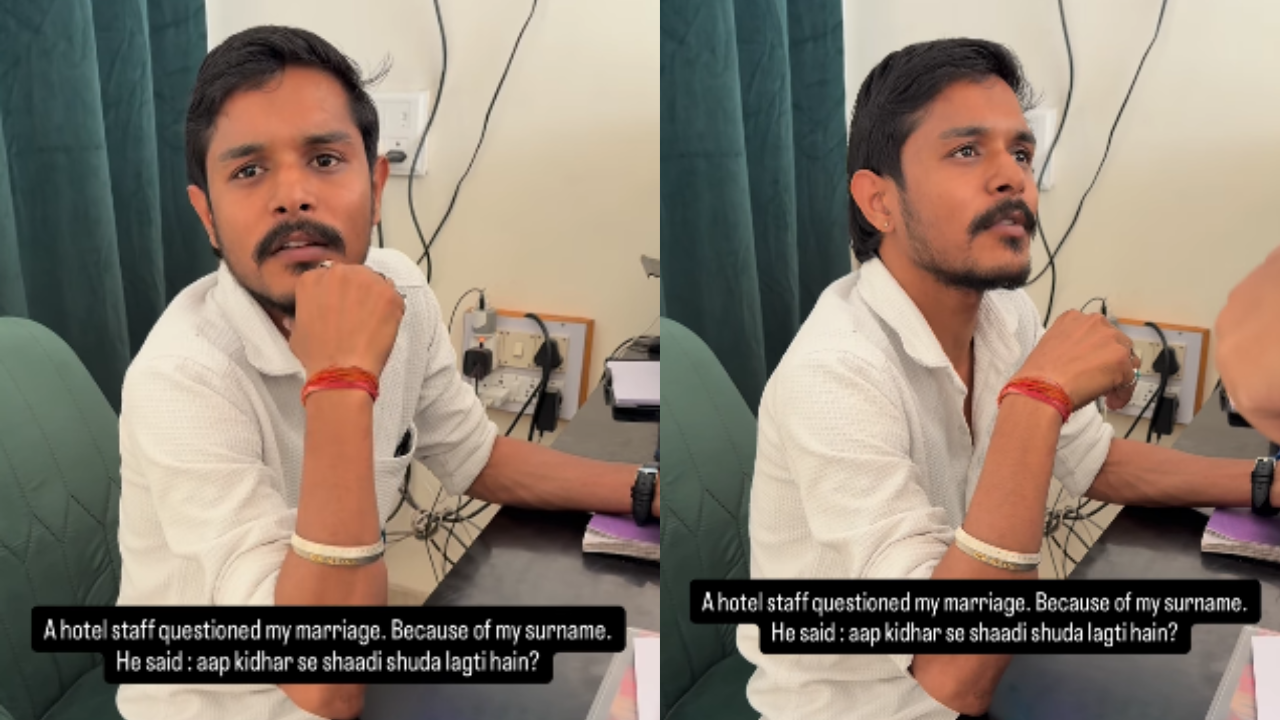
New Delhi, March 30, 2026: In an incident that has sparked fresh debate over “moral policing” in the hospitality industry, a married couple was allegedly denied check-in at a hotel after staff questioned the validity of their marriage. The reason? The wife had not changed her surname to match her husband’s.
The confrontation, which reportedly took place earlier this week, reached a boiling point when a staff member allegedly looked at the woman and remarked, “Kaha se lag rahi hain shadi-shuda?” (From where does she look married?), dismissing their legal identification and marriage certificate as insufficient proof.
A Clash of Tradition and Law
The couple, who had pre-booked their stay through a popular travel portal, arrived at the hotel expecting a smooth check-in. However, the front desk manager reportedly flagged their Aadhaar cards, noting the discrepancy in their last names.
Despite the couple presenting a digital copy of their marriage certificate, the staff remained adamant. According to the couple’s social media post detailing the ordeal, the hotel employees suggested that “genuine” married couples always share a surname or “look” a certain way—implying that the absence of traditional markers like a mangalsutra or heavy jewelry, combined with the different names, made their claim suspicious.
The Legal Reality vs. Hotel ‘Policies’
Under Indian law, there is no legal requirement for a woman to adopt her husband’s surname after marriage. Furthermore, the Supreme Court and various High Courts have repeatedly upheld that two consenting adults have the right to stay together, and hotels have no legal authority to act as “moral guardians.”
Industry experts weigh in on the common reasons for such friction:
- Lack of Training: Ground-level staff often confuse internal “safety” guidelines with personal biases.
- Fear of Local Authorities: Hotels often fear raids or harassment from local police if they are accused of facilitating “immoral activities.”
- Misinterpretation of KYC: While hotels must collect valid ID, they are not legally mandated to verify the marital status of guests.
Growing Trend of “Moral Policing”
This incident is not an isolated one. Across India, “unmarried” or “unconventionally married” couples frequently report facing scrutiny at hotel receptions. While many high-end chains have sensitized their staff to modern social norms, budget and mid-range hotels often cling to outdated societal expectations.
The phrase “Kaha se lag rahi hain shadi-shuda?” has specifically touched a nerve online, with many pointing out the inherent sexism in the comment. Critics argue that it places the burden of “proving” a marriage solely on the woman’s appearance and choice of name.
What Can Travelers Do?
If you find yourself in a similar situation, legal experts suggest the following:
- Record the Interaction: Documenting the refusal and the reasons cited can be vital for legal or consumer complaints.
- Refer to the Booking Policy: Most platforms explicitly state that different surnames are not a valid ground for denial of service.
- Contact Local Authorities: If the hotel becomes hostile, involving the local police can sometimes resolve the “verification” issue, as the hotel is legally bound to provide the service if a valid contract (booking) exists.
The hotel management has since issued a brief statement claiming they are “looking into the matter,” but the incident serves as a stark reminder that for many Indian travelers, a marriage certificate is sometimes less important to a hotel clerk than a matching last name.