

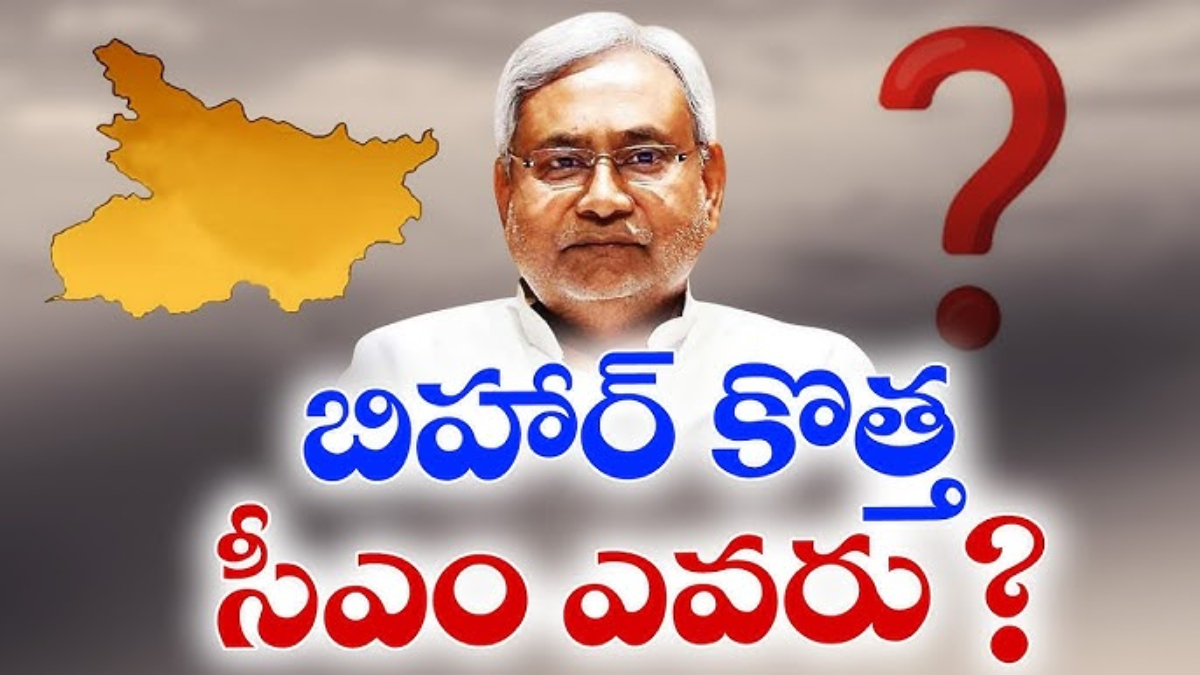
April 14, 2026: Today, an era that defined the political identity of Bihar for over twenty years has officially drawn to a close. On the birth anniversary of B.R. Ambedkar, Nitish Kumar, the longest-serving Chief Minister in Bihar’s history, submitted his resignation to the Governor, marking the end of his record tenth term.
By choosing this date—timed both for its social symbolism and the conclusion of the “inauspicious” Kharmas month—Kumar transitions from the helm of the state to the Rajya Sabha. As the mantle passes to the BJP’s Samrat Choudhary, Bihar stands at a crossroads. But for the man known as Sushashan Babu (Mr. Good Governance), the focus now shifts from policy files to the history books.
How will history judge the engineer-turned-politician who rebuilt Bihar from the ashes of “Jungle Raj” only to become the symbol of political volatility?
The Architect of the New Bihar (2005–2013)
To understand Nitish Kumar’s legacy, one must remember the Bihar of 2005. The state was a synonym for lawlessness, crumbling infrastructure, and economic stagnation. When Kumar first took the oath as a full-term CM, his impact was immediate and transformative.
- The Restoration of Law: Perhaps his greatest achievement was the restoration of the “fear of the law.” Through fast-track courts and a crackdown on organized crime, he brought notorious gang lords to justice, making the streets of Patna and beyond safe for the first time in decades.
- The Bicycle Revolution: Kumar pioneered the Mukhyamantri Balika Cycle Yojana. By giving bicycles to schoolgirls, he didn’t just improve literacy; he changed the social landscape of rural Bihar. Millions of girls on bicycles became the visual shorthand for a rising Bihar.
- Infrastructure Boom: Under his leadership, Bihar consistently clocked double-digit GDP growth. Thousands of kilometers of metalled roads and hundreds of bridges bridged the gap between the “two Bihars”—the elite urban centers and the neglected rural hinterland.
For these first two terms, history will likely remember him as the “Vikas Purush” (Development Man)—the leader who proved that Bihar was not “ungovernable.”
The Master of Social Engineering
Nitish Kumar’s survival for 20 years was not an accident of fate; it was the result of a masterclass in social arithmetic. Recognizing that he lacked the massive caste base of his rival Lalu Prasad Yadav, Kumar created his own constituency:
- Mahadalits: He carved out the most marginalized among the Dalits, providing them with targeted welfare schemes.
- Extremely Backward Castes (EBCs): By empowering the “lower” rungs of the OBC ladder, he created a loyal silent majority.
- Women: From 50% reservation in panchayats to the controversial (and often criticized) prohibition of alcohol, Kumar positioned himself as the “Brother of Bihar,” counting on women as a dedicated vote bank that transcended caste lines.
The Shadow of the “Paltu Ram”
However, the historical record will be incomplete without addressing the “flip-flops” that earned him the moniker Paltu Ram (The Turner). Between 2013 and 2026, Kumar’s political journey was a dizzying series of alliance shifts:
- 2013: Broke with the BJP over Narendra Modi’s elevation.
- 2015: Allied with the RJD to win a landslide.
- 2017: Dumped the RJD to return to the BJP.
- 2022: Dumped the BJP to rejoin the Mahagathbandhan.
- 2024: Returned to the NDA once more.
While these moves ensured he remained in the Chief Minister’s chair, they arguably eroded his moral authority. Critics argue that his obsession with the chair came at the cost of ideological consistency. History may judge these maneuvers as either a pragmatic survival instinct in a predatory political environment or a cynical pursuit of power that stalled the state’s momentum.
The Stagnation of the Later Years
The final decade of the Nitish era was marked by a sense of “fatigue.” While the basic infrastructure was in place, the “Second Revolution”—industrialization and job creation—never quite arrived.
- The Unemployment Crisis: Despite high growth rates, Bihar remained a labor-exporting state. The sight of millions of migrants walking home during the 2020 pandemic highlighted the failure to create a local industrial base.
- The Prohibition Paradox: His 2016 liquor ban remains one of his most divisive legacies. While lauded by many women, it led to a massive loss of state revenue, the rise of a parallel “mafia” economy, and the criminalization of thousands of poor citizens.
- Bureaucratic Reliance: In his later years, Kumar was often accused of being “caged” by a select group of bureaucrats, distancing him from the grassroots and his own party workers.
The Final Verdict: A Mixed but Monumental Legacy
As Nitish Kumar moves to New Delhi, he leaves behind a party, the JD(U), that faces an existential crisis without its “Pole Star.” His son, Nishant Kumar, has recently entered the political fray, but the vacuum left by the elder Kumar is vast.
How will history judge him?
He will likely not be remembered as a revolutionary like Jayaprakash Narayan, nor as a charismatic subaltern icon like Lalu Prasad Yadav. Instead, Nitish Kumar will be remembered as the Great Stabilizer. He was the man who took a “failed state” and turned it into a “functional state.”
He gave the Bihari identity a sense of pride (Bihari Asmita) that was decoupled from crime and chaos. While his frequent political pivots will remain a stain on his legacy for many, the roads, the bridges, and the millions of empowered women stand as a testament to a leader who, for all his flaws, fundamentally changed the trajectory of one of India’s most complex states.
The “Nitish Era” is over, but for better or worse, the Bihar of 2026 is a house that Nitish built.
Nitish Kumar: By the Numbers
| Milestone | Detail |
| Total Terms | 10 (A National Record) |
| Longest Stint | Nov 2005 – May 2014 |
| Key Policy | 50% Women’s Reservation in Panchayats |
| Final Act | Elected to Rajya Sabha, April 2026 |