

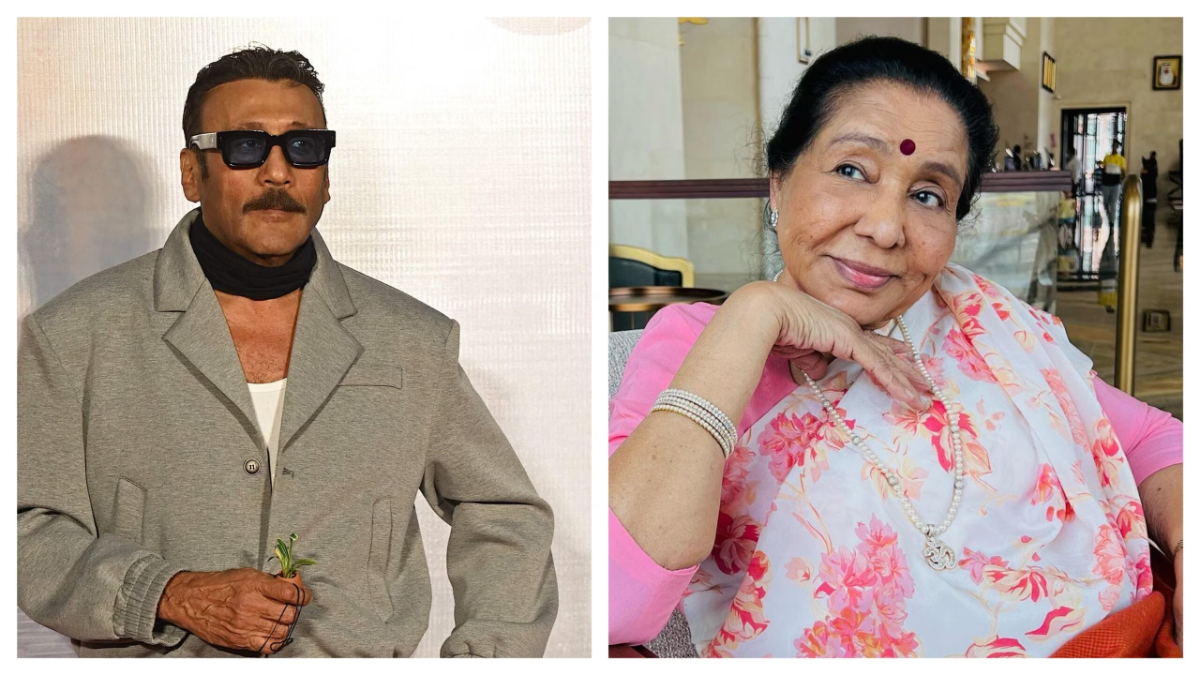
New Delhi, April 14, 2026: The Indian film and music industry was cast into deep mourning this week as the legendary playback singer Asha Bhosle passed away at the age of 92 on April 12, 2026. While the nation struggled to process the end of a musical era, a tense confrontation between veteran actor Jackie Shroff and the paparazzi has sparked a massive debate online regarding media ethics and the boundaries of privacy during times of grief.
Here is the detailed report on the incident and the legacy of the “Queen of Indipop.”
The Incident: “Ghar Jaa”
On Monday, April 13, 2026, as celebrities and political figures gathered at the Shivaji Park Crematorium in Mumbai to pay their final respects, the atmosphere was heavy with sorrow. Amidst the somber gathering, Jackie Shroff—known for his candid and “Bhidu” persona—arrived to bid farewell to a woman he often referred to as a mother figure.
As Shroff was leaving the venue, he was swarmed by a group of paparazzi seeking a “reaction” or a “byte” regarding the singer’s demise. The actor, visibly distressed and emotional, found the timing of the questions highly inappropriate.
The Heated Exchange
When asked by a photographer how he “felt” about the loss, Jackie Shroff paused and schooled the media personnel in a mix of Hindi and Marathi.
“Kasha vatnar, konachi aai geli tar? Aamchi aai geli hai. Kasa vatel manje, tera bolne ka matlab hai, kaisa lagta hai maa kisi ki gayi to kaisa lagta hai?” > (How would it feel if someone’s mother passes away? Our mother is gone. What do you mean by asking how it feels? How does it feel when someone loses their mother?)
The paparazzi, caught off guard, sheepishly responded, “Bura hi lagta hai” (It feels bad). Shroff, refusing to entertain further intrusion, shut down the conversation abruptly:
“Bas, khatam ho gaya baat. Hi time nahi re bolaycha, rahu de dada, ghar jaa.” > (That’s it, the matter ends there. This is not the time to say such things. Let it be, brother, go home.)
The video of the interaction quickly went viral on social media platforms like X (formerly Twitter) and Instagram, with many netizens applauding the actor for standing up against “insensitive journalism.”
The Passing of a Legend: Asha Bhosle (1933–2026)
The confrontation occurred against the backdrop of an irreparable loss for global music. Asha Bhosle was admitted to the Breach Candy Hospital in Mumbai on April 11 after suffering from a chest infection and extreme exhaustion. Despite the best efforts of the medical team, she passed away on Sunday, April 12, due to multiple organ failure.
A Career Without Parallel
Asha Bhosle’s journey spanned over eight decades. Born in 1933 into the Mangeshkar musical dynasty, she began her career in 1943. While she initially lived in the shadow of her elder sister, the late Lata Mangeshkar, Asha carved out a unique identity through her incredible versatility.
- 12,000+ Songs: She recorded more than 12,000 songs in over 20 Indian and foreign languages.
- Genre-Defying: From the soulful ghazals of Umrao Jaan (which won her a National Award) to the peppy cabaret numbers like “Piya Tu Ab To Aaja,” her voice was the heartbeat of Indian cinema.
- Global Recognition: She was a two-time Grammy nominee and collaborated with international artists, including the British band Gorillaz as recently as 2025.
State Honours and Final Farewell
The Maharashtra government accorded her a state funeral. Her mortal remains, draped in the Indian National Flag, were kept at her residence, Casa Grande in Lower Parel, for public darshan before being taken to Shivaji Park.
Political heavyweights, including Chief Minister Devendra Fadnavis and Deputy CM Eknath Shinde, stood alongside Bollywood icons like Aamir Khan, Ranveer Singh, Vicky Kaushal, and Tabu to pay their respects.
The Ethics of “Paparazzi Culture”
Jackie Shroff’s outburst has reignited a long-standing conversation about the “paparazzi culture” in India. In recent years, the race for viral content has often led to intrusive behavior at funerals and hospitals.
Public Reaction
The public sentiment has largely sided with Shroff. Many argue that asking for a “reaction” at a funeral is a peak of insensitivity.
- Social Media Commentary: “Jackie Shroff said what every celebrity feels but is too afraid to say. A funeral is not a red carpet event,” wrote one user on X.
- The “Maa” Connection: Shroff’s reference to Asha ji as “Aamchi Aai” (Our Mother) highlighted the deep personal bond many industry veterans shared with her, making the media’s clinical approach feel even more disrespectful.
The Granddaughter’s Grief
The emotional weight of the day was further highlighted by Zanai Bhosle, Asha’s granddaughter. In a heartbreaking tribute posted today, she called the legendary singer her “partner-in-crime” and “best friend.”
A Legacy That Lives On
Though the “Queen of Indipop” is gone, her voice remains eternal. Prime Minister Narendra Modi expressed the nation’s grief, stating that her “extraordinary musical journey enriched our cultural heritage and touched countless hearts.”
Asha Bhosle was more than just a singer; she was a businesswoman (founding the successful “Asha’s” restaurant chain) and a symbol of resilience. From her turbulent early marriage to her rise as a global icon, she proved that reinvention is the key to longevity.
Timeline of Her Final Journey:
- April 11: Admitted to ICU at Breach Candy Hospital.
- April 12: Passes away at 92 due to multi-organ failure.
- April 13 (Morning): Mortal remains kept at Casa Grande for last darshan.
- April 13 (Evening): Cremated with full State Honours at Shivaji Park; confrontation with Jackie Shroff occurs.
- April 14: Tributes continue to pour in globally as the industry reflects on her 80-year career.
As the curtains fall on this legendary life, Jackie Shroff’s simple plea to the media—”Ghar jaa”—serves as a stark reminder: behind the fame and the headlines, these are real people suffering real losses. The music may be public property, but the grief is deeply private.