

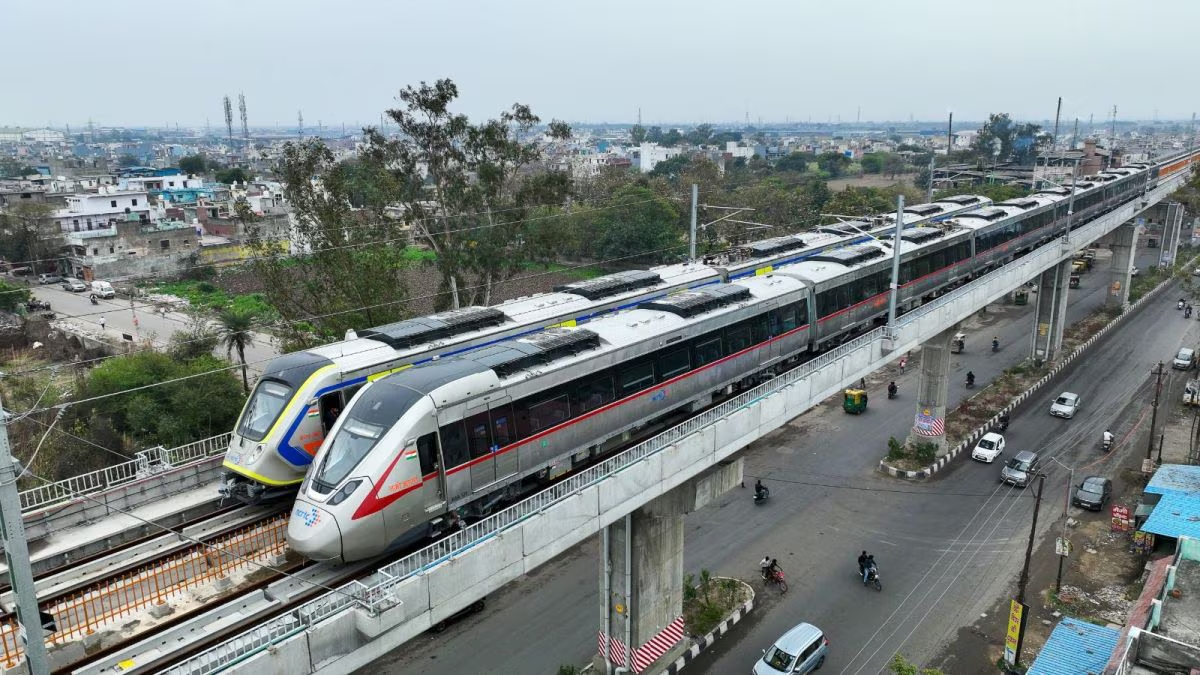
New Delhi, April 21, 2026: The landscape of regional connectivity in India took a monumental leap forward in February 2026 with the full operationalization of the Delhi–Ghaziabad–Meerut Namo Bharat (Regional Rapid Transit System) corridor. As citizens across the National Capital Region (NCR) embrace this world-class, high-speed transit network, the focus has already shifted to what lies ahead. With the primary arterial route now complete, the National Capital Region Transport Corporation (NCRTC) and the government have turned their attention to the next ambitious phase of expansion—a move set to redefine the economic and logistical map of Western Uttar Pradesh.
The Success of Phase 1: A New Benchmark
The full inauguration of the 82-km Delhi–Meerut corridor in February 2026 was more than just the launch of a new train line; it was a watershed moment for urban and regional mobility. By integrating the Namo Bharat services with the pioneering Meerut Metro on a shared infrastructure, the project proved that India could execute complex, multi-modal transit solutions at scale.
For commuters, the impact was immediate. Travel time between Delhi and Meerut has been slashed to just under an hour, transforming daily commutes that were once grueling endurance tests into comfortable, predictable journeys. This success has laid the psychological and logistical groundwork for the next wave of expansion, proving to stakeholders that high-speed, high-frequency rail is not just viable but essential for the region’s continued growth.
The West UP Expansion: Connecting the Heartland to the Hubs
While the first phase connected the spine of the region (Delhi–Ghaziabad–Meerut), the “second phase” of expansion is designed to flesh out the network, weaving together emerging industrial hubs, residential townships, and critical transport nodes in Western Uttar Pradesh.
The Ghaziabad–Jewar Airport Link: The Crown Jewel
The most significant and highly anticipated project currently in the planning pipeline for West Uttar Pradesh is the Ghaziabad–Jewar Airport RRTS corridor. This 72-km stretch is poised to become the lifeline for the rapidly developing Yamuna Expressway industrial belt.
- Strategic Importance: This corridor will serve as a direct high-speed link between the operational Delhi–Meerut RRTS and the Noida International Airport (Jewar). By connecting these two vital points, it effectively brings the airport closer to the entire NCR, allowing travelers from Meerut, Ghaziabad, and parts of Delhi to reach the airport with unprecedented ease.
- Key Connectivity: The route is planned to traverse high-growth areas, including Greater Noida West and the Kasna industrial hub. With proposed stops in these densely populated and commercially active zones, the line will act as a catalyst for real estate development and economic activity.
- Integrated Transit: The corridor is designed to provide seamless interchange facilities. It will not only connect with the Delhi–Meerut RRTS at Ghaziabad but also link up with the Noida Metro’s Aqua Line and future regional routes, creating a robust web of connectivity that reduces reliance on private vehicles.
Extending the Reach: Emerging Corridors
Beyond the airport link, the broader regional plan identifies several other potential corridors that reflect the government’s vision for a hyper-connected Uttar Pradesh:
- Ghaziabad–Khurja: This planned extension aims to further penetrate the hinterland of Western UP, supporting regional development and easing the transit burden on road networks leading into the capital.
- Noida–Faridabad–Gurgaon: While primarily a multi-state connector, this proposed line will feature significant infrastructure within the Noida and Greater Noida regions, further solidifying the status of these cities as critical nodes in the expanded RRTS network.
Transforming the Economic Landscape
The expansion of Namo Bharat into the interior districts of West Uttar Pradesh is not merely about transportation; it is an economic strategy.
- Industrial Development: By providing fast, reliable transit for workers and goods, the RRTS makes satellite cities more attractive for industries, manufacturing units, and logistics parks. This decentralization of economic activity is crucial for balanced regional growth.
- Real Estate Boom: Historically, connectivity projects are the primary drivers of real estate appreciation. With high-speed rail stops, regions like Greater Noida West, Bulandshahr, and the areas surrounding the Yamuna Expressway are seeing increased interest from both developers and homebuyers.
- Reducing Urban Congestion: A persistent issue in the NCR is the sheer volume of road traffic. By offering a faster and more affordable alternative to cars and buses, the RRTS expansion aims to pull thousands of daily commuters off the highways, leading to reduced fuel consumption, lower pollution levels, and a significantly smaller carbon footprint for the region.
Future-Proofing Urban Growth: The “Namo Bharat Advantage”
The beauty of the Namo Bharat system lies in its technical versatility. Unlike standard metro systems that are designed for dense, short-distance urban travel, the RRTS is engineered for speed (up to 160 km/h) and efficiency over regional distances.
The integration of “Transit-Oriented Development” (TOD) is a core pillar of these expansion plans. The government is ensuring that around the new stations, there are master plans for residential, commercial, and recreational spaces. This approach ensures that the cities of tomorrow are not just places where people arrive, but places where they can live, work, and thrive without needing to travel long distances for daily amenities.
Conclusion: A Vision for a Connected Future
As we look toward the latter half of the decade, the expansion of the Namo Bharat network signifies the maturity of India’s infrastructure ambitions. For the residents of West Uttar Pradesh, this is not just an infrastructure project; it is an upgrade to their quality of life.
With the Ghaziabad–Jewar corridor at the forefront, the region is set to become one of the most connected corridors in the country. The transition from a region dependent on bottlenecked highways to one powered by a seamless, high-speed rail network is well underway. As the blueprints transition into construction, the promise of a more prosperous, mobile, and efficient Uttar Pradesh is becoming a tangible reality—one that will reshape the lives of millions for generations to come.