

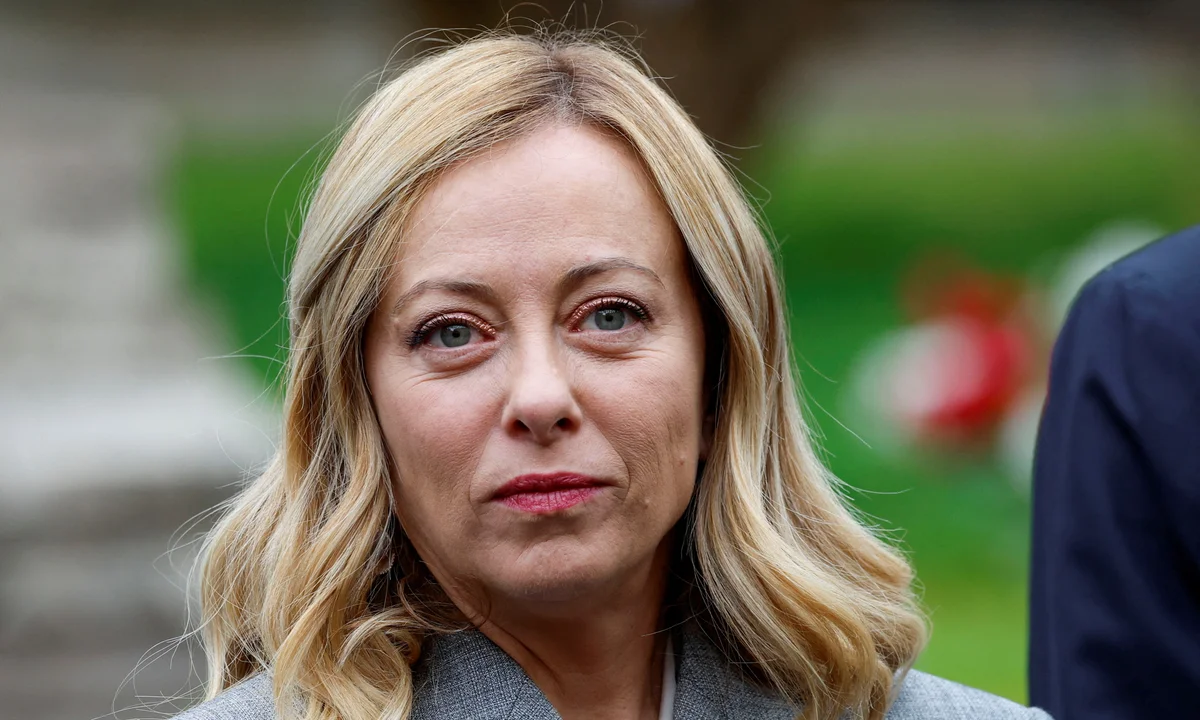
New Delhi, May 6, 2026: In a sharp and candid response to the rise of AI-generated misinformation, Italian Prime Minister Giorgia Meloni has publicly condemned the circulation of a fabricated, sexually explicit image of herself. The viral photo, which appeared to show the Prime Minister in lingerie, has ignited a wider conversation about the dangers of deepfake technology, the weaponization of artificial intelligence in politics, and the urgent need for digital literacy in the age of viral media.
The Incident: A Fabricated Reality
The controversy began earlier this week when a manipulated image began circulating widely on social media platforms. The image depicted Prime Minister Meloni in a compromising position—seated on a bed while wearing lingerie. To many observers, the image appeared realistic enough to trick casual users, leading some to circulate it with claims that the Prime Minister’s behavior was “shameful” and unbecoming of her high office.
Meloni took to her official Facebook page to address the situation directly. By posting the fake image alongside a screenshot of a social media user named “Roberto” who had shared the photo with critical commentary, Meloni aimed to expose the falsehood for what it was. Her response was a blend of defiance, humor, and a sober warning.
“I must admit that whoever created them, at least in the attached case, has also improved me quite a bit,” she quipped, acknowledging the sophistication of the AI generation while maintaining her composure. However, she quickly pivoted from the humor of the moment to the serious implications of the incident.
Beyond Personal Attacks: The Danger of Deepfakes
While Meloni noted that she possesses the platform and the resources to defend her reputation, she emphasized that the true danger of deepfake technology lies in its ability to target those who cannot easily fight back.
“The point, however, goes beyond me,” Meloni wrote in her post. “Deepfakes are a dangerous tool, because they can deceive, manipulate, and strike anyone. I can defend myself. Many others cannot.”
The Italian Prime Minister characterized the creation and distribution of the image as a deliberate “political attack.” She argued that this incident is symptomatic of a disturbing trend: the use of any means necessary—including fabricated, AI-generated falsehoods—to attack opponents and manipulate public perception.
A Call for Digital Vigilance
The incident has served as a wake-up call regarding the fragility of truth online. Meloni urged the public to adopt a fundamental rule for navigating the modern internet: Verify before you believe, and verify before you share.
In an era where AI can generate hyper-realistic images, videos, and audio in seconds, the burden of truth has shifted increasingly toward the consumer. Meloni warned that if today it is a public figure being targeted by a deepfake, tomorrow it could be anyone. Her message resonated with experts who have long warned that the democratization of AI image-creation tools has outpaced public awareness of how to identify manipulated media.
The Broader Context: AI and Law
Italy has been at the forefront of attempting to manage the risks associated with this technology. Last year, Italy became the first country in the European Union to approve comprehensive AI regulatory legislation. This landmark law includes strict provisions, including the potential for prison sentences for those who intentionally distribute AI-generated or manipulated content that causes harm.
This is not the first time Meloni has dealt with such issues. In 2022, she initiated a defamation lawsuit against an individual accused of creating and sharing deepfake pornographic content using her likeness. These repeated incidents highlight the ongoing struggle between rapid technological advancement and the legal protections afforded to individuals against defamation and non-consensual imagery.
The Impact on Social Media Discourse
Social media users have reacted to the incident with a mix of concern, cynicism, and resignation. While many rallied behind the Prime Minister, others noted a growing “truth fatigue,” where users are becoming increasingly skeptical of everything they see online. One commentator noted that because fake images are becoming so ubiquitous, their inherent value as “proof” of anything is rapidly diminishing—a phenomenon sometimes compared to the inflationary devaluation of currency.
However, researchers and digital rights advocates warn against total cynicism. They argue that while skepticism is healthy, apathy is dangerous. The ability of deepfakes to destroy lives, influence elections, and incite harassment is not merely a technical nuisance but a significant societal threat.
Conclusion: A Lesson for Everyone
Giorgia Meloni’s firm response to the viral lingerie photo serves as a critical reminder that we are entering a new phase of digital reality. As AI tools become more powerful and accessible, the line between authentic documentation and fabricated imagery will continue to blur.
For the public, the lesson is clear: the image on the screen is no longer a reliable witness. In the words of the Italian Prime Minister, the only defense we have is caution. By choosing to pause, verify, and question the source of the content we consume and share, we can help build a culture of digital responsibility that protects not just the powerful, but every individual from the reach of sophisticated, automated lies.