

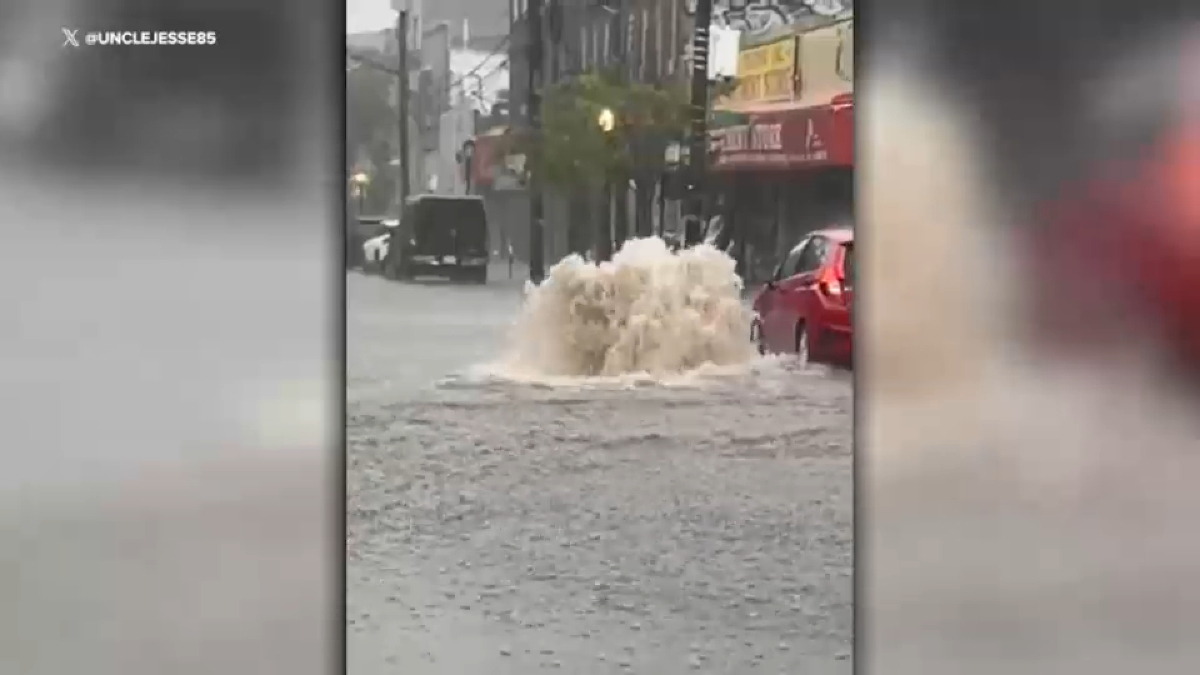
A shocking 15-second video circulating on social media has become the defining image of a severe flash-flooding event that recently paralyzed New York City. The viral footage, which has already accumulated over 14 million views, captures a terrifying moment in Queens: an unidentified woman is instantly swept away by rushing, muddy floodwaters the exact second she steps off a Metropolitan Transportation Authority (MTA) city bus. The dramatic incident has not only put a spotlight on the immediate dangers of extreme weather but has also reignited a fierce public debate regarding the resilience of the city’s aging transit and drainage infrastructure.
The incident occurred during an intense storm system that brought an unseasonal heatwave to an abrupt end. Thunderstorms dropped vast amounts of water in a highly concentrated period, with some neighborhoods reporting approximately 5 centimeters (nearly 2 inches) of rainfall in just a single hour. This sudden deluge completely overwhelmed local drainage systems, rapidly turning ordinary streets and sidewalks into fast-moving, hazardous rivers. The boroughs of Brooklyn and Queens bore the brunt of the storm’s fury, experiencing submerged roads, stranded vehicles, and widespread chaos across surface transportation networks.
A Terrifying 15 Seconds in Queens
The viral video, recorded by a bystander and shared widely across platforms like X (formerly Twitter) and YouTube, illustrates just how quickly a routine commute can turn life-threatening. In the footage, a woman wearing a bright pink crop top and matching bottoms prepares to exit a stopped MTA bus. As she stands at the threshold of the bus door, she firmly holds onto the yellow safety railings on either side of the frame, visibly hesitant as she looks down at the inundated street. The pavement and sidewalk are entirely obscured by a torrent of rapidly flowing, waist-deep water rushing past the vehicle.
The moment she releases her grip on the safety railings to step onto the sidewalk, the sheer force of the current takes over. Within a split second, the woman loses her footing and is violently knocked sideways by the raging waters. The camera shakes erratically as the person filming gasps in shock. The woman is seen tumbling down the sidewalk, entirely at the mercy of the flash flood. A bystander wearing a blue shirt quickly enters the frame, rushing toward the cascading water in a brave attempt to intercept and assist her.
The video cuts off before showing the final resolution of the rescue, leaving viewers highly anxious. While the clip has sparked immense concern globally, city officials have noted that no official reports of critical injuries or fatalities have been connected directly to this specific bus stop incident, though the search for further details regarding the woman’s identity and well-being continues.
Infrastructure Under Scrutiny
This dramatic event has cast a harsh light on the vulnerability of New York City’s public systems. The sudden downpour blindsided thousands of commuters, converting major avenues into virtual lakes and forcing some drivers to abandon their cars entirely or climb onto their roofs to await emergency rescue teams. The storm dealt a massive blow to the city’s transit ecosystem:
-
Subway Suspensions: Rising water cascading down station stairs forced transit officials to entirely suspend service on major lines, including the F and J trains.
-
Avenue Overflows: Multiple underpasses and crucial traffic arteries across the five boroughs were shut down entirely by the New York Police Department (NYPD).
-
Surface Gridlock: City buses struggled to navigate flooded avenues, leaving passengers trapped inside vehicles that were surrounded by class-5 style rapids.
Public frustration has mounted significantly online, with residents questioning why transit and city management systems seem consistently unequipped to handle heavy summer downpours. Critics point out that while severe weather is a natural force, a major metropolis should possess drainage systems capable of handling localized rain events without putting bus passengers in immediate physical peril.
Official Response and Moving Forward
In the wake of the deteriorating weather conditions and mounting public outcries, New York City Emergency Management teams issued urgent regional warnings. Authorities have strongly advised all residents to strictly avoid walking or driving through floodwaters, reminding the public that even a few inches of moving water can easily knock an adult off their feet or sweep a vehicle off the road. Residents living in low-lying, flood-prone neighborhoods—particularly in Queens sectors like Jamaica, Hillside, and Queens Village—were instructed to seek higher ground immediately during active storm bands.
The office of New York City Mayor Zohran Mamdani confirmed that municipal agencies are working overtime to address the immediate damage, clear clogged storm basins, and coordinate with the MTA to review emergency protocols for bus operators during flash-flood events. Advocates are demanding that bus drivers be given the flexibility to drop off passengers away from designated stops if the standard drop-off zone is visibly transformed into a dangerous torrent.
As climate patterns continue to bring intense, concentrated bursts of rainfall to urban environments, municipal leaders face growing pressure to transition from temporary emergency responses to aggressive, long-term infrastructure modernization. For everyday New Yorkers, the viral video remains a sobering reminder of how a simple step off a city bus can instantly escalate into a fight for survival.