

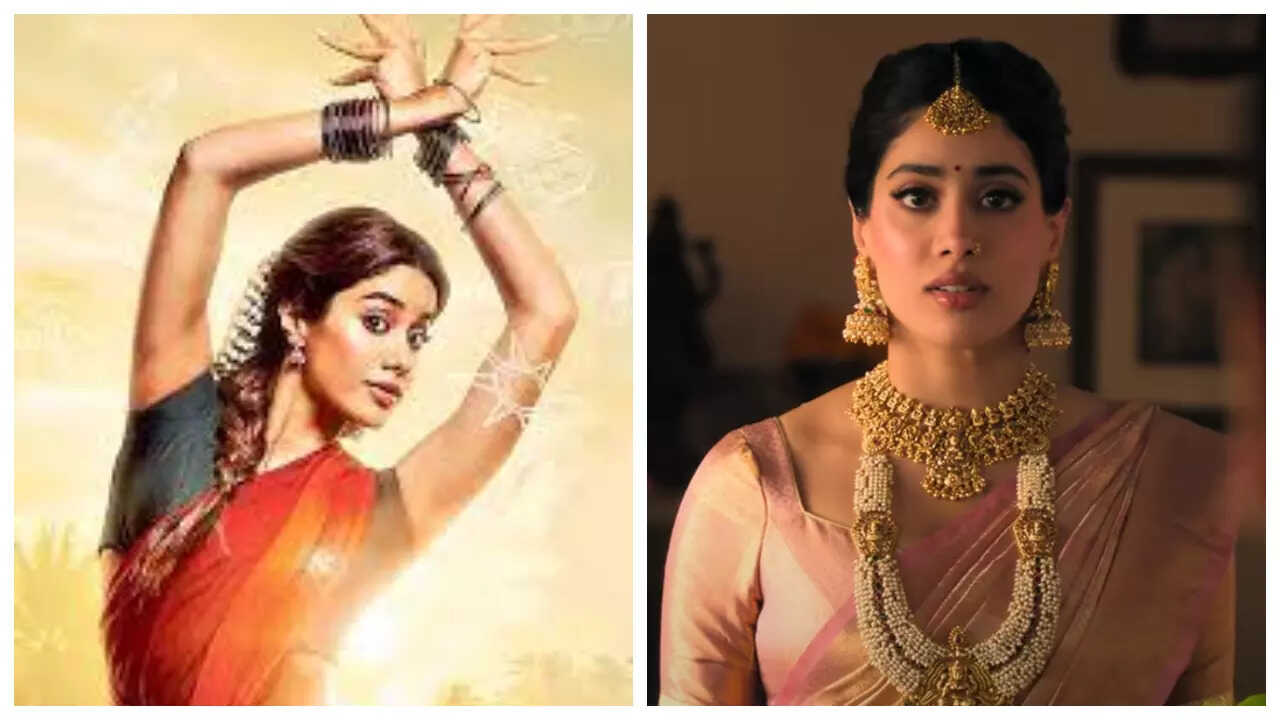
New Delhi, May 30, 2026: Bollywood actress Janhvi Kapoor has officially drawn the line when it comes to experimenting with regional languages on the silver screen. In a recent, candid conversation with the media, the actress opened up about her professional journey across various film industries. While discussing her recent experiences, Janhvi made a surprising confession that quickly caught the attention of fans and film enthusiasts alike: she has decided to step away from Malayalam cinema, calling the language far too difficult to master.
The actress, who has been aggressively expanding her horizons outside of Hindi cinema, revealed that she does not see herself taking on a Malayalam-language role anytime soon. Despite her immense respect for the industry and the cultural richness of Kerala, the sheer complexity of the language proved to be a hurdle she is not willing to leap over again. For Janhvi, the decision marks a realistic boundary in her quest to become a truly multilingual star.
The Turning Point with “Param Sundari”
The roots of Janhvi’s linguistic realization trace back to her work on the film Param Sundari, which hit screens earlier. In the movie, Janhvi played a character named Thekkepattu Sundari Damodharan Pillai, a woman with deep Malayali roots. Because her character was eventually written as half-Malayali and half-Tamil to accommodate her speaking style, Janhvi had to deliver heavy Malayalam dialogues.
Following the project’s release, social media platforms were flooded with mixed reactions. While her dedicated fan base applauded her effort to try something entirely outside her comfort zone, a significant section of the audience—particularly native Malayalam speakers—criticized her accent and dialogue delivery. Internet memes and gentle trolling highlighted how tough it is for someone raised in a non-Malayali environment to capture the specific phonetics and unique rhythm of the language.
Reflecting on that high-pressure experience, Janhvi didn’t mince words about the difficulty of the task. “I don’t think I should attempt Malayalam again, because it’s too difficult for me,” she admitted honestly. She went on to show her appreciation for the language, adding, “For me, it’s such a beautiful, sweet language. But the pronunciation and flow are incredibly complex.”
Familiarity vs. Friction in the Southern Industries
Interestingly, Janhvi’s struggles with Malayalam stand in stark contrast to her comfort levels with other major languages of South India. The actress pointed out that her ears have always been much more attuned to Tamil and Telugu, making her transition into those industries significantly smoother.
Janhvi credits this comfort to her upbringing and her lineage. Being the daughter of the legendary late actress Sridevi, who dominated Tamil and Telugu cinema for decades before becoming a national icon, Janhvi grew up exposed to those sounds. She noted that she is “phonetically quite familiar” with both languages, which makes memorizing lines and delivering them with the right emotion feel less like an exhausting academic exercise and more like an artistic adaptation.
This familiarity has directly translated into box-office opportunities. Janhvi made a massive splash in Telugu cinema with Devara: Part 1, sharing the screen with global star NTR Jr. The film went on to become one of the highest-grossing projects of her career, and her performance as Thangam was warmly received by the Telugu audience. Following that massive success, she locked in her second major Telugu film, Peddi, directed by Buchi Babu Sana and co-starring mega-power star Ram Charan.
Why Malayalam is a Unique Challenge for Outsiders
Janhvi’s admission isn’t particularly shocking to anyone familiar with Indian linguistics. Malayalam is widely recognized as one of the most structurally and phonetically complex languages in the country. It features unique retroflex consonants (sounds produced with the tongue curled back against the roof of the mouth) and complex consonant clusters that are incredibly tough for non-native speakers to articulate without years of practice.
In contrast to Bollywood, where sync-sound or distinct dubbing can sometimes mask a leading actor’s linguistic shortcomings, the Malayalam film industry—commonly known as Mollywood—is celebrated globally for its rigid commitment to realism and raw, grounded storytelling. Audiences in Kerala are highly sensitive to authenticity. If a character is supposed to be local, a misplaced syllable or a forced accent instantly breaks the immersion of the story. Janhvi’s decision to step back shows a mature recognition of this cultural standard; rather than delivering a half-hearted phonetic performance, she prefers to leave those roles to native speakers who can do them complete justice.
Shifting Focus to Telugu and Tamil Cinema
With Malayalam permanently off the table, Janhvi is redirecting all of her South Indian cinematic ambitions toward the Telugu (Tollywood) and Tamil (Kollywood) industries. She is currently knee-deep in promotional campaigns for Peddi, where she portrays a vibrant female lead named Achiyamma. The film is designed as a high-octane sports action drama set in the heart of rural Andhra Pradesh, tracking a story of community unification through sports.
Working on Peddi alongside an ensemble cast that includes Shiva Rajkumar, Boman Irani, and Jagapathi Babu has allowed Janhvi to truly enjoy her time on set without the crushing anxiety of an unfamiliar accent. “I’m really enjoying working in Telugu films. I’d love to explore Tamil films as well,” she expressed, signaling that her southern journey is far from over—it is simply becoming more focused.
Balancing Bollywood and Regional Ambitions
While her ventures into the South dominate recent headlines, Janhvi maintains a steady and prominent footprint in mainstream Hindi cinema. Since her debut with Dhadak in 2018, she has consciously chosen diverse, performance-driven roles, earning critical nods for films like Gunjan Sexena: The Kargil Girl and Homebound.
Her career trajectory shows a young actress trying to strike a balance between commercial, star-studded blockbusters and independent, character-driven narratives. By drawing a clear line at Malayalam, Janhvi is practicing a form of career curation that many contemporary actors avoid. Acknowledging one’s professional limitations is a sign of artistic maturity. Instead of overextending herself across every single regional market for the sake of a “pan-India” label, she is doubling down on areas where she can truly excel, connect with the audience, and deliver authentic performances.