

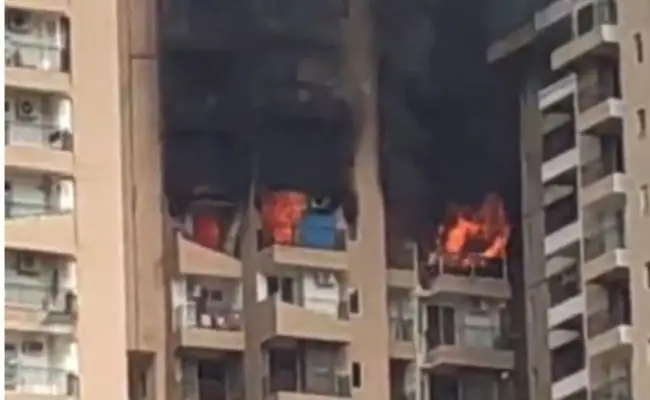
New Delhi, June 29, 2026 — A massive fire broke out on Monday morning on the 21st floor of a high-rise residential building in Noida’s Sector 119, triggering widespread panic among hundreds of residents. The incident occurred at the prominent Aranya Society, prompting an immediate evacuation of the affected tower and adjacent blocks. Initial investigations and witness accounts strongly suggest that the blaze was triggered by a severe technical fault leading to an air conditioner (AC) blast, a hazard that has increasingly worried high-rise residents during intense summer seasons.
The fire department received an emergency call around 9:45 AM after thick plumes of dark smoke and bright orange flames were seen billowing out from the balcony of the high-rise apartment. Due to the high altitude of the flat and strong cross-winds, the fire spread rapidly within the unit, eventually spreading to damage parts of an adjacent apartment. Panic-stricken residents ran down the staircases of the 28-story building as fire alarms went off across the complex.
Upon receiving the alert, fire services and local police from the Sector 113 jurisdiction rushed to the scene. Around six fire tenders were deployed to battle the flames. Firefighters equipped with breathing apparatus and specialised gear navigated the building’s internal firefighting infrastructure to approach the 21st floor. Because conventional hydraulic ladders and external rescue platforms typically struggle to reach past the 10th or 12th floors, responders relied heavily on internal wet risers, functional booster pumps, and water hoses built into the society’s corridors.
The Growing Threat of Summer AC Blasts
While an official inquiry has been launched to determine the precise origin of the sparks, preliminary findings indicate a short circuit in a split AC unit that led to a sudden compressor explosion. This incident follows a pattern of similar high-rise blazes reported across the Delhi-NCR region during periods of high cooling demands, where electrical grids and domestic appliances face prolonged operational stress.
Industry experts point out that when air conditioners run continuously for several days without adequate pauses, the internal compressor can overheat significantly. This problem is frequently compounded by a lack of periodic maintenance, low refrigerant levels, or faulty wiring. If the safety pressure switch fails under these conditions, the internal pressure builds up rapidly, leading to a dangerous burst that can instantly ignite nearby flammable materials like curtains, sofas, or wooden paneling.
Fire Safety Gaps in High-Rise Buildings
This latest incident has once again turned the spotlight on high-rise safety protocols and architectural design requirements under the National Building Code (NBC). Fire safety consultants highlight that combating blazes at extreme heights presents unique hurdles that demand proactive communal vigilance.
- Reliance on Internal Systems: External fire trucks and hydraulic platforms have strict structural height limits. For flats situated on upper decks, internal safety installations—such as automated sprinklers, functional fire lifts, smoke extraction systems, and consistently pressurized stairwells—serve as the absolute primary defense line.
- The Crucial First Ten Minutes: The initial response using onsite corridor fire extinguishers and hose reels by trained security staff often dictates whether a localized fire is contained or transforms into a major structural crisis before the local fire brigade arrives.
- Obstruction-Free Exits: Routine audits frequently reveal that common lobbies and emergency exit staircases are blocked by discarded furniture, heavy planters, or household storage. In zero-visibility smoke situations, these blockages become major hazards for fleeing residents.
Local authorities and Resident Welfare Associations (RWAs) across the region are urging homeowners to schedule routine electrical load assessments and professional AC servicing. Experts strongly recommend setting thermostats around 24°C rather than at minimum limits to minimize structural strain on old wiring. As cooling demands continue to climb, maintaining these safety practices remains critical to ensuring safety in high-rise communities.