

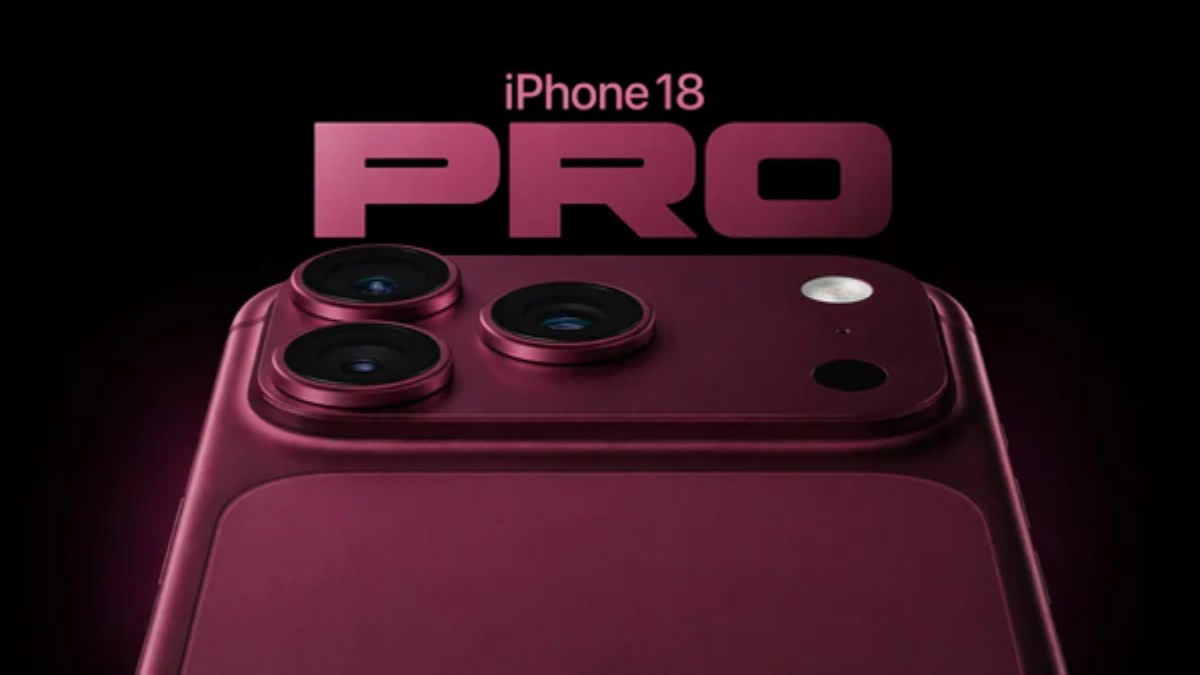
New Delhi, June 29, 2026: As the smartphone market continues to push the boundaries of hardware and artificial intelligence, the tech world has turned its full attention toward Apple’s upcoming flagship lineup. Leaks and industry supply chain reports provide a remarkably clear picture of what the tech giant is planning.
The iPhone 18 Pro and iPhone 18 Pro Max are shaping up to be landmark devices, introducing a highly anticipated processing milestone, major changes to the camera system, and a refreshed design layout. Here is an updated, comprehensive breakdown of everything expected from Apple’s next pro-tier flagships.
The Launch Timeline: When Will It Arrive?
Apple has long favored the month of September to pull back the curtain on its flagship hardware, allowing the company to build immense commercial momentum ahead of the critical holiday shopping season. According to noted industry analysts and Bloomberg’s Mark Gurman, Apple is tightly sticking to its traditional playbook.
The company traditionally hosts its keynote on the first Tuesday or Wednesday following Labor Day in the United States. September 8, 2026, stands out as the most likely announcement date, with September 9 acting as a close runner-up.
If Apple adheres to its usual secondary patterns, pre-orders will likely go live just a couple of days after the event, with the devices hitting retail shelves globally by mid-to-late September. Interestingly, rumors suggest Apple may split its traditional cycle this generation, moving the standard iPhone 18 and a budget-friendly “iPhone 18e” model to a Spring 2027 launch window. This structural change leaves the September spotlight entirely to the premium iPhone 18 Pro, iPhone 18 Pro Max, and a highly anticipated first-generation foldable device, tentatively dubbed the “iPhone Ultra.”
Price Predictions: Navigating the Mobile Inflation
While a major flagship launch is always a source of excitement, consumers should prepare for a noticeable hit to their wallets. For multiple generations, Apple managed to keep base pricing relatively stable for its high-end smartphones. However, market realities have shifted significantly due to a global memory chip crunch and escalating manufacturing costs.
Market intelligence firms like IDC point out that because Apple recently raised prices on its refreshed MacBook and iPad models to offset component expenses, the iPhone lineup is finally poised to follow suit. Analysts predict a potential price hike of up to $200 for the Pro tiers, bringing the starting price of the base iPhone 18 Pro to somewhere between $1,200 and $1,299 in the US market. The larger iPhone 18 Pro Max could carry a premium starting tag of $1,349 to $1,399.
In international markets like India, premium import duties and a higher baseline mean that the standard Pro variant is expected to retail between ₹1,19,900 and ₹1,34,900, while the Pro Max could push anywhere from ₹1,39,900 to over ₹1,59,900 depending on the configuration. High-capacity variants topping out at 2TB will scale even higher.
Processor: Breaking the 2nm Barrier with the A20 Pro
The true heart of the upgrade lies within the silicon. The iPhone 18 Pro series will introduce the next-generation A20 Pro chipset, marking the mobile industry’s historic transition to TSMC’s cutting-edge 2纳米 (2nm) manufacturing process. To put it simply: the smaller the transistors on a chip, the more tightly they can be packed together, leading to monumental leaps in speed and energy management.
Early performance projections indicate that the A20 Pro will offer a 10% to 15% increase in CPU performance alongside an incredible 30% reduction in power consumption. This extreme efficiency is rumored to be the foundation for an unprecedented “two-day battery life,” easily compensating for the power-hungry demands of modern cellular modems and screens.
Furthermore, Apple is expected to leverage a packaging architecture known as Wafer-Level Multi-Chip Module technology. This design allows the phone’s unified system memory—widely rumored to standardise at a hefty 12GB of RAM—to sit closer to the core processor. The result is lightning-fast, on-device execution of Apple Intelligence features, ensuring that complex local AI models, advanced photo editing, and text summarization run seamlessly without relying on cloud processing or overheating the chassis.
Camera Upgrades: The Era of Mechanical Variable Aperture
Over the last few years, smartphone cameras have hit a hardware ceiling, relies heavily on software algorithms to fake depth and balance exposures. The iPhone 18 Pro aims to bridge the gap between smartphones and professional DSLR cameras by introducing a mechanical variable aperture on its primary 48MP lens.
In bright daylight conditions, the lens can narrow its aperture to keep the entire landscape perfectly sharp and prevent overexposure. Conversely, in challenging low-light environments, the blades open wide to flood the sensor with light, natively reducing digital noise without needing to artificial stretch night-mode exposure times. This hardware shift also yields a stunningly natural, physical background blur (bokeh) for portrait photography, eliminating the jagged edges often created by digital portrait filters.
The supporting array is getting an overhaul as well. The ultra-wide and telephoto lenses are expected to maintain their high-resolution 48MP sensors but will feature upgraded optical designs to match the main sensor’s low-light performance. Fans of video can look forward to 8K video recording capabilities and improved cinematic modes, while the front-facing FaceTime camera jumps to a sharper 24MP sensor for immaculate video conferencing and self-portraits.
Design and Display Refinements
While the overall industrial profile will retain its iconic premium look—utilizing an ultra-durable titanium frame and a hardened Ceramic Shield—several functional changes are coming to the exterior:
- Shrinking the Dynamic Island: Supply chain leaks whisper that Apple has managed to reduce the physical footprint of its Face ID sensors by up to 35%. This means the pill-shaped screen cutout at the top of the display will shrink drastically, giving users more uninterrupted screen real estate.
- Next-Gen LTPO+ Displays: The phone will keep its standard 6.3-inch and 6.9-inch display boundaries, but will utilize upgraded LTPO+ OLED panels. Capable of smoothly scaling from a battery-saving 1Hz up to a hyper-fluid 120Hz, these displays will hit outdoor peak brightness levels reaching up to 3,000 nits.
- Sophisticated Color Palettes: Apple plans to swap out previous experimental hues for a striking, deep wine-red tone tentatively called Dark Cherry. It will spearhead the luxury lineup alongside classic premium choices like Light Blue, Dark Grey, and Silver.
- The In-House C2 Modem: On the connectivity side, the iPhone 18 Pro will feature Apple’s second-generation custom 5G modem (the C2 chip). Moving away from third-party components allows Apple to deeply integrate network connectivity into the main logic board, cutting down on data dropouts and dramatically decreasing battery drain when hunting for a 5G signal.
With a definitive focus on pushing 2nm raw performance, reimagining light capture with mechanical optics, and dedicating more workspace to localized artificial intelligence, the iPhone 18 Pro series represents a massive technical stride rather than a simple annual iteration. Keep your eyes on early September, as Apple prepares to usher in this new era of mobile capability.