

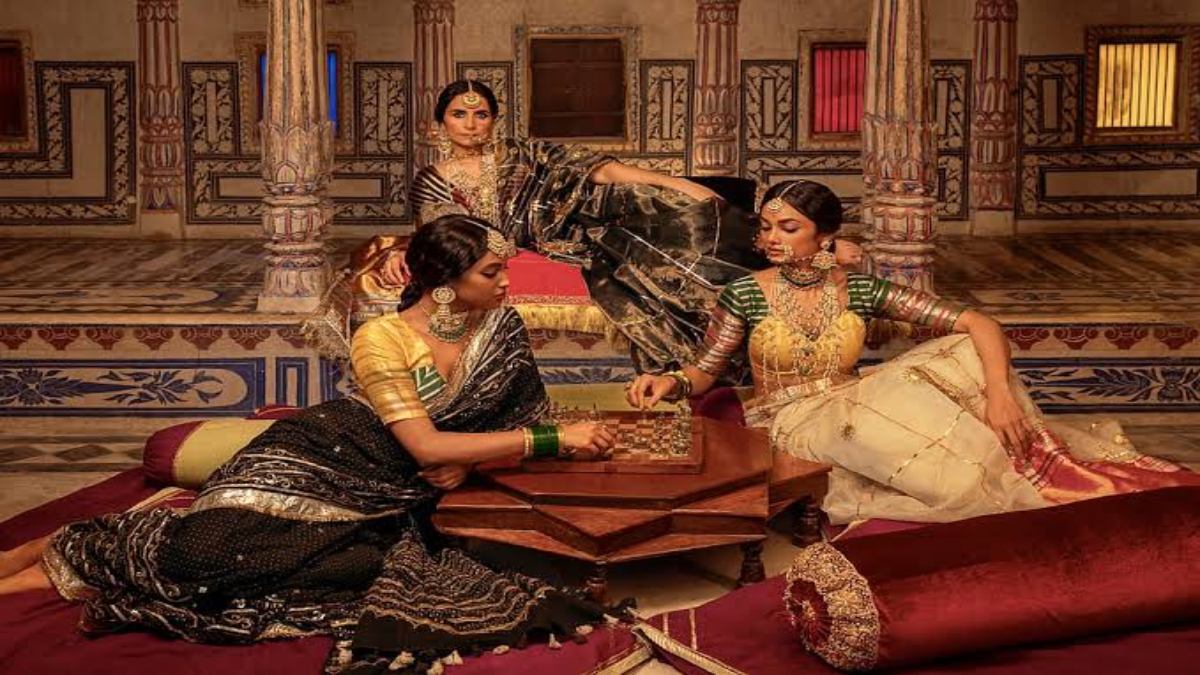
New Delhi, July 14, 2026: History books often paint a grand picture of India’s royal past, filling pages with the battle tactics of kings, political treaties, and sprawling fortress walls. Yet, the deep personal stories that unfolded within the zenankhana—the private women’s quarters of the palace—have largely been left unwritten. Designer Sourav Das is attempting to balance the scales. His newest collection, Rani Mahal, functions as a textile narrative that pulls back the heavy curtains of time to honor the quiet authority, intellect, and memory of Rajasthan’s royal women.
Rather than focusing on mainstream royalty, Das looks to the forgotten corners of lesser-known palaces and matrilineal estates. Through a mix of traditional weaves and hand embroidery, the collection proves that true power does not always need a public throne to make a lasting impact.
Capturing the Soul of the Zenankhana
For Sourav Das, creating Rani Mahal started as a journey to capture history in its most fragmented form. The lives of women behind palace walls were rarely documented in text; instead, they survived through oral memories, royal paintings, and the weathered walls of the palaces themselves.
This emotional focus shapes the entire collection. Instead of crafting loud, heavy garments meant for public spectacles, Das wanted to imagine the private reality of these women. These were individuals who carried both grace and deep intellect, managing family legacies and exerting tremendous influence over the kingdom from within their private sanctuaries.
A Design Born from Real Matrilineal Legacies
The collection gained a profound sense of realism through Das’s close collaboration with the Karansar family of Barli, Rajasthan. What started as simple design research quickly turned into a deep exploration of a family’s matrilineal heritage. By looking at heirloom pieces, old photographs, and listening to family stories, Das found a direct link to the very women he wanted to honor.
The design choices reflect this archival research. Traditional cholis (fitted bodices) serve as the starting point for contemporary blouses, while handwoven Kota saris form the strong, structural backbone of the collection.
Every single choice in the collection leans heavily on comfort and context, built specifically as a spring-summer line. The garments use a base of sheer kota doria woven with ultra-fine zari threads. This creates a tissue-like translucency that feels weightless yet luxurious.
Das notes that the sheer fabric was a conscious storytelling choice:
“I used a Kota weave because I wanted a very sheer translucent base.” The fabric mimics the interplay of light and shadow behind palace screens, offering a literal and metaphorical window into a hidden world.
The Palette of Time and Weathered Frescoes
The color palette of Rani Mahal avoids the bright, saturated jewel tones commonly associated with modern royal attire. Instead, Das turned to the soft, muted tones found on the ancient frescoed walls of Rajasthan’s smaller forts—surfaces that have been beautifully worn down by centuries of sun and wind. The result is a color story that feels deeply romantic, carrying the physical traces of the rooms that inspired it.
To complement these faded colors, the embellishments are rooted in centuries-old Rajasthani crafts:
- Kota Doria Weaves: Serving as the lightweight canvas for the collection.
- Gota Work: Ribbon embroidery using gold or silver ribbons to add a metallic shimmer.
- Zardozi: Intricate sewing using gold and silver threads to add weightless luxury.
By closely studying archival garments preserved in regional museums and private family collections, Das managed to copy the richness of these historical details while ensuring the silhouettes remain wearable for the modern woman.
A Evolution for the Designer
Beyond its historical storytelling, Rani Mahal represents an important milestone in Sourav Das’s career as a designer. For years, fashion insiders have known him primarily for his technical expertise in woven textiles.
Rani Mahal breaks that singular mold by introducing detailed hand embroidery as a major part of his design identity. By layering intricate needlework over his signature handwoven bases, Das bridges the gap between structure and surface design.
A standout piece that captures the spirit of this evolution is a black khadi resist-printed sari, which Das holds particularly close to his heart. Styled with subtle jewel-toned accents and delicate embroidery, the sari balances the rustic simplicity of khadi with the grandeur of palace life. It serves as a perfect summary of what Rani Mahal aims to do: take the everyday elements of history and elevate them into a beautiful celebration of quiet, feminine power.