

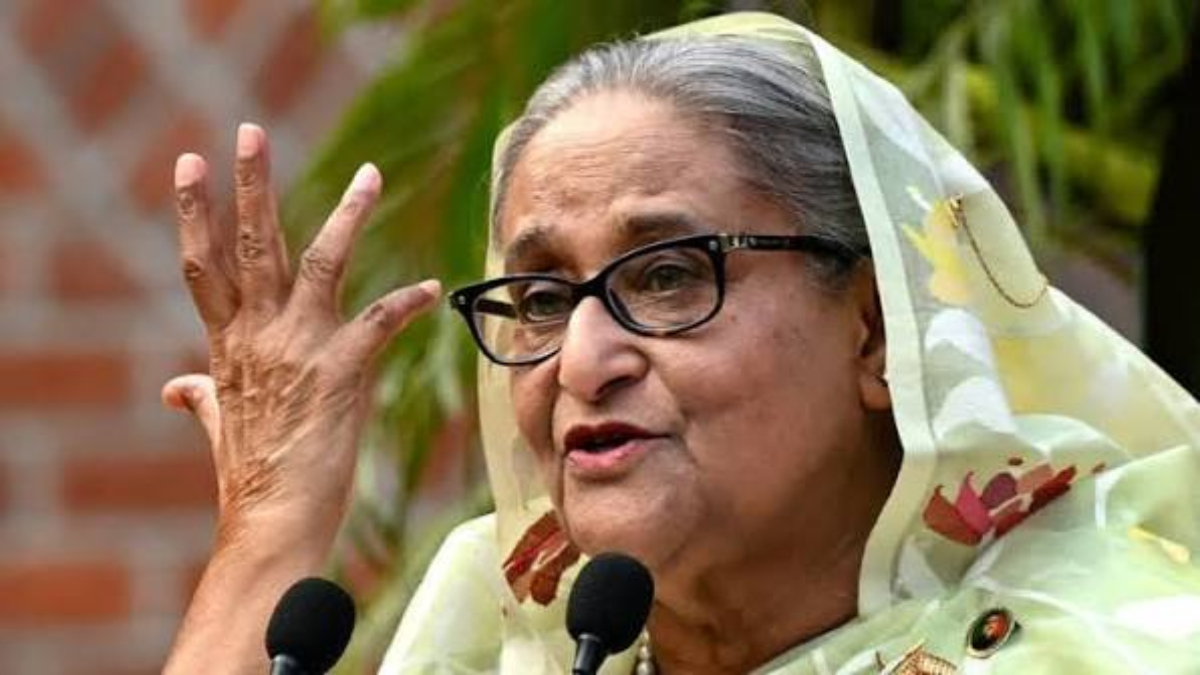
New Delhi, July 14, 2026 — The political landscape in Bangladesh has intensified following a firm declaration from the newly formed government regarding the fate of deposed Prime Minister Sheikh Hasina. State Minister for Foreign Affairs, Shama Obaed Islam, made it explicitly clear that if the ousted leader returns to the country, she will be arrested immediately and sent to prison. The announcement comes directly in response to Hasina’s recent public statements from her exile in India, where she claimed she plans to return to Bangladesh by December to surrender before a court.
The government’s stance underscores a zero-tolerance policy toward the former prime minister, who was convicted in absentia for crimes against humanity. Minister Shama Obaed reiterated that because Hasina is already a convicted criminal under Bangladeshi law, her immediate detention is non-negotiable. “If she surrenders, steps will be taken as per the existing law. She will have to land in jail. The law will take its own course,” the State Minister told reporters during a press briefing at the Ministry of Foreign Affairs. The administration has emphasized that the legal machinery will act firmly without any political concessions or special privileges.
A Drastic Shift in Bangladesh’s Political Reality
Sheikh Hasina’s 20-year rule abruptly crumbled on August 5, 2024, following a massive, violent student-led uprising that gripped the nation. The United Nations reported that the brutal crackdowns ordered during her final weeks in power resulted in the deaths of nearly 1,400 people. As millions of protesters marched on her official residence in Dhaka, Hasina fled the country via a military helicopter and sought refuge in New Delhi, India, where she has resided ever since.
Following nearly two years of deep political volatility and an interim transition, Bangladesh held general elections. Prime Minister Tarique Rahman’s administration took formal office, vowing to stabilize the nation, reform constitutional bodies, and deliver justice for the casualties of the 2024 protests. Under this new leadership, the Awami League—the political party long helmed by Hasina—has been officially banned, and its top leadership has either fled the country or gone deep into hiding.
The Capital Verdict and Legal Dead Ends
The primary legal mechanism awaiting Sheikh Hasina is a death sentence handed down in absentia. In November 2025, Bangladesh’s International Crimes Tribunal (ICT) found the 78-year-old former leader guilty of crimes against humanity. The tribunal concluded that she directly ordered the use of lethal weapons, military drones, and helicopters to suppress unarmed student demonstrators. Along with her former Home Minister, Asaduzzaman Khan Kamal, Hasina was sentenced to capital punishment.
According to the ICT’s Chief Prosecutor, Md Aminul Islam, Hasina faces immediate incarceration with no immediate legal recourse. He clarified that under the International Crimes Tribunal Act, individuals sentenced to death have no statutory right to seek bail upon arrest. Furthermore, because Hasina failed to lodge an official appeal within the legally mandated 30-day window following the verdict, her statutory right to challenge the conviction has expired. Any future legal appeals would rest entirely on a discretionary, high-stakes decision by the Supreme Court of Bangladesh. The state has also moved to confiscate all of her domestic assets and freeze her bank accounts.
Hasina’s December Return: A Calculated Political Move?
The sudden friction erupted after Sheikh Hasina gave an exclusive media interview outlining a concrete timeline for her return. Acknowledging the extreme risks involved—including the potential of being jailed or targeted—Hasina stated that she, alongside senior exiled members of her party, intends to fly back to Dhaka around December.
The Dhaka administration, however, views this announcement with deep suspicion. State Minister Shama Obaed Islam characterized Hasina’s remarks as a strategic “political stunt” meant to mobilize and re-energize fugitive Awami League members rather than a genuine submission to the judiciary. Authorities fear that her physical presence could re-ignite severe civil unrest and polarize a society that is still actively recovering from years of authoritarian rule. The ICT Chief Prosecutor went as far as warning Hasina to refrain from any political maneuvering that could compromise national security, stating, “We want you tomorrow. Therefore, do not stage any stunts or create further instability.”
The Extradition Dilemma and Ties with India
While Hasina speaks of a voluntary return, the Bangladeshi government is simultaneously pursuing her forced repatriation. Dhaka has officially invoked its bilateral extradition treaty with India, formally submitting multiple high-level requests to New Delhi to hand her over.
This request places the Indian government in a complex diplomatic dilemma. Historically, New Delhi maintained exceptionally close ties with Sheikh Hasina’s administration, viewing her as a vital ally for regional stability and counter-terrorism. Providing her refuge since 2024 initially strained relations between India and the incoming Bangladeshi political factions.
However, recent diplomatic engagements indicate a mutual desire to avoid a complete breakdown in relations. Indian officials have noted the extradition request and stated they are evaluating it under the strict framework of international law and bilateral treaties. Crucially, both nations have agreed that the legal complexities surrounding Hasina’s exile should not derail vital trade, border security, or bilateral initiatives, such as medical and business visas for Bangladeshi citizens.
As December approaches, the geopolitical standoff is bound to reach a critical juncture. Whether Sheikh Hasina returns voluntarily to face her capital sentence or is eventually extradited through formal diplomatic channels, the current administration has made it clear: the gates of Dhaka’s central jail are open and waiting for her.