

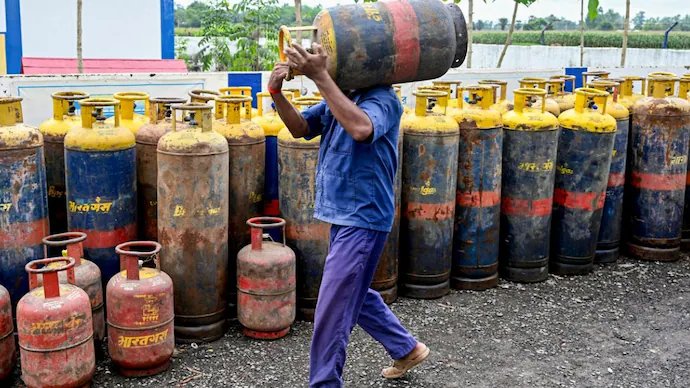
New Delhi, June 1, 2026 — In a move that is expected to trigger a ripple effect across the food, hospitality, and commercial sectors, state-owned Oil Marketing Companies (OMCs) have announced an upward revision in the prices of commercial Liquefied Petroleum Gas (LPG) cylinders. Starting today, the price of a standard 19-kilogram commercial LPG cylinder has been hiked by Rs 42. Meanwhile, providing major relief to millions of kitchens nationwide, the rates for domestic household gas cylinders (14.2 kg) remain strictly untouched.
The price modification, which takes effect immediately on the first day of the month, follows the routine monthly review cycle conducted by public sector fuel retailers like Indian Oil Corporation (IOC), Bharat Petroleum Corporation Limited (BPCL), and Hindustan Petroleum Corporation Limited (HPCL). According to the updated price notification, a 19-kg commercial cylinder will now cost significantly more in major metropolitan hubs and urban markets. Retailers, restaurant owners, and small-scale food manufacturers are bracing themselves for immediate operational cost escalations as energy inputs become costlier.
Industry analysts point out that this latest price hike is heavily intertwined with shifting dynamics in international energy markets. India relies on imports for over 85 percent of its crude oil requirements and a massive chunk of its LPG consumption. Over the past few weeks, a combination of geopolitical tensions in supply corridors, localized transport bottlenecks, and variations in the international cost-and-freight benchmarks have put upward pressure on Saudi Aramco’s LPG contract prices—which serve as the primary baseline for pricing in the domestic Indian market. The OMCs, which absorb or pass on these global fluctuations, felt compelled to adjust the commercial segment to protect their refining and marketing margins.
Following the Rs 42 hike, exact retail prices vary from state to state due to localized Value Added Tax (VAT) and state-level distribution freight charges. In Delhi, the commercial cylinder price shifts closer to the Rs 1,700–1,800 range, while Mumbai, Chennai, and Kolkata see proportional escalations relative to their previous baselines.
While the business community navigates this new spike, ordinary households have voiced immense relief. The decision to keep domestic 14.2-kg LPG cylinder rates unchanged is seen as a deliberate, stabilization measure by the administration. Household budgets are highly sensitive to variations in essential commodities, and cooking gas is a primary indicator of inflation for the middle- and lower-income demographics. By keeping domestic cylinders stable, the government and OMCs have shielded retail consumers from immediate inflationary stress, ensuring that everyday kitchen expenses remain highly predictable.
Impact on the Food and Hospitality Sector
The immediate brunt of the Rs 42 hike will undoubtedly be borne by the commercial food services sector, ranging from high-end restaurants and hotels to local tea stalls, street food vendors, and sweet shops. For these establishments, cooking gas constitutes a massive portion of daily operational overheads. A sudden increase of Rs 42 per cylinder means that high-volume businesses utilizing dozens of cylinders every week will face a substantial surge in their weekly expenditures. Industry representatives have already expressed concern that consecutive input cost increases might eventually force them to alter menu prices.
Historically, when commercial fuel rates rise, small-scale businesses face a tough dilemma: absorb the costs and watch their profit margins shrink, or pass the burden onto the end consumer. For a local eatery, a prolonged spike in fuel costs usually translates to small but noticeable increases in the prices of regular meals, snacks, and catering services. While a Rs 42 hike might seem manageable in isolation, businesses note that it adds to a cumulative burden of rising costs for other essential ingredients like edible oils, vegetables, and labor, making macroeconomic management tricky for small business owners.
Why Domestic and Commercial Rates Diverge
Many consumers wonder why commercial gas rates fluctuate frequently while household gas prices enjoy long periods of absolute stability. The reason lies in the structurally distinct regulatory frameworks governing the two sectors. The commercial LPG sector operates on a largely deregulated, market-linked model. Prices are directly linked to international import parity rates, changing dynamically on the first of every single month based on global trends. This ensures that public sector oil companies do not run up massive under-recoveries or losses on fuel sold for corporate and commercial profit-generating activities.
Conversely, the domestic LPG segment is deeply connected to public welfare and social safety networks. The government closely coordinates with oil marketing companies to absorb international volatility on behalf of household consumers. Through targeted subsidies, structural cushions, and strategic pricing interventions, domestic LPG rates are kept artificially insulated from sudden global spikes. This structural separation ensures that while businesses face market-driven fluctuations, citizens are protected against sudden shocks that could disrupt household stability or impact nutritional security across the country.
Macroeconomic Outlook and Future Trajectory
Looking ahead, market experts suggest that LPG prices will remain sensitive to global oil production quotas and broader macroeconomic indicators. The current hike reflects temporary supply-side adjustments, but any stabilization in international crude markets could pave the way for a correction or a rollback in the upcoming months. OMCs continue to monitor international freight indices, foreign exchange rates, and geopolitical shifts daily to determine the next phase of pricing updates.
In summary, the latest pricing restructure highlights a balanced approach by energy distributors. It addresses the commercial realities of international supply chains by raising rates for businesses, while simultaneously reaffirming consumer protection by keeping domestic kitchen budgets secure. As the market adapts to these updated rates, all eyes will remain on international oil benchmarks to see whether this upward trajectory continues or stabilizes before the next monthly review cycle.