

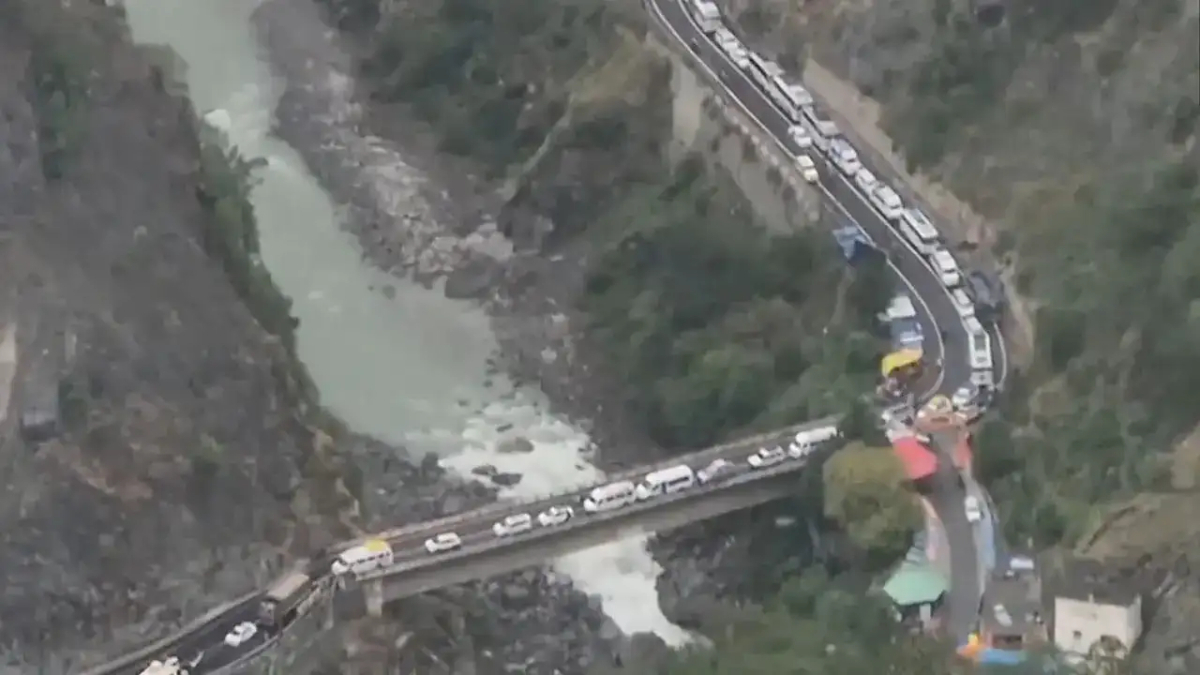
New Delhi, June 1, 2026 — The ongoing Char Dham Yatra has hit a critical peak as a staggering influx of over 30,000 pilgrims daily pushes Uttarakhand’s fragile mountain infrastructure to its absolute limit. Severe traffic congestion has paralyzed major stretches of the Badrinath National Highway, leaving thousands of devotees stranded inside their vehicles for hours. Visuals emerging from the ground show bumper-to-bumper gridlocks snaking across the narrow Himalayan terrain, with the impact felt most severely on the high-altitude choke points leading to the holy shrine.
The Anatomy of the Gridlock
The crisis reached its peak on the crucial eight-kilometer stretch between Joshimath and the Marwari Bridge. This area has been highly vulnerable since a major landslide in 2023 damaged sections of the highway. While the Border Roads Organisation (BRO) has been working continuously on restoration, various technical challenges in the rugged terrain have delayed completion.
The uneven, single-lane patches and persistent potholes have caused multiple vehicle breakdowns over the past few days, acting as immediate triggers for multi-kilometer jams. The gridlock, which originates near the ‘Zero Band’ area, has frequently lasted throughout the day and spilled late into the night.
Compounding the problem is a massive, simultaneous surge in tourism. Scorching, record-breaking heatwaves across northern India’s plains have driven a dual wave of travelers up into the mountains: devout pilgrims bound for Badrinath and Hemkund Sahib, alongside general tourists seeking respite in hill stations like Mussoorie and Nainital. This explosive mix of regional vehicular traffic has severely tested local management.
Impact on Stranded Pilgrims
For the families and elderly devotees caught in the traffic, the delays have brought significant hardships. Vehicles remain stationary for hours under a blazing mountain sun or chilling night temperatures, and accessing basic necessities has become a challenge.
- Supply Shortages: Finding adequate food, clean drinking water, and functional restrooms on the narrow ledges of the highway is increasingly difficult.
- Vulnerable Travelers: Families traveling with children and elderly relatives face prolonged physical exhaustion inside stalled buses and private cars.
- Logistical Delays: The delays have disrupted carefully planned itineraries, causing missed hotel bookings and scheduled darshan (holy viewing) windows at the temple complex.
Despite the gridlock, local community groups and administrative teams are working along the route to distribute water and basic refreshments to those stuck in the longest queues.
Administration Responds with the ‘Gate System’
To restore order and prevent complete paralysis of the route, the Chamoli district administration, led by local police and sub-divisional magistrates, has enforced an aggressive traffic-rationing strategy known locally as the Gate System.
Under this one-way system, vehicles are allowed to proceed from only one direction at a time through the narrowest bottlenecks, while oncoming traffic is temporarily held at designated safe zones. Movements from both sides are strictly regulated in alternating intervals of approximately 30 minutes to an hour.
Additionally, the police have integrated a staggered stoppage plan at historical and spiritual sites. For instance, vehicles returning down from Badrinath Dham are being systematically halted at Vishnuprayag. According to Chamoli Superintendent of Police, Surjeet Singh Pawar, this measure is designed with religious sentiments in mind—allowing descending pilgrims to comfortably explore the first Prayag (river confluence) and visit the nearby Narsingh Temple while waiting out their designated travel slot.
Official Stance vs. Social Media Reports
While dramatic videos of kilometer-long lines and frustrated travelers continue to trend across social media platforms, state authorities maintain that the situation is being managed successfully under close supervision.
Administration officials emphasize that while intermittent traffic delays of one to three hours are inevitable given the sheer volume of 30,000 daily visitors, the pilgrimage itself remains continuous and structured. The implementation of the timed gate system has successfully prevented permanent highway blockages, ensuring that wheels keep turning—albeit slowly. Authorities have actively cautioned the public against reacting to exaggerated or misleading panic posts online, assuring the public that the ground teams are fully equipped to handle the crowd volumes safely.
Crucial Travel Advisories for Upcoming Visitors
With the peak pilgrimage season showing no immediate signs of slowing down, transport authorities and experienced tour operators have issued an updated set of guidelines for anyone planning to embark on the Badrinath or Hemkund Sahib route:
The Uttarakhand government continues to monitor registration numbers closely, hinting that stricter daily caps on vehicle entries could be deployed if the highway pressure crosses safe thresholds in the coming weeks. For now, patience and early planning remain the most important tools for any devotee journeying to the Himalayas.