

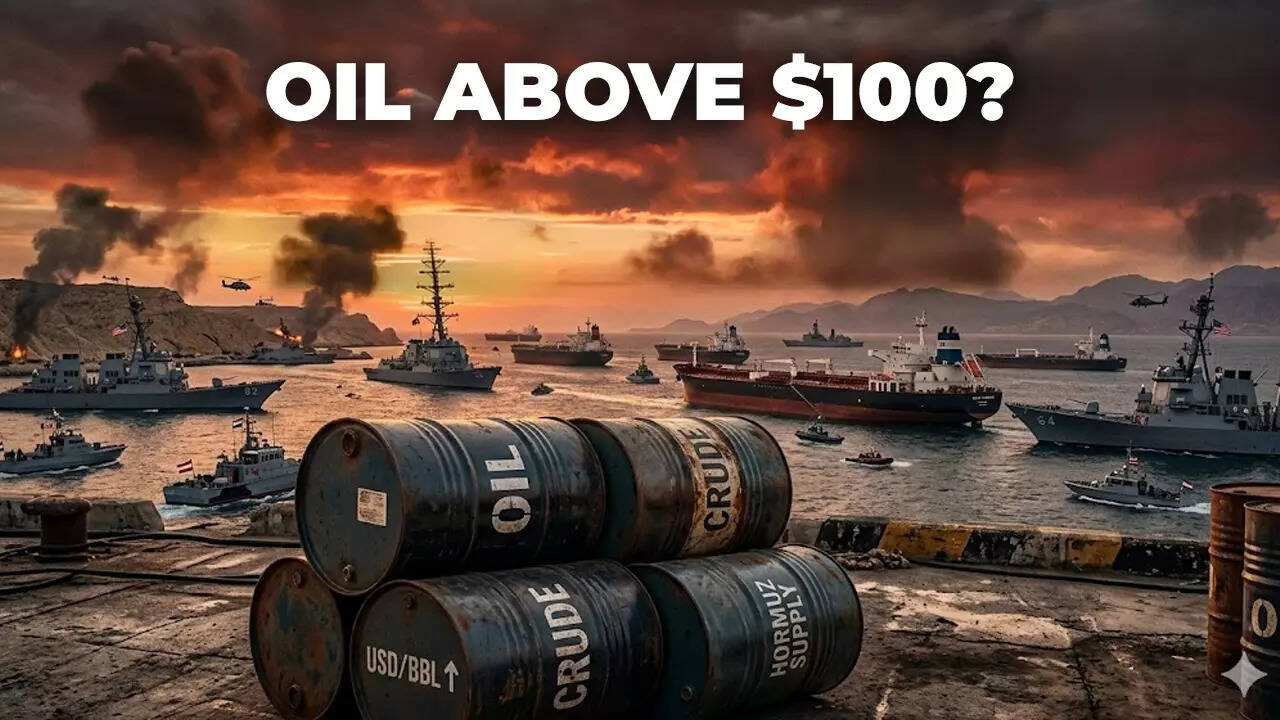
March 3, 2026 — The global energy landscape is teetering on the edge of a significant crisis as the Strait of Hormuz, the world’s most vital maritime oil chokepoint, faces an effective shutdown. Following a weekend of intense military escalations between the U.S., Israel, and Iran, the waterway has been rendered virtually impassable for commercial tankers, sending shockwaves through international markets and raising the specter of triple-digit oil prices.
The “Jugular Vein” of Global Energy Constricted
The Strait of Hormuz is often described as the world’s “jugular vein” for energy. Approximately 20 million barrels of oil per day—roughly 20% of global consumption—transit through this narrow passage. It is also the primary exit route for 20% of the world’s Liquefied Natural Gas (LNG), primarily from Qatar.
The current disruption follows a series of events that began on February 28, 2026:
- Military Strikes: Coordinated U.S. and Israeli airstrikes targeted Iranian infrastructure.
- Retaliatory Threats: Iran’s Islamic Revolutionary Guard Corps (IRGC) warned shipping away from the waterway, citing safety risks.
- Insurance Collapse: Leading maritime insurers have withdrawn war-risk coverage for the area, effectively grounding the fleet of over 150 tankers currently anchored in open waters.
Markets React: Is $100 Oil Inevitable?
In the first 48 hours of the crisis, Brent Crude and West Texas Intermediate (WTI) surged by nearly 10%, with Brent hitting a 14-month high of approximately $82 per barrel. However, analysts warn that this is just the beginning if the bottleneck persists.
“A full and sustained closure of Hormuz could drive oil prices substantially higher, potentially exceeding $100 or even $120 per barrel if flows are not restored within days,” noted a senior analyst at Wood Mackenzie.
While OPEC+ members, including Saudi Arabia and Russia, agreed on March 1 to a production increase of 206,000 barrels per day, experts point out that this move is largely symbolic if the oil cannot be transported out of the Persian Gulf.
Global Economic Ripples
The impact of a prolonged shutdown extends far beyond fuel prices at the pump. The disruption presents a “dual supply shock”:
| Sector | Potential Impact |
| Natural Gas | A halt in LNG flows could reignite the energy crisis in Europe and Asia, with wholesale gas prices potentially tripling. |
| Logistics | Major carriers like Maersk have already suspended transits, forcing ships to reroute around Africa, adding weeks to delivery times and skyrocketing freight costs. |
| Inflation | Central banks, already battling sticky inflation, may be forced to reconsider interest rate cuts as energy-driven costs seep into food and consumer goods. |
| Fertilizers | The Strait handles a third of the global trade in urea; a shortage could trigger a secondary crisis in global food security. |
The Road Ahead: Diplomacy or Escalation?
The duration of the closure remains the “million-dollar question.” Some energy experts suggest the volatility may be short-lived—perhaps 7 to 10 days—if diplomatic channels can de-escalate the situation. However, if the “de facto” blockade shifts into a formal, prolonged military standoff, the global economy could face its most severe energy supply gap since the 1970s.
For now, the world remains in a holding pattern, watching the narrow 21-mile-wide passage that holds the keys to global economic stability.