

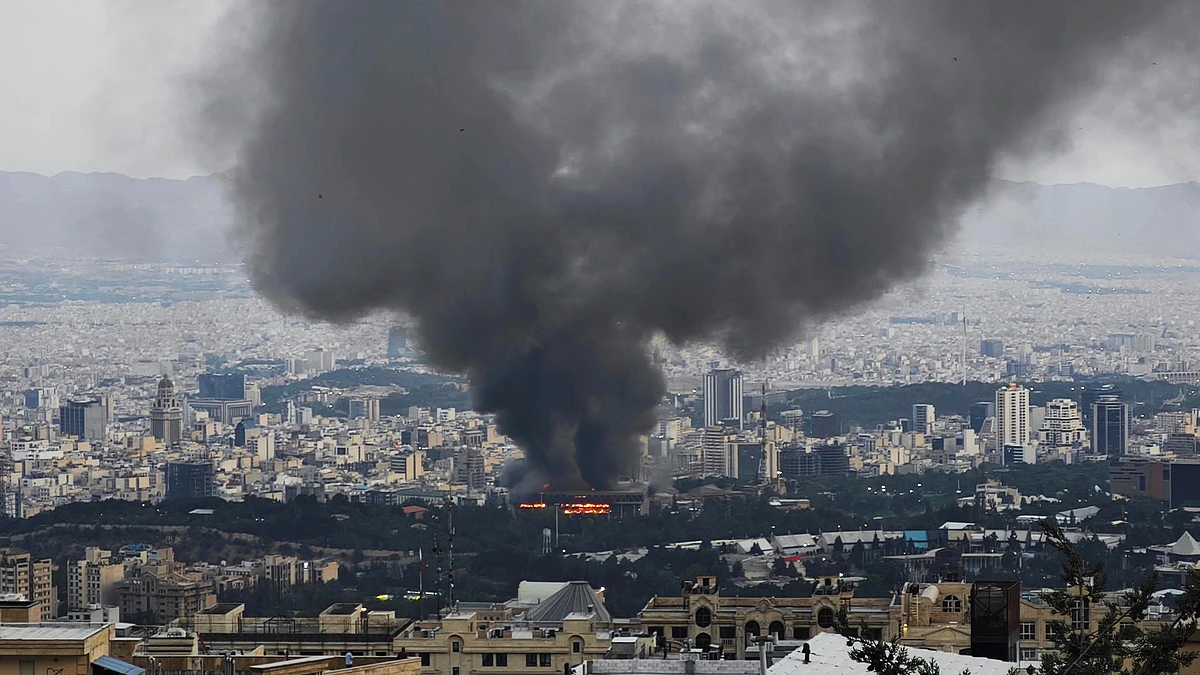
New Delhi, March 3, 2026 — The Middle East has spiraled into a state of high-intensity conflict as the fourth day of hostilities between Iran and a U.S.-Israeli coalition reached a critical turning point. In the early hours of Tuesday, March 3, 2026, two explosive-laden drones struck the United States Embassy in Riyadh, sparking fires and sent shockwaves through the Saudi capital’s Diplomatic Quarter.
Simultaneously, Tehran has moved to weaponize global energy markets, with the Islamic Revolutionary Guard Corps (IRGC) declaring the Strait of Hormuz officially closed to all maritime traffic, threatening to set ablaze any vessel that attempts to transit the vital waterway.
Attack on the US Embassy in Riyadh
According to the Saudi Ministry of Defense, the embassy compound was targeted by two Unmanned Aerial Vehicles (UAVs) identified as “suspected Iranian drones.” Witnesses reported hearing loud blasts followed by thick plumes of black smoke rising over the high-security district.
- Casualties: Initial assessments indicate no injuries, as the primary strike hit the roof and perimeter of the chancery while it was largely empty.
- Security Measures: The U.S. State Department has issued an immediate “shelter-in-place” order for American citizens in Riyadh, Jeddah, and Dhahran.
- Response: U.S. President Donald Trump, speaking from Washington, warned of a swift response, stating, “You’ll find out soon what the retaliation will be.”
This attack follows a pattern of retaliatory strikes by Iran against Gulf nations that host U.S. military bases, including similar incidents reported in Kuwait and the UAE over the past 48 hours.
Strait of Hormuz: A Global Energy Chokehold
In a move that has sent Brent crude prices surging by over 13%, senior IRGC adviser Ebrahim Jabari announced on state television that the Strait of Hormuz is now a “no-go zone.”
“The strait is closed. If anyone tries to pass, the heroes of the Revolutionary Guards will set those ships ablaze. We will not let oil be exported from the region while we are under attack,” Jabari declared.
The closure affects approximately 20% of the world’s daily oil consumption and a fifth of global Liquefied Natural Gas (LNG) supplies. Shipping giants, including Maersk and MSC, have already suspended operations in the area, and war-risk insurance for the region has been effectively cancelled.
The Context: Operation Epic Fury
The current escalation was triggered on February 28, 2026, when U.S. and Israeli forces launched “Operation Epic Fury,” a series of massive airstrikes targeting Iran’s nuclear facilities, missile sites, and command structures. These strikes resulted in the death of Iran’s Supreme Leader, Ayatollah Ali Khamenei, plunging the Iranian government into a state of volatile transition.
Global Implications and Escalation
As Israel continues its “decisive” campaign to dismantle Iran’s nuclear capabilities, the humanitarian toll is mounting. The Red Cross and Red Crescent have deployed hundreds of teams across the region as civilians face the brunt of missile exchanges.
With the U.S. military recovering the remains of fallen service members and the IRGC intensifying its “area denial” strategy in the Persian Gulf, the world watches to see if diplomatic channels can be reopened or if the region is headed toward an all-out continental war.