
 Monetary Policy Committee (MPC))
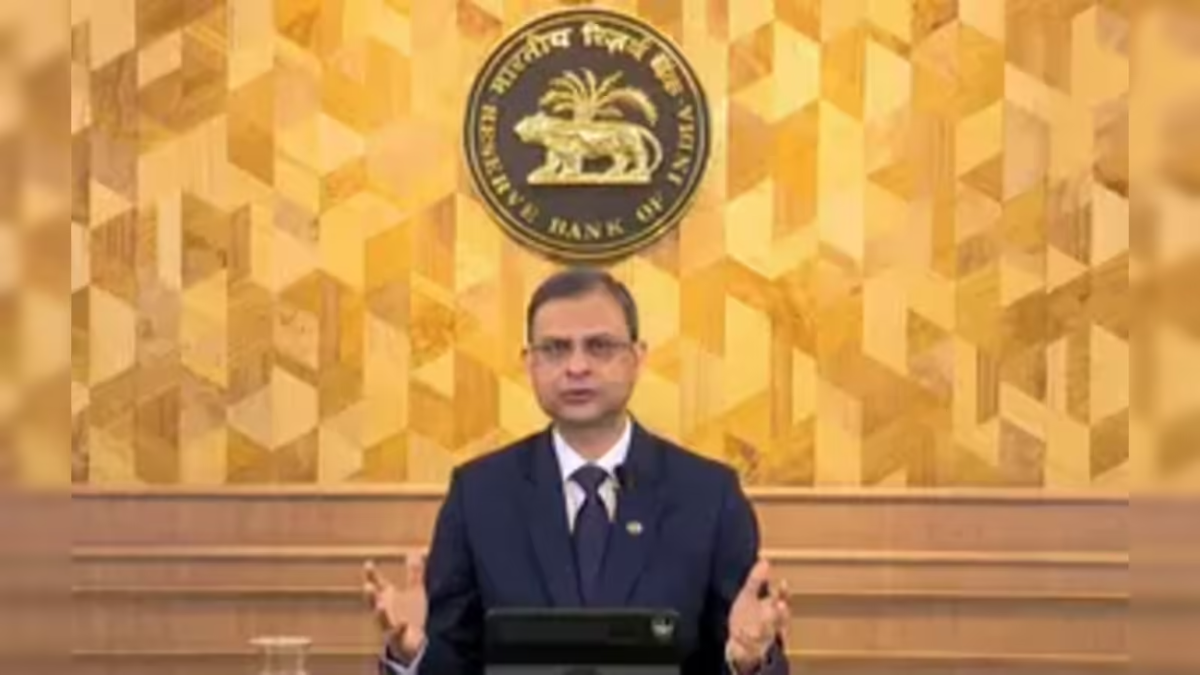
New Delhi, June 5, 2026: In its first major policy review of the fiscal year, the Reserve Bank of India’s (RBI) Monetary Policy Committee (MPC) has taken a distinctly cautious approach. Led by Governor Sanjay Malhotra, the six-member committee voted unanimously on June 5, 2026, to hold the benchmark repo rate steady at 5.25%.
The central bank chose to maintain its “neutral” stance—a strategic hold as it navigates a sudden storm of global economic headwinds. Alongside the rate pause, the RBI delivered a sober reality check by cutting its Gross Domestic Product (GDP) growth projections for the financial year 2026-27 (FY27) while simultaneously raising its inflation forecast.
The decision reflects a deliberate effort by the central bank to prioritize macroeconomic stability over aggressive growth. The RBI is aiming to insulate the domestic economy from a fragile external environment shaped by intensified geopolitical conflicts in West Asia, erratic global commodity markets, and a bruised domestic currency.
The Core Decisions at a Glance
For quick reference, the table below highlights the key modifications made by the central bank during today’s high-stakes meeting.
Why the RBI Chose to Wait and Watch
The decision to stay on hold at 5.25% marks the second consecutive meeting where the RBI has opted for a pause, resisting calls from some market segments for a rate cut to boost credit. Governor Malhotra explicitly pointed out that “monetary policy has turned more cautious” because of heightened global turbulence.
The primary culprit behind this defensive posture is the escalating West Asia conflict, which has disrupted major global maritime trade routes and severely stressed global supply chains. This geopolitical friction has pushed international crude oil and gas prices back into volatile territory. For a country like India—which relies heavily on imported crude to meet its domestic energy needs—sustained energy inflation acts as a direct tax on economic activity.
Furthermore, the Indian Rupee has faced depreciation pressures, weakening over the past year against a surging US dollar. By holding the interest rate at 5.25%, the RBI keeps domestic yields attractive enough to prevent excessive capital flight, helping anchor the currency without prematurely choking off domestic business investments.
Growth Expectations Face a Reality Check
Perhaps the most significant revelation from the live policy announcement was the downward revision of the economic growth targets. The RBI cut its real GDP growth estimate for FY27 to 6.6%, a notable drop from its previous projection of 6.9%.
The central bank acknowledged that the “prolonged global supply chain disruptions, volatility in global financial markets, and weather-related shocks” are beginning to spill over into domestic industrial and commercial activities. While high-frequency indicators—such as the Manufacturing and Services Purchasing Managers’ Index (PMI)—show that India’s domestic economic engine remains fundamentally resilient, the external drag cannot be completely ignored.
Crucially, rising input costs for businesses—driven by expensive raw materials like base metals, plastics, and rubber—are threatening corporate profit margins. If companies choose to pass these expenses onto everyday consumers, the resulting inflation could become a major drag on the purchasing power of urban and rural households, ultimately cooling down private consumption.
The Inflation Monster Refuses to Subside
On the inflation front, the narrative has shifted toward renewed vigilance. While headline Consumer Price Index (CPI) retail inflation hovered comfortably below the central bank’s medium-term 4% target during March (3.4%) and April (3.5%), the baseline projections for the remainder of the year look significantly steeper.
The RBI raised its full-year FY27 inflation forecast quite aggressively to 5.1%, up 50 basis points from earlier models. The quarterly breakdown paints a telling picture of an economy facing an impending mid-year bulge: CPI is expected to hit 4.2% in Q1, spike to 5.1% in Q2, peak at a troubling 5.9% in Q3, and sit at 5.4% by Q4.
Financial Fortresses: FX Reserves and Neutral Stance
Despite the cautious forecasts, Governor Malhotra struck an optimistic note regarding India’s internal macro-fundamentals, stating that the country entered this cycle of global instability in a much stronger position compared to previous global crises.
A core pillar of this strength is India’s massive foreign exchange repository. The central bank revealed that India’s forex reserves stand at a healthy $682.2 billion. This massive stockpile offers an essential safety net, providing an import cover of roughly 11 months and accounting for over 89% of the nation’s total external debt. This financial cushion gives the RBI deep operational capacity to step into the currency markets and smooth out speculative, volatile swings in the rupee without needing to rely on knee-jerk interest rate spikes.
Maintaining the “neutral” policy stance further emphasizes this flexibility. Rather than committing to a rigid path of rate hikes or signaling imminent cuts, the neutral bias allows the MPC to remain purely “data-dependent”. If West Asian tensions de-escalate and energy costs cool off by the end of the year, the door remains wide open for pro-growth rate cuts. Conversely, if crude oil surges well past the $100 per barrel mark for an extended duration, the committee retains the freedom to pivot toward a rate hike to curb secondary inflationary pressures.
What This Means for Everyday Consumers
For the common citizen, today’s policy freeze translates directly to short-term status quo. Because the repo rate was held flat at 5.25%, retail commercial banks are highly unlikely to alter their retail lending rates anytime soon.
- Borrowers: Equated Monthly Installments (EMIs) on floating-rate home loans, auto loans, and personal loans will remain unchanged for now.
- Savers: Fixed deposit interest rates are likely plateauing at current levels, meaning depositors shouldn’t expect significant yield increases in the near future.
The real challenge for households will be navigating the expected rise in consumer prices over the next two quarters. While loan payments won’t cost more, general daily living expenses—from fuel outlays to goods manufactured with imported raw materials—could pinch household budgets a bit tighter as companies gradually pass down their elevated input costs.
Ultimately, the June 2026 policy statement presents an RBI focused heavily on building economic fortresses. By choosing stability over speed, the central bank is making a calculated bet that sacrificing a fraction of short-term growth will protect the Indian economy from a highly unpredictable global landscape.