
 2020, the Central Board of Secondary Education (CBSE) has officially)
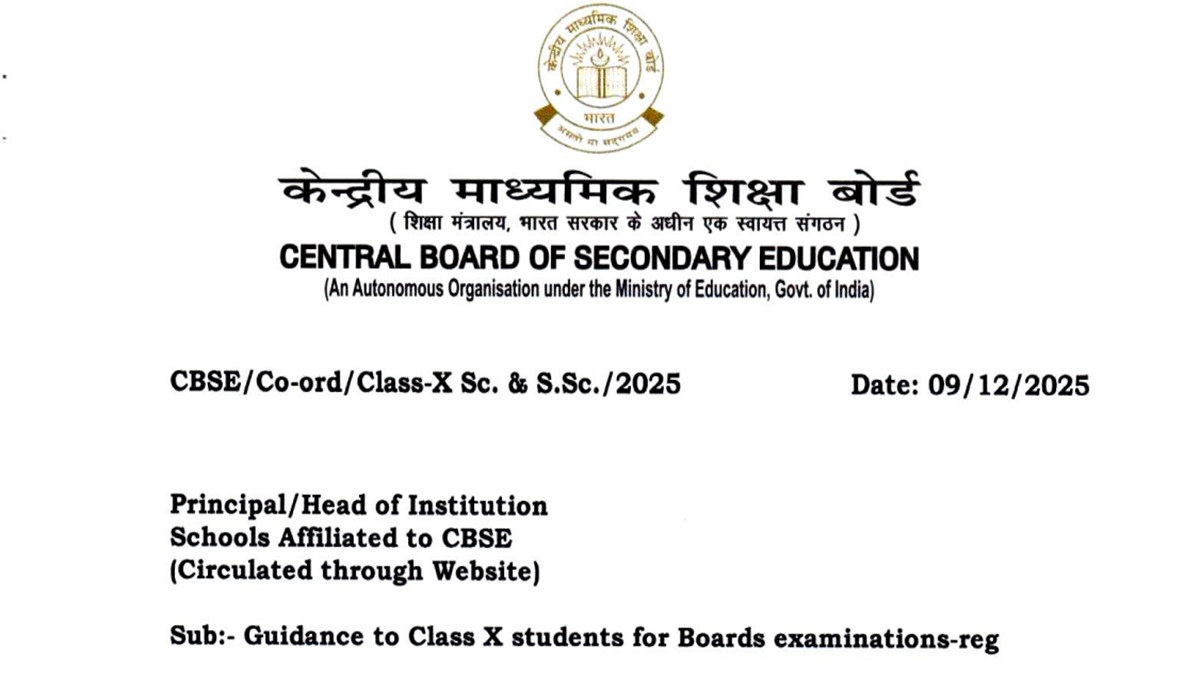
New Delhi, April 16, 2026: In a landmark move aligning with the National Education Policy (NEP) 2020, the Central Board of Secondary Education (CBSE) has officially set the stage for the Second Board Examination 2026 for Class 10. This dual-exam policy is designed to reduce student stress, eliminate the high-stakes nature of a single annual exam, and provide a much-needed “safety net” for those looking to improve their performance or clear subjects they found challenging.
For private candidates, this transition offers a unique opportunity to navigate their academic journey with greater flexibility. Following the declaration of the main results on April 15, 2026, the board has now opened the application window for the second phase of examinations, tentatively scheduled for May–June 2026.
Below is a comprehensive guide on eligibility, application procedures, fee structures, and the strategic changes implemented for the 2026 cycle.
Understanding the Two-Exam System
The introduction of the second board exam marks a shift from the traditional “Supplementary” or “Compartment” mindset to an “Improvement and Opportunity” framework.
- Objective: To allow students to retain the best score between two attempts.
- Syllabus: The second exam will be based on the same syllabus as the main board examination held in February–March 2026.
- Flexibility: Students can choose to appear for up to three core subjects to improve their grades.
Eligibility Criteria: Who Can Apply?
The 2026 guidelines categorize private candidates into specific groups eligible for the second exam:
- Improvement Seekers: Students who passed the main exam but are dissatisfied with their scores in certain subjects. They can apply for improvement in up to three subjects.+1
- Compartment Candidates: Students who were placed in the “Compartment” category after failing to secure passing marks in one or two subjects during the main March 2026 exams.
- Additional Subject Candidates: Those who passed the main exam but wish to appear for an additional subject (non-practical).
- Skill Subject Replacement: Students who passed but wish to appear for a failed compulsory subject that was replaced by a skill subject in their final result.
Crucial Note: Students marked as “Essential Repeat” (ER) in the main result are generally not eligible for the second exam in May/June and must wait for the 2027 main examination cycle.
The Application Process: Step-by-Step
For private candidates, the application process is entirely online and must be completed through the official CBSE “Saral” or “Private Candidate” portal.
Step 1: Preparation
Gather your 2026 Main Examination Roll Number, School Code, and Center Number as mentioned on your original admit card. You will also need a scanned copy of your passport-sized photograph and signature (in JPEG format).
Step 2: Online Entry
Visit the official website (cbse.gov.in) and navigate to the “Individual Application for Private Candidates” link. Select the category (Improvement, Compartment, or Additional Subject). Enter your roll number and other details to fetch your records from the CBSE database.
Step 3: Subject Selection
Choose the subjects you wish to appear for. A major update for 2026 allows Class 10 students to switch from Mathematics Standard to Mathematics Basic for the second attempt if they find the Standard version too difficult, though no other subject changes are permitted.
Step 4: Fee Payment
Fees must be paid through digital modes only (Net Banking, Debit/Credit Card, or UPI).
- Standard Fee: ₹320 per subject for Indian candidates.
- Late Fee: A significant “Late Fee” of ₹2,000 per candidate is applied if the initial deadline is missed.
Step 5: Confirmation Page
After successful payment, generate the “Confirmation Page.” This document is vital; while you don’t need to send it to the CBSE regional office, you must keep it for your records and to download your new admit card.
Important Dates and Deadlines
The board has emphasized a very tight schedule for the 2026 second exam to ensure that results are declared in time for the new academic session.
- Application Window (Regular): April 16, 2026 – April 20, 2026.
- Late Fee Window: April 21, 2026 – April 22, 2026.
- Exam Commencement (Tentative): Third week of May 2026.
- Result Declaration (Tentative): Mid-July 2026.
The “Best of Two” Rule
One of the most frequently asked questions is: What happens if I score lower in the second exam?
The CBSE policy ensures that students are not penalized for trying. For those appearing for Improvement, the board will issue a statement of marks that reflects the better of the two scores for each subject. If you score 75 in March and 82 in May, the 82 will be considered. If you score 75 in March and 70 in May, your original 75 will remain valid.
Key Highlights for 2026 Candidates
- Practical Marks: Private candidates do not need to retake practical exams. The marks obtained in the main examination’s practical/internal assessment will be carried forward.
- Examination Centers: While the board tries to allot centers near the candidate’s residence, private candidates may be assigned to different centers than their main exam to optimize logistics.
- Three Subject Limit: Unlike the main exam, the second board exam is limited to a maximum of three subjects for Class 10. This is to ensure a focused preparation window for the students.
Preparation Strategy: How to Approach the Second Exam
With only about 4–5 weeks between the result declaration and the second exam, candidates must be surgical in their preparation.
- Analyze the Main Paper: Look at your March 2026 question paper and identify where you lost marks. Was it time management? Or specific chapters like Trigonometry or Heredity?
- Focus on the NCERT: The second exam will follow the NCERT curriculum strictly. Avoid cluttering your desk with new reference books.
- Solve Sample Papers: CBSE usually releases a specific set of sample papers for the second attempt. Practicing these is essential to understand the difficulty level.
The Psychological Shift
The 2026 dual-exam policy is a cultural shift in the Indian education system. For decades, the “Board Exam” was a one-shot event that caused immense anxiety. By providing this second window, CBSE is encouraging a growth mindset.
For private candidates—who often study without the daily structure of a classroom—this second chance is a vital resource. It provides a structured way to fix mistakes without losing an entire academic year.
The CBSE Class 10 Second Board Exam 2026 is more than just a “re-test”; it is a progressive step toward a more student-friendly evaluation system. Private candidates should act swiftly to complete their applications by the April 20 deadline to avoid heavy late fees. Whether you are looking to turn a ‘D’ into a ‘B’ or simply clear a subject that gave you trouble, this May attempt is your golden ticket to a better academic record.