

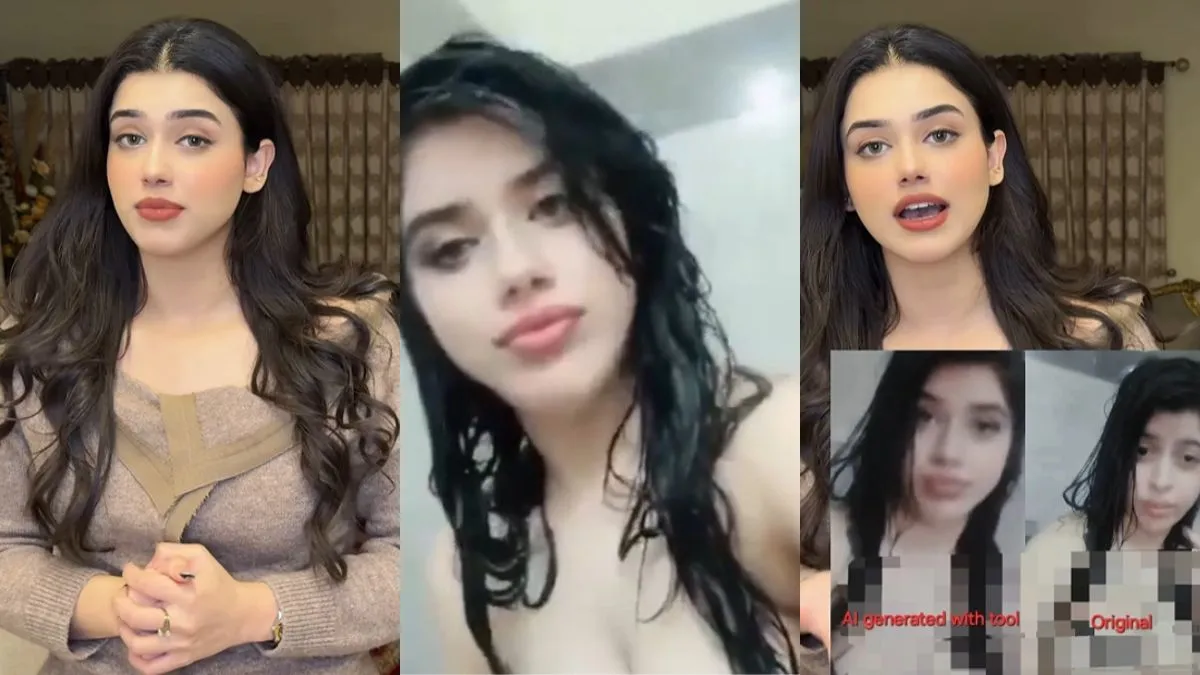
New Delhi, May 20, 2026: The rapid evolution of generative artificial intelligence has brought creative breakthroughs, but it has also fueled a dangerous wave of digital exploitation. Pakistani digital content creator and social media influencer Alina Amir recently became the latest target of a highly coordinated cyber harassment campaign.
An alleged “leaked” private video, varying in shared descriptions from four to seven minutes long, began circulating aggressively across major digital platforms. The clip was pushed under viral search terms like “MMS Leaked Video” and “Alina Amir Private Video Link.”
The incident has triggered widespread public outrage, shedding light on the ease with which bad actors manipulate artificial intelligence to target and defame prominent women online.
Rise of the ‘Sarsarahat Girl’
Born on May 10, 2003, in Lahore, Alina Amir rose from a middle-class background to become one of Pakistan’s fastest-growing digital personalities. Her breakthrough moment came when she uploaded a highly expressive recreation of a viral Bollywood dialogue originally spoken by actress Parineeti Chopra (“Meri body mein sensation ho rahi hai”). The short reel struck a chord across both Pakistan and India, earning her the affectionate nickname “Sarsarahat Girl.“
Amir’s innate charm, lip-sync content, and fashion reels quickly catapulted her into social media stardom. By early 2026, her digital footprint expanded significantly, garnering over 2.5 million followers on Instagram and another 2.3 million on TikTok. However, this massive public visibility also made her a prime target for malicious online actors looking to exploit her likeness for digital traffic.
Anatomy of the Deceptive Video Scandal
The controversy erupted when a deeply explicit video allegedly featuring Amir in an intimate scenario surfaced on various adult forums and mainstream social media channels. The clip spread rapidly, boosted by suspicious, spam-heavy external links promising users access to the “original footage.”
Initially, Amir chose to handle the situation quietly, hoping the unverified rumors would dissipate naturally. However, the sheer velocity of the digital news cycle combined with an influx of vulgar comments on her official profiles forced her to take a stand.
Amir formally clarified that the content is an entirely AI-generated deepfake—a manipulated media format where a person’s face is seamlessly swapped onto another individual’s body using specialized deep learning software. She emphasized that the video was a calculated attempt to damage her public standing and personal life, branding the act as a severe cybercrime rather than mindless internet gossip.
Demanding Accountability: Appeals to Leadership and the CCD
Refusing to let the perpetrators hide behind digital anonymity, Amir took swift legal and public actions to defend her name. She officially engaged the Punjab Cyber Crime Department (CCD) to trace the origin of the video and pull down malicious links from public spaces.
Furthermore, Amir used her massive reach to appeal directly to government leadership, tagging Punjab Chief Minister Maryam Nawaz Sharif. She urged the Chief Minister to enforce strict punitive measures against online syndicates that weaponize morphed media against women.
In an unprecedented move to accelerate the investigation, Amir also took a personal financial risk by offering a $1,000 bounty out of her own pocket for any credible, verified information leading to the identification and arrest of the individuals behind the deepfake’s creation.
The Malicious Landscape of Fake ‘MMS’ Links
Cybersecurity experts reviewing the incident have highlighted a dual danger regarding the situation. Beyond the immense psychological harm inflicted on the victim, the viral spread of the “Alina Amir Leaked Video” is also being leveraged by digital scammers to deploy malware.
Many of the highly circulated external links promising the full video are actually “phishing scams” or malicious doorways designed to compromise the data privacy of unsuspecting clickers. These fake networks manipulate public curiosity to steal login credentials, financial information, or install background tracking software on mobile devices.
The underlying technology used to defame Amir points toward a wider, systemic epidemic hitting Pakistan’s digital creator ecosystem. In recent months, several prominent female influencers—including Minahil Malik, Imsha Rehman, Kanwal Aftab, Mathira Khan, and Maryam Faisal—have faced similar targeted campaigns involving alleged private leaks, many of which share the distinct hallmarks of AI manipulation or unauthorized privacy breaches.
Where is Alina Amir Now?
Despite the immense emotional toll of the controversy, Amir has chosen not to retreat from the public eye. She continues to reside in Lahore with her family, who have remained her primary support system throughout the ordeal. By turning a private crisis into a public fight for digital justice, she has earned significant praise from her core audience. Her clarification video was met with an outpouring of support, with thousands of fans apologizing for believing unverified content and praising her courage.
Amir’s current focus remains tied to monitoring the progress of the cybercrime investigation while advising her audience to cultivate better media literacy. She urges everyday internet users to exercise strict critical thinking before forwarding sensitive content, reminding them of the human cost involved.
“Reputation takes years to build and seconds to ruin,” Amir noted in her final address on the matter. “Anyone can become a target. Today it’s me; tomorrow it could be someone else. It’s easy to forget there’s a real human behind the screen.”