

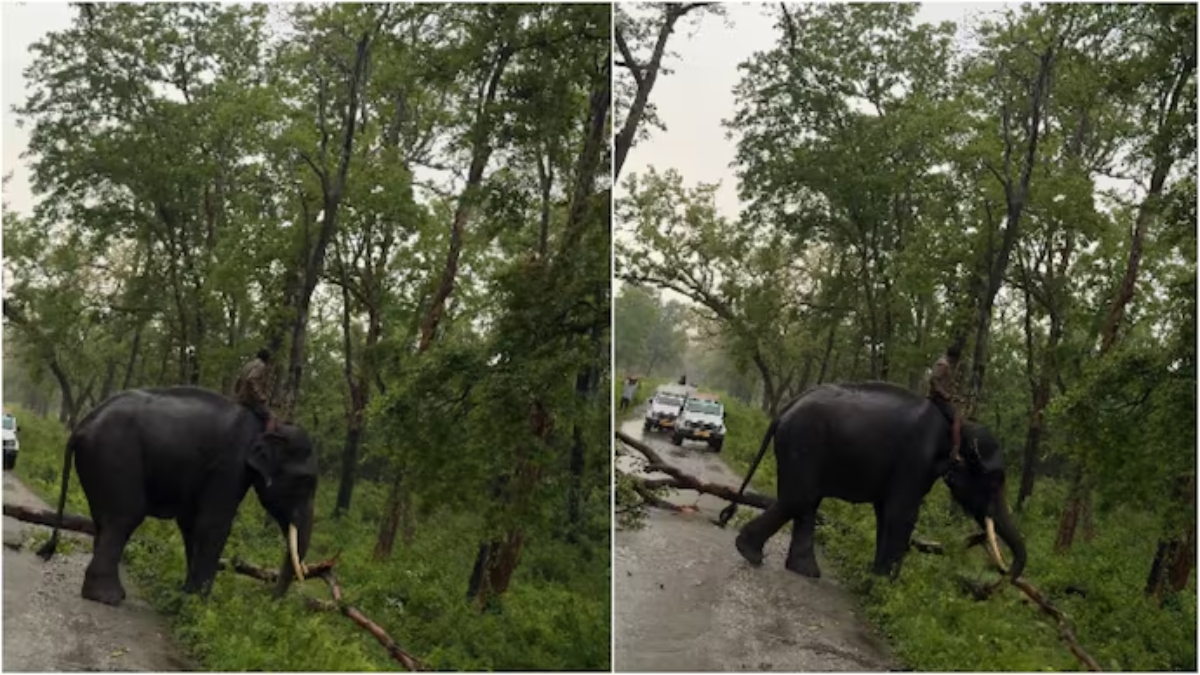
New Delhi, May 20, 2026 — In an era where artificial intelligence, heavy machinery, and advanced robotics claim to solve almost every human problem, a viral video from the heart of the Indian wilderness has delivered a powerful reality check. The footage proves that when it comes to navigating and preserving the planet’s most dense ecosystem, nature’s original engineering still outperforms anything humanity has built.
The video, captured during a routine evening field patrol and shared on X (formerly Twitter) by Indian Forest Service (IFS) officer Parveen Kaswan, has quickly taken social media by storm. It highlights an extraordinary, unsung “co-worker” of the forest department: a majestic Asian elephant smoothly clearing an impenetrable jungle path where modern vehicles and heavy machinery cannot tread.
The Video That Captivated Millions
The clip offers a rare, ground-level glimpse into daily conservation work, moving away from typical tourist safari perspectives. In the video, forest officials follow closely behind a large elephant navigating thick, overgrown jungle vegetation.
With incredible precision and calm strength, the elephant uses its powerful trunk to snap away blocking branches, pull down dense overgrown foliage, and clear massive twigs that have choked the narrow forest trail.
The effortless manner in which the animal sweeps away obstacles highlights a profound partnership between the forest department and these intelligent creatures. Netizens have flooded the post with admiration, universally labeling the elephant as the “real ranger of the jungle.”
Where Modern Technology Fails
The viral sensation has sparked a broader conversation about why heavy machinery is intentionally kept out of deep forest zones. While an excavator or bulldozer could technically clear path blockages, their deployment in core wildlife zones causes irreversible damage.
- Ecological Sensitivity: Heavy tires and metal tracks crush delicate topsoil, destroy root systems, and disrupt micro-habitats of smaller organisms.
- Noise Pollution: The deafening roar of mechanical engines panics wildlife, potentially driving herds toward human settlements and exacerbating human-animal conflict.
- Terrain Limitations: Deep inside natural reserves, structured roads vanish entirely. Swamps, steep muddy inclines, and tightly knit canopies create a landscape where multi-ton vehicles easily get stuck or find it physically impossible to maneuver.
The elephant, by contrast, moves with zero carbon footprint. Its massive feet distribute its weight perfectly across uneven terrain, and its natural clearing method mimics the natural life cycle of the forest without causing structural damage to the habitat.
Intelligence Over Raw Power
What truly resonates with viewers online is the sheer intelligence displayed by the giant mammal. The elephant doesn’t mindlessly tear down trees; it accurately assesses which branches are obstructing the human path and systematically removes them.
This level of problem-solving and environmental awareness is something standard machinery simply cannot replicate without human remote control or highly complex, rigid programming. The elephant reads the jungle terrain dynamically, adjusting its strength depending on whether it is snapping a brittle bamboo stalk or moving a heavy fallen limb.
The Vital Role of Camp Elephants in Conservation
The viral video sheds light on the critical role of “Kumkis” and camp elephants managed by forest departments across India. These elephants are not just symbols of majesty; they are active, indispensable assets in wildlife protection.
| Conservation Duty | Description | Why Machines Can’t Do It |
| Deep Patrols | Navigating anti-poaching squads through dense, roadless terrain to monitor vulnerable wildlife. | Vehicles lack the clearance and quiet mobility required for anti-poaching operations. |
| Rescue Operations | Assisting in the relocation or medical treatment of injured wild animals or trapped herd members. | Wild animals react with extreme aggression to mechanical noises, but tolerate other elephants. |
| Conflict Mitigation | Standing as a physical barrier to herd back wild elephant groups away from human agricultural fields. | Standard vehicles can easily be flipped or damaged by an agitated wild tusker. |
A Symbiotic Bond
Beyond the utility, the video stands out as a beautiful testament to the ancient, mutual trust between mahouts (elephant caretakers), forest officials, and captive pachyderms. This partnership relies entirely on vocal cues, touch, and deep emotional bonds built over decades.
As technology continues to reshape the world, this viral moment serves as a gentle reminder that some of the world’s most complex environments cannot be managed by a dashboard or an engine. To protect the wild, humans must continue to rely on the ancient, matchless wisdom of the wild itself.