

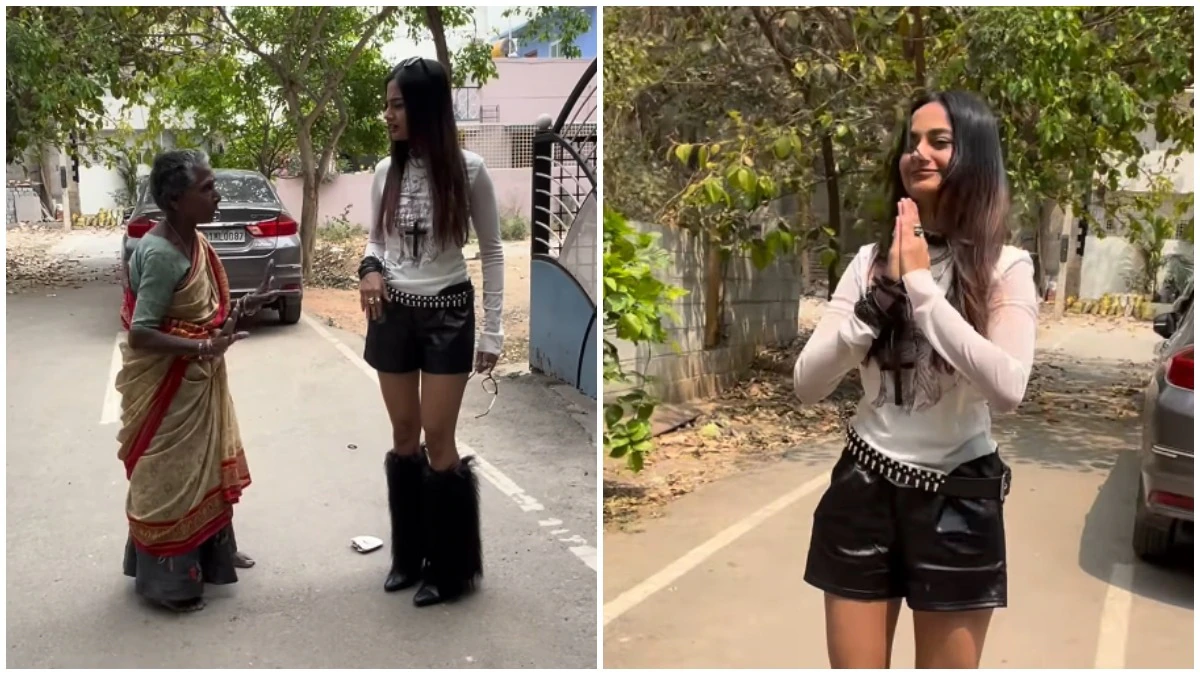
New Delhi, March 16, 2026: The streets of Bengaluru have once again become the backdrop for a heated national debate on “moral policing” versus “cultural values.” A viral video involving social media influencer Shriyanshi has taken the internet by storm, sparking a divide among netizens after she was publicly scolded by an elderly woman over her choice of attire.
The incident, which reportedly took place during a street photoshoot, has highlighted the growing friction between traditional social expectations and the evolving lifestyle of India’s urban youth.
The Incident: A Photoshoot Interrupted
According to reports and the viral footage (which has since been deleted from the original account), Shriyanshi was posing for photographs on a public road in Bengaluru. Like many content creators, she was reportedly utilizing the “golden hour” of natural sunlight for her shoot.
The routine session took an unexpected turn when an elderly woman approached her. Speaking in a local language, the woman began visibly lecturing and scolding the influencer, expressing deep disapproval of the outfit Shriyanshi was wearing.
A Calm Response Under Pressure
One of the most discussed aspects of the video was Shriyanshi’s reaction. Rather than engaging in a heated argument or defending her fashion choices aggressively, the influencer remained remarkably composed. In the clip, she is seen:
- Repeatedly apologizing to the elderly woman.
- Attempting to de-escalate the tension.
- Maintaining a polite tone despite the public nature of the confrontation.
While the exact details of the outfit were not the focus of the footage, the woman’s verbal reprimand centered on what she deemed “inappropriate” for a public setting.
Internet Divided: Moral Policing vs. Social Norms
The video, which garnered over 1.4 million views before its removal, has split social media users into two distinct camps.
1. The Pro-Choice & Anti-Moral Policing Camp
Many netizens rushed to Shriyanshi’s defense, praising her maturity and condemning the elderly woman’s interference.
- Personal Freedom: Supporters argue that in a democratic society, individuals should have the autonomy to dress as they please without fear of public shaming.
- Safe Spaces: Critics of the elderly woman’s behavior noted that “moral policing” creates a hostile environment for women in public spaces.
- Professionalism: Others pointed out that the influencer was simply doing her job and that her attire was a professional choice for her content.
2. The Traditionalist & “Public Decency” Camp
Conversely, a section of the internet supported the elderly woman, reflecting a generational gap in perspectives.
- Cultural Values: Some users felt that public spaces should be respected and that clothing should align with the cultural sensibilities of the local community.
- Public Decorum: This group argued that while personal freedom is important, it should be balanced with “social decency” to avoid making others feel uncomfortable.
A Recurring Theme in Bengaluru
This incident is not an isolated one. Recently, other creators and fitness influencers in Bengaluru have reported similar encounters where strangers have confronted them over gym wear or western outfits. These recurring events have sparked a broader conversation about the “Silicon Valley of India” and whether its cosmopolitan reputation is clashing with deeply rooted traditionalist views.
As the digital creator economy continues to grow, the use of public infrastructure for content production is likely to remain a flashpoint for such cultural debates.