

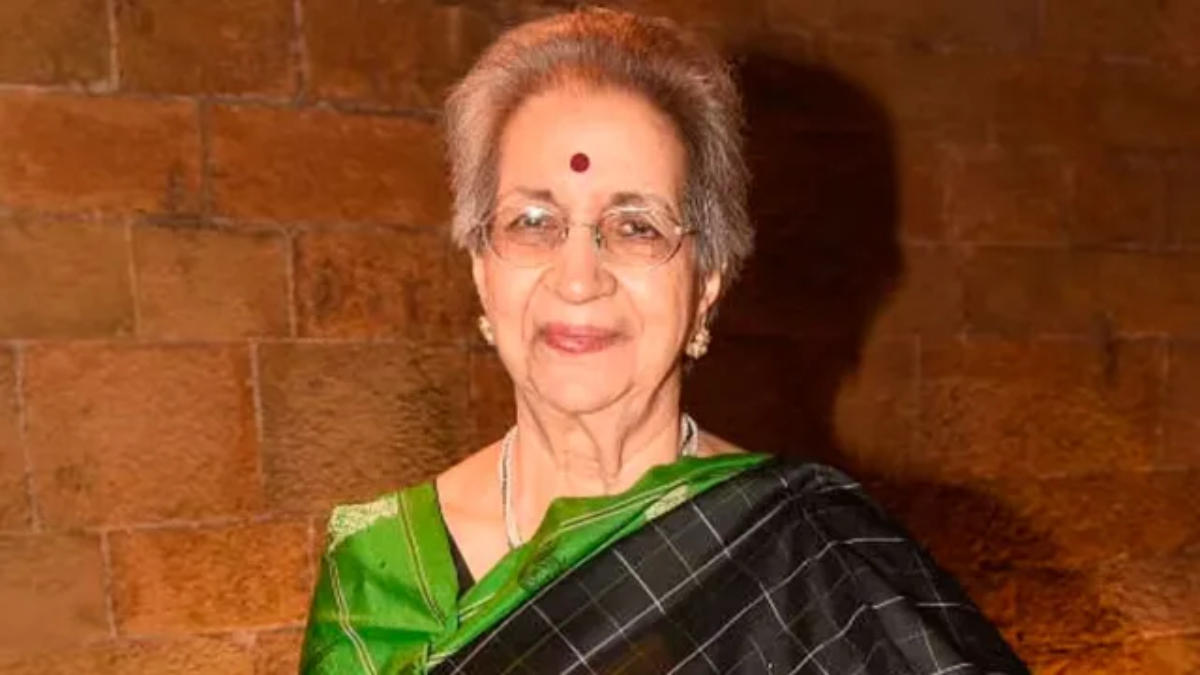
New Delhi, july 1, 2026 — The Indian cultural landscape is in mourning following the demise of Smt. Vijaya Mehta, a towering icon of modern Indian theatre and parallel cinema. Fondly known as “Bai” within the artistic community, the veteran director, actor, and producer passed away peacefully at her South Mumbai residence on Tuesday night, June 30, 2026, following a prolonged illness. She was 91 years old.
Her passing marks the end of an era for experimental Marathi theatre and meaningful Indian cinema, leaving behind a remarkable multi-decade legacy that completely revolutionized contemporary stagecraft and storytelling in India.
PM Modi Leads the Nation in Paying Tribute
As news of her demise spread, tributes poured in from all corners of the country, led by Prime Minister Narendra Modi. Taking to the social media platform X (formerly Twitter) on Wednesday morning, the Prime Minister expressed deep sorrow and lauded her immense contribution to the nation’s cultural fabric.
The Birth of a Revolution: The Rangayan Era
Born Vijaya Jaywant on November 4, 1934, in Baroda (now Vadodara), Gujarat, her journey into the performing arts was shaped by rigorous discipline and top-tier training. After graduating from the University of Mumbai, she studied theatre under the watchful eyes of legendary stalwarts Ebrahim Alkazi and Adi Marzban. This academic grounding laid the foundation for what would become one of the most radical creative movements in post-Independence India.
In the 1960s, a young Vijaya Mehta joined forces with iconic playwright Vijay Tendulkar, alongside legendary actors Shriram Lagoo and Arvind Deshpande, to co-found the groundbreaking Mumbai-based theatre group Rangayan.
Rangayan fundamentally changed the rules of the game. At a time when commercial, loud dramas dominated the Marathi stage, Mehta and her contemporaries championed experimental, socially conscious, and intellectually stimulating narratives. They gave a voice to marginalized struggles, complex human psychology, and modern socio-political realities.
Iconic Masterpieces on the Stage
Mehta’s directorial vision on the stage was nothing short of visionary. Her landmark adaptation of C. T. Khanolkar’s Ek Shoonya Bajirao is widely taught and celebrated as a turning point in contemporary Indian theatre design.
She was also instrumental in introducing global theatrical movements to local audiences. Mehta brilliantly adapted the works of European masters, most notably staging Ajab Nyay Vartulacha, a highly acclaimed Marathi adaptation of German playwright Bertolt Brecht’s The Caucasian Chalk Circle. Her subsequent productions, including Barrister, Shakuntal, Hamidabaichi Kothi, Purush, and Mother, became legendary masterclasses in acting and direction.
Mehta’s brilliance wasn’t contained within domestic borders; she spearheaded multiple historic Indo-German theatre collaborations with international directors like Fritz Bennewitz, physically bridging the gap between Western methodologies and Indian classical theatrical systems like Bhasa’s Mudrarakshasa.
A Lasting Footprint in Parallel Cinema
While the wooden floors of the stage remained her primary canvas, Vijaya Mehta seamlessly transitioned into Indian cinema, leaving an indelible mark on the 1980s Parallel Cinema movement (realist, art-house films).
As an actor, her powerhouse performances in Govind Nihalani’s Party (1984) and Shyam Benegal’s Kalyug (1981) remain heavily studied by film students. Her nuanced performance in Party earned her the prestigious Best Actress award at the Asia Pacific Film Festival.
Stepping behind the camera as a filmmaker, she directed cinematic gems such as Rao Saheb (1986) and Pestonjee (1988). Rao Saheb, which explores the oppressive life of a young widow in colonial India, won her a National Film Award for Best Supporting Actress. Both films are universally celebrated for bringing the quiet, emotional realism of her theatrical work onto the silver screen.
“She Raised Your Standards” — Mentoring a Generation
Beyond her own art, Vijaya Mehta was an unparalleled mentor. She is credited with spotting, nurturing, and polishing generations of actors, writers, and technicians who went on to become giants in Bollywood and Indian television.
Veteran Bollywood actor Anupam Kher, who worked with Mehta on Rao Saheb and Pestonjee, shared an emotional public letter mourning the loss of his “Guru.” Kher highlighted her unique approach to teaching, stating that she chose to inspire rather than dictate.
An Era of Accolades
A career spanning over six decades brought Vijaya Mehta some of India’s highest institutional honors. Her trophy cabinet reflected a lifetime of unconditional surrender to the arts:
- 1975: Sangeet Natak Akademi Award for Direction
- 1986: National Film Award for Best Supporting Actress (Rao Saheb)
- 1987: Padma Shri (India’s fourth-highest civilian honor)
- 2012: Sangeet Natak Akademi Tagore Ratna
- Lifetime Achievement: Honored with the META (Mahindra Excellence in Theatre Awards) Lifetime Achievement Award.
Vijaya Mehta’s life was an uncompromising pursuit of artistic truth. She stripped away the artificial glitter of show business to expose the raw, beating heart of human emotion. While “Bai” has taken her final bow, the curtains will never truly close on the vast artistic empire she left behind.
She is survived by her daughter, noted theatre actress and director Anahita Uberoi, and two sons.