

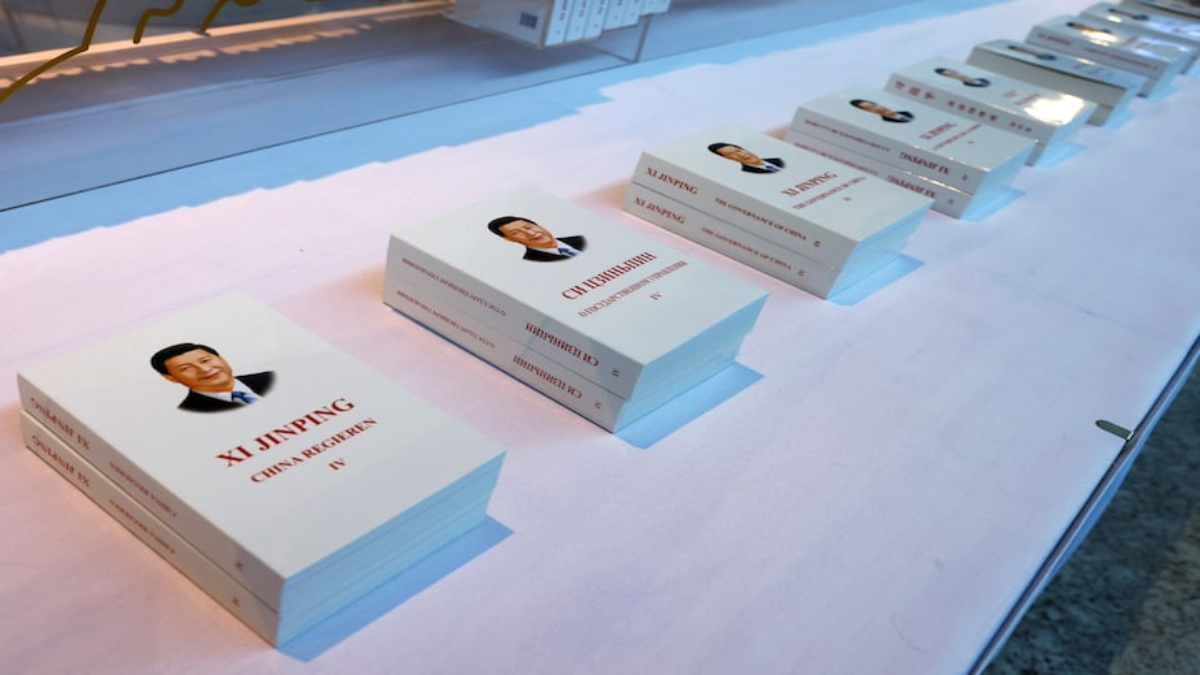
New Delhi, March 19, 2026: The Nepali government has launched a high-level investigation into an incident involving the burning of hundreds of copies of Chinese President Xi Jinping’s book, The Governance of China, at a technical university in eastern Nepal. The event, which occurred over the weekend, has sparked a diplomatic row and raised concerns over the stability of bilateral relations between Kathmandu and Beijing.
The Incident at Manmohan Technical University
The controversy began on the night of Saturday, March 14, 2026, at Manmohan Technical University (MTU) in the Budhiganga area of Morang district. A video capturing the event went viral on social media, showing individuals tossing stacks of the multi-volume collection into a bonfire alongside other documents and scrap materials.
Local journalists who arrived at the scene reported seeing a significant number of books being destroyed. While some appeared damaged, witnesses claimed that many copies appeared relatively new. The university administration initially restricted access to the site before students eventually allowed reporters inside to document the remains of the fire.
Conflicting Accounts: Routine Cleanup or Political Statement?
The university administration has vehemently denied any political intent behind the act. According to Subash Shree Pokhrel, Vice Chancellor of MTU, the burning was an “inadvertent” part of a campus-wide cleanup operation.
- The University’s Defense: Officials stated that the books had been stored in an automobile workshop for several years and had become heavily infested with termites and mold. They argued that junior staff members were simply clearing out “unusable waste” to make room for a new civil engineering laboratory.
- The Skepticism: Critics and local media have questioned why such a massive quantity of the Chinese President’s philosophical works—some reports suggest hundreds, others say over a thousand—were stored at a technical institute in the first place, and why they were disposed of in such a public and sensitive manner.
Diplomatic Fallout and China’s Reaction
The incident quickly escalated into a diplomatic matter. On Sunday, March 15, the Chinese Embassy in Kathmandu issued a formal note verbale to Nepal’s Ministry of Foreign Affairs. Beijing expressed “serious concern” and demanded a thorough investigation into the motives behind the burning, as well as legal action against those responsible.
For China, the image and works of President Xi are of paramount political sensitivity. The timing is particularly delicate, as Nepal and China are currently navigating complex negotiations regarding the Belt and Road Initiative (BRI) and other infrastructure projects.
Government Response and Probe Panels
In response to the diplomatic pressure, the Nepali government has mobilized multiple investigative bodies:
- Home Ministry Task Force: A five-member team, led by Assistant Chief District Officer Saroj Koirala, has been formed to identify the officials who issued the burning order and the individuals involved.
- University Conservation Committee: A separate three-member probe team, chaired by Rajan KC, is conducting field visits and interviewing faculty members.
- Local Police Action: The Morang District Administration and Koshi Provincial Police have been directed to treat the case with “high priority.”
Yuvaraj Kattel, the Chief District Officer of Morang, emphasized the sensitivity of the situation, stating, “Nepal cannot tolerate such incidents that might harm our close ties with a neighboring country. We are committed to finding the truth.”
Context of Nepal-China Relations
This incident adds to a series of recent friction points between the two nations, including ongoing probes into corruption related to Chinese-funded projects like the Pokhara International Airport and restrictions on Tibetan spiritual leaders visiting Nepal.
As the investigative panels are expected to submit their findings within 15 days, the Nepali government faces the challenge of balancing domestic administrative lapses with international diplomatic expectations.