

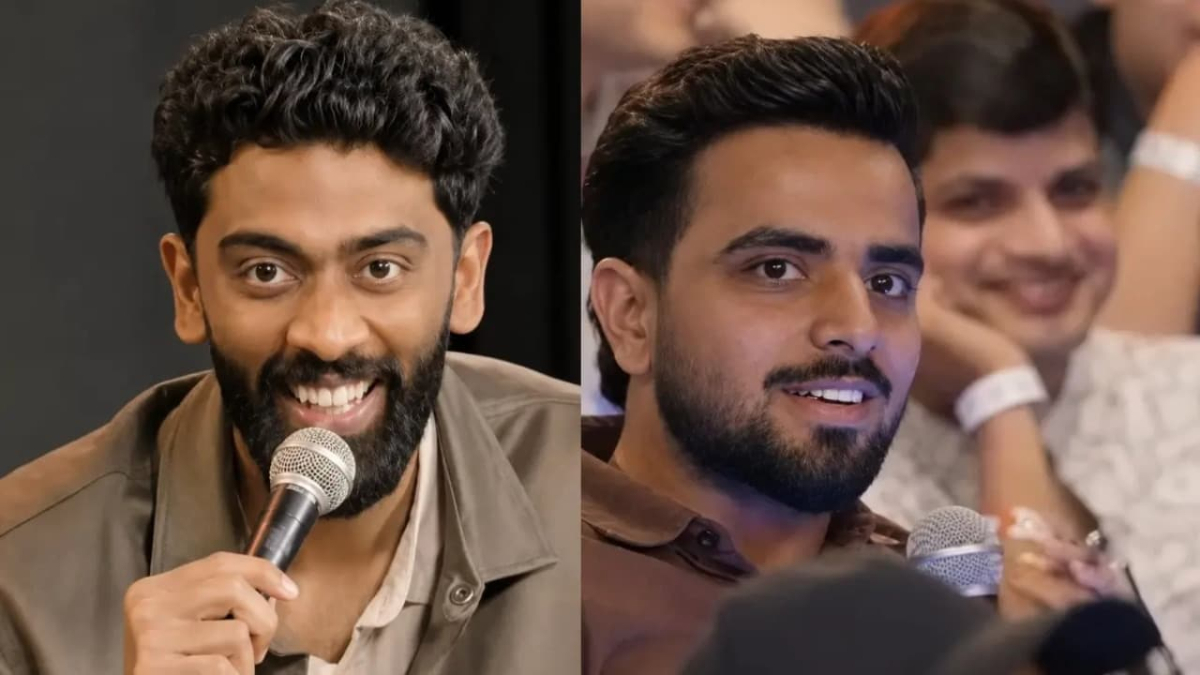
New Delhi, June 13, 2026: What started as a fleeting moment of audience interaction at a stand-up comedy show transformed into a national flashpoint, blending issues of modern dating culture, corporate accountability, and the unforgiving machinery of online cancel culture.
The controversy centered around Himanshu Jangra, a 22-year-old web developer, whose comments during a live comedy gig sparked widespread outrage. Yet, as the digital firestorm threatened to consume everyone in its path, it was the measured response of his employer, Vivek Vishwakarma, that emerged as a rare beacon of sanity and structured reasoning amid the chaos.
The Outrage: A ₹370 Price Tag on Consent
The incident occurred during a live show by stand-up comedian Pranit More. Engaging in “crowd work”—a style of comedy reliant on spontaneous interaction with the audience—More struck up a conversation with Jangra.
The 22-year-old shared an anecdote about a recent date, proudly narrating that he had spent ₹370 on a plate of chicken biryani for a woman. He stated that when she later asked to be dropped home, he expected a physical “return” on his financial investment.
Jangra then detailed taking the woman to a park, pushing past her boundaries, and engaging in non-consensual physical contact. Instead of challenging the blatant admission of sexual coercion, the comedian laughed, labeled it “Peak Gurgaon content,” and handed Jangra a ₹5,000 cash prize. The entire exchange was edited, subtitled, and uploaded online as promotional material.
The internet responded with swift and severe condemnation. From casual social media users to high-profile influencers and law enforcement, the backlash was absolute. The Mumbai Police amplified the conversation by issuing a public awareness post with the hashtag #BiryaniIsNotConsent, explicitly stating that a plate of biryani does not buy access to a person’s body.
Facing intense public scrutiny, Pranit More issued an apology admitting to a severe “lapse in judgment” and subsequently deactivated his Instagram account. However, the digital mob had already pivoted, training its sights on Jangra’s place of employment.
The Backlash Hits Corporate Doors
Jangra was employed at Starvik Design, a Gurugram-based branding and digital marketing agency. As the viral clip saturated timelines, netizens tracked down his professional profile. Within hours, Starvik Design’s social media pages, public email inboxes, and review channels were flooded with thousands of explicit complaints, negative ratings, and demands for Jangra’s immediate termination.
For a young agency entirely reliant on its online reputation, the crisis was existential. Vivek Vishwakarma, the founder of Starvik Design, suddenly found himself thrust into the epicenter of a national controversy.
In the typical playbook of modern corporate public relations, the standard response is swift, detached, and clinical: issue a brief text statement terminating the employee, condemn the actions unequivocally, and block the comment section. Vishwakarma, however, chose a completely different route.
The Sane Voice: Striking a Balance Between Accountability and Nuance
Vishwakarma released a detailed video message addressing the public. While he made it clear that Jangra’s remarks were offensive, unacceptable, and completely contrary to the values of his company, he refused to reduce a complex human situation into a one-dimensional PR save.
Before taking any disciplinary action, Vishwakarma did something remarkably rare in the age of instant internet justice: he conducted an objective internal review. He deliberately consulted the company’s female team members and evaluated Jangra’s day-to-day conduct inside the workplace.
The internal findings did not match the monster depicted in the viral clip. The female employees and colleagues verified that Jangra had consistently been professional, respectful, hardworking, and well-behaved at work. Vishwakarma chose to state this truth publicly, acknowledging that the persona displayed on the comedy stage was completely disconnected from the individual they knew professionally.
Despite the positive workplace record, Vishwakarma ultimately made the business decision to fire Jangra. He explained that actions outside office hours carry real-world consequences. The controversy had severely paralyzed the agency’s operations. Every post was met with endless trolling, and two major prospective clients, with whom the firm was about to finalize deals, abruptly backed out due to the toxic association.
The Danger of Permanent Digital Exile
What truly distinguished Vishwakarma’s response from the ongoing internet hysteria was his plea for societal empathy and long-term perspective. He emphasized that while accountability is vital, the internet’s tendency toward permanent destruction leaves no room for human growth.
He revealed that Jangra, deeply remorseful and overwhelmed by the scale of the backlash, had since fled back to his hometown in Haryana, isolated himself completely, and was receiving continuous threat calls.
Vishwakarma highlighted how easily a impressionable young mind can get swept away by the “vibe” and validation of a live performance room, saying things for shock value without realizing the real-world gravity of the words.
The Broader Cultural Problem
The structural breakdown of the “₹370 biryani” saga exposes a much deeper systemic issue within the entertainment ecosystem. Jangra did not develop these transactional views on consent in isolation. He was playing to a room that was systematically conditioned to reward misogyny as “relatable content.”
For years, segments of the stand-up comedy industry have normalized treating women as commodities and transactions for cheap laughs. From seasoned comics reducing female existence to financial equations to crowds eagerly cheering at narratives of boundary-pushing, the environment actively constructs the mindset that Jangra displayed. The chilling reality wasn’t just Jangra’s statement; it was the initial applause, the laughter, and the cash prize that validated it before the internet intervened.
Ultimately, Vivek Vishwakarma’s handling of the crisis serves as a textbook example of mature leadership. He protected his business and enforced accountability by terminating the employee, but he firmly refused to participate in the dehumanization of a young individual.
If society’s response to terrible mistakes is permanent digital exile and total psychological destruction, it eliminates the very possibility of rehabilitation. The true victory in dismantling deep-seated entitlement lies not just in firing the offender, but in ensuring that the broader culture stops applauding the mindset that created him.
The dynamic conversation around online justice, cancel culture, and workplace boundaries in the wake of this incident is explored in detail in this analytical video: The Himanshu Jangra Case An_alysis, which breaks down the social impact and the corporate double standards of internet outrage.