

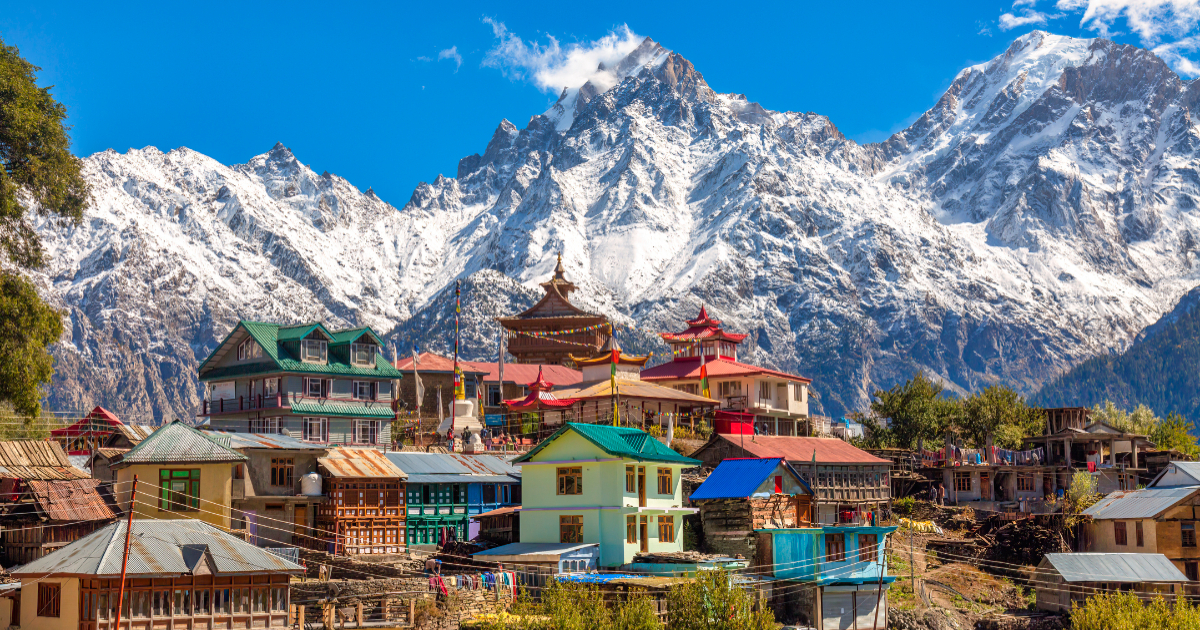
New Delhi, january 19, 2026: The Himalayas, stretching across the northern frontier of India, still harbor secrets that have escaped the maps of mainstream tourism. For those looking to write a different kind of travel story this year, here are seven lesser-known Himalayan villages that offer a glimpse into a world unchanged by time.
1. Kalap, Uttarakhand: The Village Without Roads
Tucked deep within the Garhwal Himalayas, Kalap is the definition of “off-the-grid.” There are no motorable roads leading here; reaching the village requires a breathtaking 6-hour trek from the nearest trailhead. With a population of fewer than 300, Kalap offers a rare digital detox.
The village is a pioneer in community-led tourism, where visitors stay in traditional stone-and-wood homes. The architecture follows the ancient Kathkuni style, designed to withstand the region’s seismic activity.
- Why Visit: Experience authentic shepherd life, participate in traditional wool spinning, and enjoy views of the snow-clad Bandarpunch range.
2. Gurez Valley, Jammu & Kashmir: The Last Frontier
While the rest of Kashmir draws thousands, Gurez remains a silent sentinel near the Line of Control. Guarded by the towering Habba Khatoon peak—named after the legendary poetess—the valley is bisected by the turquoise Kishanganga River.
Gurez is home to the Dard-Shina community, who have preserved their unique language and culture for centuries. The wooden log huts and vast alpine meadows make it look more like the Swiss Alps than a typical Indian hill station.
- Best Time to Visit: June to September, as the Razdan Pass remains closed under heavy snow during winter.
3. Rakchham, Himachal Pradesh: Between Legend and Reality
Often overlooked by travelers racing toward the famous “last village” of Chitkul, Rakchham is the Sangla Valley’s best-kept secret. It sits at an altitude of approximately 3,115 meters, perfectly balanced between lush greenery and the stark, rocky terrain of the high Himalayas.
The village is a patchwork of pink buckwheat fields and apple orchards. Unlike the more commercialized hubs nearby, Rakchham offers a quietude where the only sound is the rushing Baspa River.
- Highlight: The village temples, featuring intricate wood carvings that blend Hindu and Buddhist influences.
4. Thembang, Arunachal Pradesh: A Living Heritage
Thembang is not just a village; it is a fortified ancient settlement. Recognized by UNESCO as a heritage site, this Monpa village in the West Kameng district is over 1,000 years old. It is enclosed by two ancient stone gates (the Dzongs), built to protect the residents from northern invaders.
There are no hotels here—only community-run homestays where you can sip salt-butter tea by the hearth and listen to elders recount the history of ancestral warriors.
- Activity: Trek the ancient trade routes that once connected India with Tibet.
5. Dzuluk (Zuluk), Sikkim: The Loops of the Silk Route
Perched at 9,400 feet, Dzuluk was once a vital transit point on the historic Old Silk Route. Today, it is a tiny hamlet known for the “Three-Level Zigzag Road,” a feat of engineering that offers 32 hairpin turns with dizzying views of the Kanchenjunga range.
Dzuluk is ideal for those who find beauty in mist and mountains. It remains sparsely populated, making it a prime spot for birdwatchers hoping to catch a glimpse of the rare Blood Pheasant or Himalayan Monal.
- Pro Tip: You will need a Special Area Permit (protected area permit) to visit this region.
6. Sissu, Lahaul Valley: The Heart of the High Desert
Since the opening of the Atal Tunnel, the Lahaul Valley has become more accessible, yet Sissu remains largely a stopover rather than a destination. This is a mistake. Sissu is home to a spectacular perennial waterfall that drops from a height of over 50 meters, appearing like a silver thread against the barren mountains.
The village serves as a gateway to the high-altitude desert of Spiti, but its golden poplars and the serene Chandra River make it a destination worth staying in for several days.
- Must See: The lake at Sissu, which turns into a crystal-blue mirror reflecting the surrounding peaks during the summer months.
7. Yurutse, Ladakh: The Village of One House
For the ultimate seeker of solitude, Yurutse is the final answer. Located in the Markha Valley of Ladakh at an altitude of over 4,100 meters, it is often referred to as a “one-house village.”
While technically there are a few structures, only one family typically operates a homestay here for trekkers. Surrounded by a barren, lunar landscape and the occasional marmot, it is a place where time truly stands still.
- The Experience: There is no electricity or mobile network. Nights are lit by the brightest stars you will ever see, and the silence is absolute.
Travel Tips for 2026:
- Sustainability: These villages are ecologically fragile. Always practice “Leave No Trace” tourism.
- Connectivity: Do not expect 5G or even 4G in these areas. Carry offline maps and physical cash.
- Health: High-altitude sickness is real. Ensure you spend at least 48 hours in a base town like Leh or Manali before heading to higher villages.