

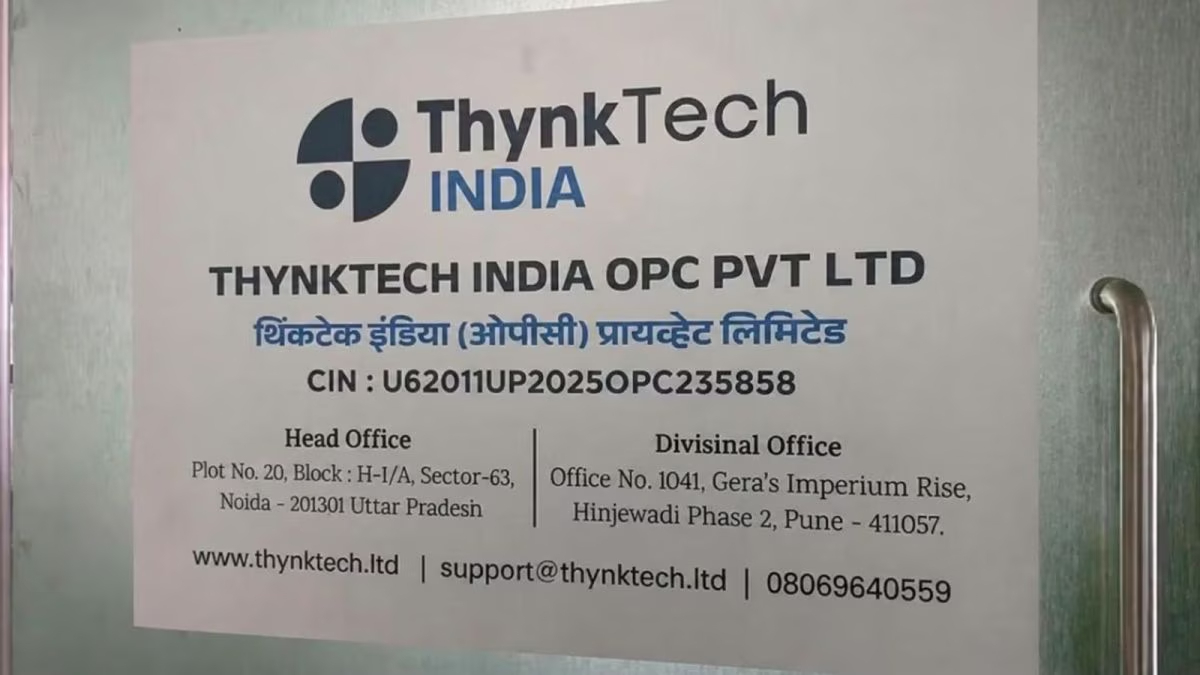
New Delhi, June 4, 2026 – In a shocking development that has sent ripples through Maharashtra’s tech community, a massive employment racket operating under the guise of a booming tech start-up has been busted in Pune’s prominent Hinjewadi IT hub.
The Pimpri-Chinchwad police have arrested Harshal Bhanudas Thakare, the Chief Executive Officer (CEO) of ‘ThynkTech India OPC Pvt Ltd’ (also operating as Thynk Technology India). Thakare was apprehended in Nashik after a brief attempt to evade law enforcement. He is currently facing charges of criminal breach of trust and cheating under sections 316(2) and 318(4) of the Bharatiya Nyaya Sanhita (BNS).
The abrupt closure of the firm has left over 700 young software engineers, fresh graduates, and interns abruptly jobless, staring at financial ruin and severely disrupted career paths.
The Modus Operandi: A Carefully Crafted Illusion
What makes the ThynkTech scam unique—and highly damaging—is the elaborate corporate facade the founders maintained. Unlike crude phishing or online job scams, ThynkTech constructed a highly believable physical presence. The company operated across four separate, polished office setups located on the 10th floor of the premium Gera’s Imperium Rise complex in Hinjewadi Phase II.
According to Senior Police Inspector Balaji Pandhare, Thakare intentionally scattered operations across small office setups and distinct project groups to prevent large groups of employees from easily communicating or recognizing the systemic issues building across the firm.
The recruitment strategy was aggressive and targeted. The firm built strong recruitment ties with prominent engineering and IT colleges throughout Maharashtra, including rural and semi-urban centers like Yavatmal, Jalgaon, and Nashik, alongside institutions in Pune. Desperate to break into the competitive tech industry, fresh graduates underwent an allegedly rigorous two-stage interview process before receiving formal offer letters on authentic-looking company letterheads.
The Laptop Trap and Financial Extortion
There was one critical condition attached to the coveted offer letters: all fresh recruits and interns were required to pay a mandatory security deposit of ₹15,000. The management claimed this cash collection was entirely collateral to safeguard the corporate Dell laptops assigned to them for work.
The physical distribution of brand-new laptops successfully eliminated any lingering suspicions among the applicants. However, police investigations later uncovered that the laptops were not owned by ThynkTech. Thakare had sourced approximately 350 laptops from five external hardware rental vendors. The entire operation began collapsing when ThynkTech failed to pay these vendors, leading one vendor to file a separate police complaint over unpaid dues amounting to ₹8.5 Lakhs.
In a move to cover his tracks as complaints began to rise, Thakare instructed employees in late March to return their laptops under the pretense that the company was transitioning away from its third-party hardware provider. Estimates suggest 70% to 80% of the workforce surrendered their hardware, never to see it or their security deposits again.
The Crash: Bounced Cheques and Sealed Doors
The initial phase of the company seemed promising, with freshers receiving their initial stipends on time to build corporate legitimacy. However, by January 2026, the cash flow abruptly stopped. Permanent staff, training heads, and interns went completely unpaid for months.
Whenever confronted, Thakare blamed temporary delays on internal financial audits or corporate transitions, promising that all funds would materialize by late February. When pressure intensified, the firm issued salary cheques that immediately bounced at the bank due to insufficient funds.
The final blow came on April 22, 2026. Employees arrived at the Hinjewadi office to find the doors padlocked and sealed. Taped to the glass entrance was a legal notice from the commercial property owner, stating that the company’s access was barred due to a total failure to pay office rent, maintenance fees, and utility bills since March. The CEO, along with HR executive Soumya Singh and Manager Dhruvil Parekh, had turned off their phones and vanished.
A Growing Crisis in the IT Corridor
The Forum for IT Employees (FITE), an organization advocating for tech workers’ rights, stepped in to coordinate with the Hinjewadi police after being flooded with complaints. FITE President Pavanjit Mane revealed that this is not an isolated incident, but rather a dangerous pattern targeting desperate job seekers.
According to FITE data, ThynkTech is the fifth IT firm in Pune to abruptly shut down under fraudulent circumstances within the last eight months. Cumulatively, these rapid closures have left between 4,000 and 5,000 IT professionals and freshers unemployed in the region. Another fraudulent firm, Flynaut, allegedly extorted up to ₹1.50 Lakh per employee as a “security deposit” before vanishing.
Investigators suspect that part of the scam’s profitability involved exploiting state and central skill development schemes. The firm allegedly collected official documentation from hundreds of interns to claim government stipends and training reimbursements while withholding those funds entirely from the actual workers.
Human Cost and Next Legal Steps
The emotional and economic fallout for the affected engineers is severe. Many victims belong to rural backgrounds, where families took out loans or pooled life savings to pay the upfront ₹15,000 fee, hoping to secure a stable footing in India’s competitive tech industry. Beyond losing months of income, these young professionals face a gap in their employment history and fear a permanent stain on their resumes.
The Pimpri-Chinchwad court has remanded Harshal Thakare to police custody until June 8 to allow for a deeper financial investigation. Police teams are tracking the financial trails to locate where the extorted deposits were routed. Meanwhile, law enforcement agencies are actively searching for the missing HR executive and manager to determine their level of involvement in the scam.
The Assistant Commissioner of Labor, S.T. Shirke, confirmed that the labor department has initiated regulatory tracking alongside the police to address the gross violation of employment laws and non-payment of wages.